Skin Problems in Healthcare Workers: A Complete Guide
Quick Answer: According to NIOSH, healthcare workers commonly experience skin issues such as hand eczema, mask-related pressure marks and acne, allergic reactions to gloves, and rashes from prolonged PPE use. These problems stem mainly from frequent hand hygiene, tight-fitting protective gear, and chemical exposure during shifts. Simple habits like proper moisturizing, breathable glove choices, and short PPE breaks can significantly reduce symptoms and prevent long-term skin damage.
Skin problems in healthcare workers are more common than most people realize, even among those who follow proper hygiene practices every day. Part of the answer lies in the numbers: according to the CDC’s National Institute for Occupational Safety and Health, contact dermatitis makes up 90 to 95 percent of all reported occupational skin disease cases in the United States.
Frequent handwashing, glove use, and exposure to sanitizers and disinfectants gradually strip the skin’s natural barrier, which is why these issues are so common on the job, not a sign of poor skincare habits.
Understanding these daily occupational causes can help healthcare teams recognize early warning signs and take practical steps to protect their skin while continuing to provide safe, hands-on care.
Why Skin Problems Are More Common Among Healthcare Workers
Healthcare professionals face a unique combination of daily exposures that most other workers don’t encounter at the same intensity. The following factors explain why healthcare workers face higher risk of occupational skin conditions than nearly any other profession:
Frequent Hand Hygiene Nurses, doctors, and support staff often wash or sanitize their hands dozens of times per shift. This repeated exposure to soap, water, and alcohol-based sanitizers strips the skin’s natural oils and weakens its protective barrier over time. Nurses in particular face this challenge daily; learn more in our guide on hand dermatitis in nurses.
Prolonged Glove Use Wearing gloves for extended periods traps sweat and heat against the skin, creating conditions that can lead to irritation, moisture buildup, and allergic reactions to rubber additives found in some gloves.
Extended PPE Wear Long shifts in masks, face shields, and gowns cause friction and pressure, especially around the nose, cheeks, and ears. A study conducted among healthcare workers in Wuhan, China, found that the hands, cheeks, and nasal bridge were among the most commonly affected areas in medical staff.
Chemical and Disinfectant Exposure Healthcare settings require frequent use of disinfectants and cleaning agents. Repeated contact with these substances can damage the skin barrier and increase the likelihood of irritant or allergic contact dermatitis.
High-Risk Occupation Category According to research published in the National Institutes of Health database, healthcare workers rank among the occupational groups most affected by hand dermatitis, alongside hairdressers and metal workers.
Common Skin Problems in Healthcare Workers
While the causes overlap, each condition shows up differently on the skin and needs its own approach to manage. Below are the most frequently reported issues among care providers, based on clinical research and patch-test data.
Irritant Contact Dermatitis (ICD)
ICD occurs when the skin’s outer barrier is directly damaged by repeated exposure to irritants like soap, water, and sanitizers, rather than through an allergic reaction. A cross-sectional study found that 82.6 percent of participants reported ICD symptoms, with dry skin being the most common complaint at 75.4 percent. Notably, nearly all participants increased their handwashing frequency, yet less than half regularly used emollients to protect their skin.
Allergic Contact Dermatitis
Some medical professionals develop true allergic reactions to substances in gloves or skincare products. Patch testing on nurses with occupational contact dermatitis identified common allergens, including thiuram mix, potassium dichromate, and preservatives like methylchloroisothiazolinone. This type of reaction often causes itching, swelling, or blistering that goes beyond simple dryness.
Hand Eczema
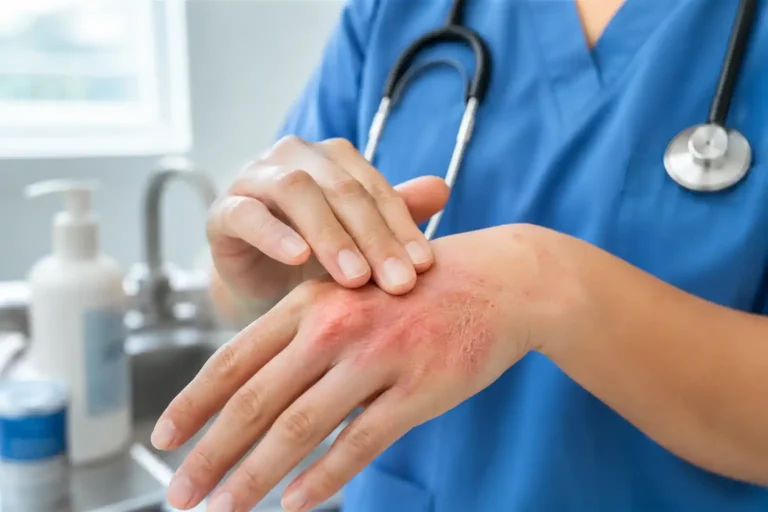
A chronic, recurring condition marked by persistent dryness, cracking, and sometimes bleeding. It develops gradually from repeated wet work and is harder to reverse once established, making early prevention especially important.
Mask-Related Skin Issues
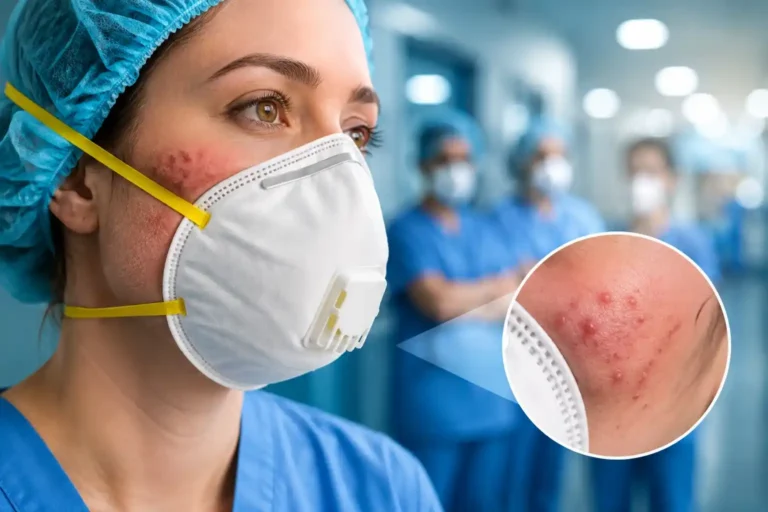
Extended mask wear can lead to acne breakouts from trapped moisture and oil, along with pressure marks or indentation lines across the nose, cheeks, and ears after long shifts. For a full breakdown of why this happens and how to prevent it, see our guide on mask-related acne among healthcare workers.
Sweat Rash Under PPE
Full-body protective equipment traps heat and moisture, which can lead to prickly heat rashes, particularly during heavy work schedules or in warmer environments.
Fungal Infections
The warm, damp conditions created under gloves and PPE provide an environment where fungal infections can develop, often in skin folds or between fingers.
Latex Allergy
Repeated exposure to latex gloves can trigger reactions ranging from mild itching to more significant allergic responses, making glove material selection an important consideration for at-risk workers.
How to Prevent Skin Problems in Healthcare Workers
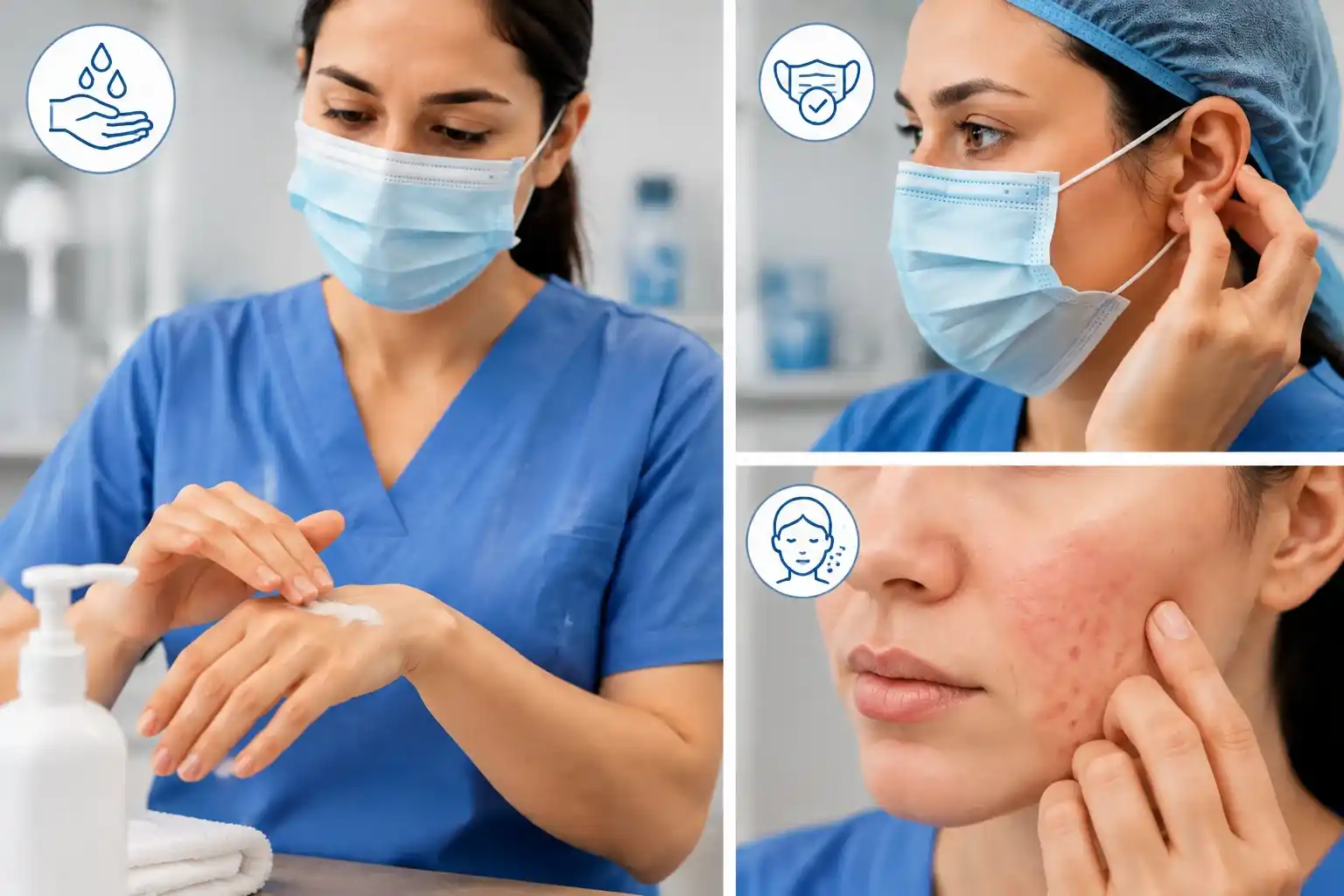
Prevention doesn’t require a complicated routine. A few consistent habits can go a long way in protecting your skin:
- Moisturize your skin regularly, especially after washing or sanitizing your hands.
- Choose gloves and masks that fit properly to reduce friction and irritation.
- Take short breaks to let your skin breathe when possible.
- Follow proper hand hygiene without over-washing.
Each of these areas involves its own specific do’s and don’ts, which we cover in detail below:
- Hand Dermatitis: Causes and Treatment
- Skin Breakdown from PPE and Masks
- Maskne: Causes and Solutions
How Healthcare Providers Diagnose Occupational Skin Conditions
Diagnosing an occupational skin condition typically involves a few key steps:
- Reviewing your work history, daily exposures, and hygiene routine.
- Examining the affected area for patterns that point to a specific cause.
- Ruling out non-work-related factors like pre-existing conditions or allergies.
- Patch testing, when an allergic reaction is suspected.
If you’re noticing persistent symptoms, understanding this process can help you have a more informed conversation with your provider.
How Occupational Skin Problems Are Treated and Managed
Treatment usually starts with identifying and reducing exposure to the trigger causing the reaction. From there, care typically falls into a few categories:
- Avoiding or limiting contact with the identified irritant.
- Using moisturizers and barrier creams to support skin recovery.
- Topical medications for more persistent inflammation.
- Professional evaluation when symptoms are severe, recurring, or don’t improve with basic steps.
Most mild cases improve significantly once the underlying cause is addressed and proper skin care is followed consistently. Severe or persistent cases, however, may need ongoing dermatological care and can take longer to fully resolve.
Bottom Line
Occupational skin disease remains one of the most under-recognized risks in healthcare work, despite being well-documented in medical literature for decades. It is not a personal failing or a sign of poor hygiene, it is a predictable consequence of a demanding clinical environment. What separates a temporary irritation from a chronic condition often comes down to timing: how quickly it is noticed, and how quickly it is addressed. For healthcare workers, protecting the skin is not separate from protecting patients, it is part of the same commitment to safe, sustainable care.
Frequently Asked Questions
Are nurses more likely to develop skin issues than doctors?
Nurses often report higher rates of hand dermatitis, largely due to more frequent direct patient contact and hand hygiene throughout a shift compared to some other roles.
Is it safe to keep working with a skin condition like dermatitis?
Most mild cases don’t require time off. However, if you notice cracking, oozing, or signs of infection, it’s best to inform occupational health so protective measures, like glove changes or task adjustments, can be arranged while you continue working safely.
Can occupational skin problems become permanent?
They can in some cases. Research shows that recovery rates for occupational skin disease among healthcare workers can be surprisingly low, even months after diagnosis, particularly when the same exposures continue without any changes to routine or protective measures.
Do occupational skin problems affect patient care?
Yes, indirectly. When hands are cracked or painful, workers may unconsciously wash less thoroughly or skip steps to avoid discomfort, which can reduce hand hygiene compliance, an essential part of infection control and patient safety.
References
- CDC’s National Institute for Occupational Safety and Health (NIOSH)
- Occupational Skin Dermatitis among Healthcare Workers Associated with the COVID-19 Pandemic
- Glove-Induced Hand Dermatitis: A Study in Healthcare Workers
This article is for informational purposes only and does not constitute medical advice. Please consult a qualified healthcare provider for diagnosis and treatment of any skin condition.