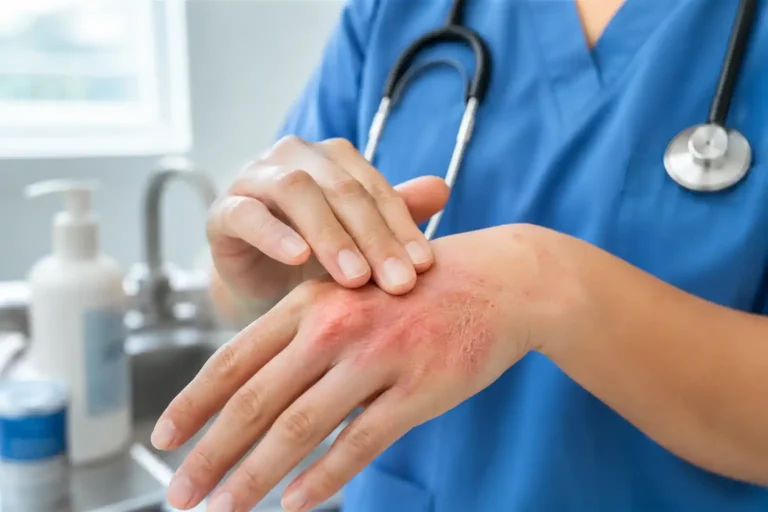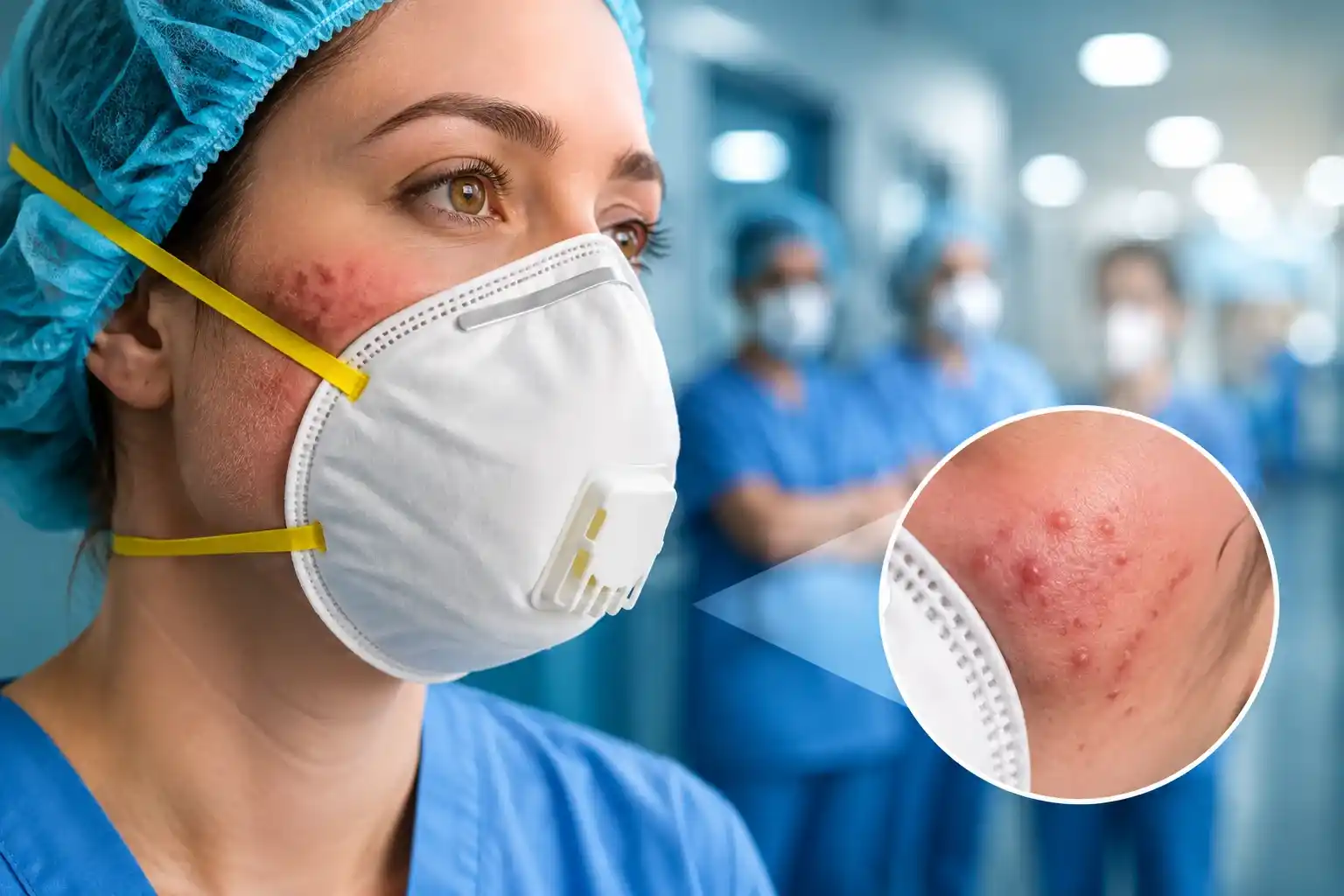
Maskne in Healthcare Workers: What Causes It and How to Manage It
Quick Answer: Mask-induced acne is a form of acne, irritation, or skin breakdown caused by prolonged mask wearing, and it affects a large share of healthcare workers. Studies show that anywhere from 40% to nearly 69% of healthcare workers experience it, with risk increasing for those under 30, women, and anyone wearing a mask for more than 8 hours a day. Gentle cleansing, regular moisturizing, and short mask breaks are the most effective ways to prevent and manage it.
Skin concerns related to prolonged mask use became increasingly recognized during the COVID-19 pandemic, particularly among healthcare professionals who spent long hours wearing personal protective equipment (PPE).
Studies suggest that factors such as friction, trapped moisture, heat, and reduced airflow inside masks may contribute to skin irritation, acne-like breakouts, and other facial skin conditions. Maskne in healthcare workers can develop even in individuals without any history of acne, highlighting the importance of understanding risk factors, prevention strategies, and proper skin care approaches for those with frequent mask exposure.
What Is Mask-Induced Acne?
Mask-induced acne falls under a broader category dermatologists call acne mechanica, a type of acne triggered by physical friction and pressure on the skin rather than hormones or diet alone. When a mask presses against the same areas of the face for hours, it disrupts the skin’s natural balance in a few specific ways.
The mask traps warmth and moisture against the skin, creating conditions similar to leaving a bandage on for too long. This trapped heat and moisture changes the environment where bacteria naturally live on your face.
As a result, certain strains, especially Cutibacterium acnes, can grow more aggressively than they normally would.
At the same time, constant friction from the fabric can physically block hair follicles. Combined with increased sweat and oil production under the mask, this blockage sets the stage for new breakouts or for worsening existing acne.
Mask-induced acne shows up in two main ways: as a brand-new breakout in someone who never had regular acne problems, or as a flare-up of acne that was already there before mask-wearing became routine.
Research on healthcare workers found that new onset cases actually outnumber flare-ups of pre-existing acne. This suggests that prolonged mask wearing can trigger the condition even in people who never had acne problems before.
Common Facial Dermatoses Caused by Mask Wearing
Acne isn’t the only skin issue mask wearing can bring on. From irritation to allergic reactions, several different conditions can affect the same area of the face, which is why getting the right diagnosis matters.
▪️ Irritant Contact Dermatitis
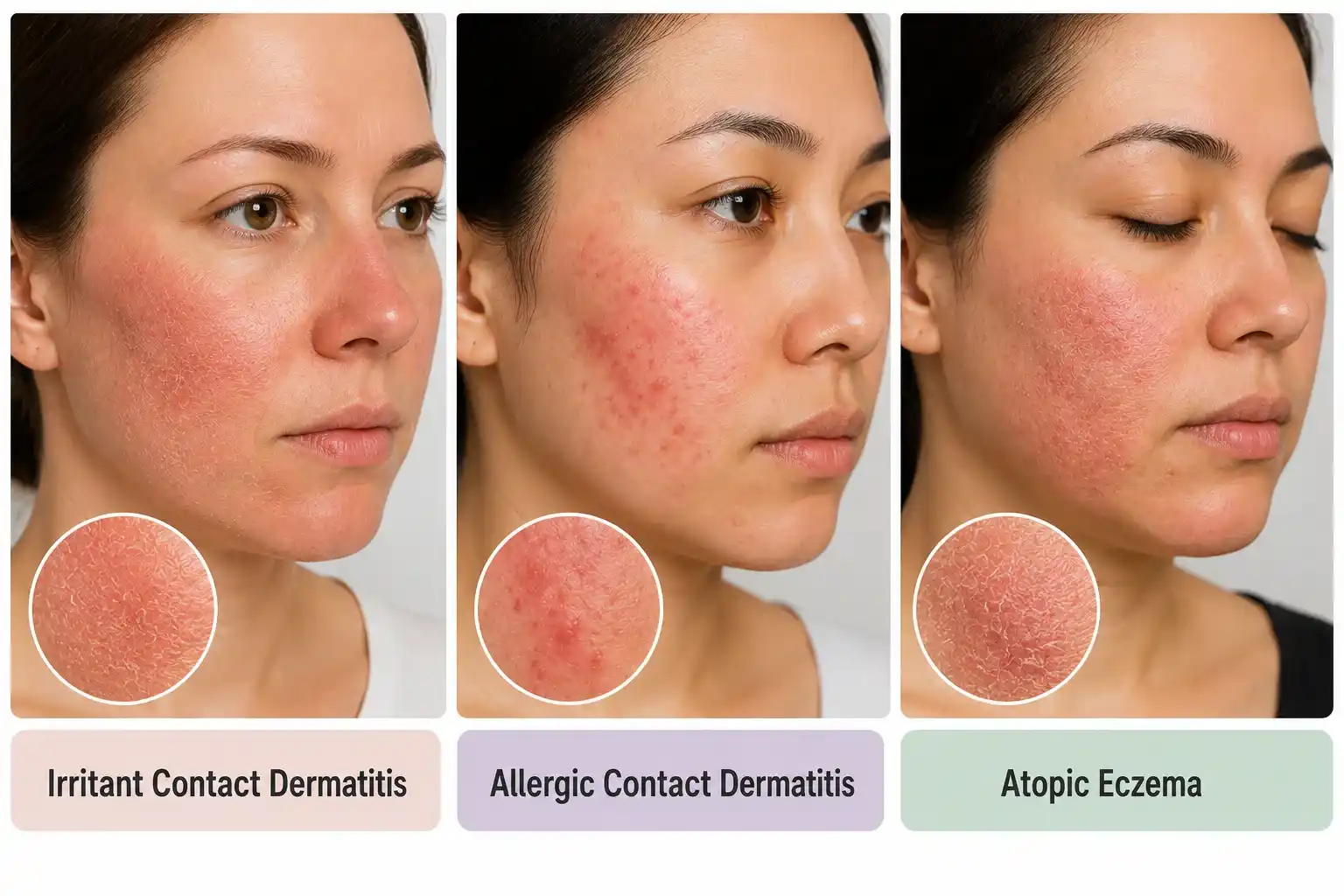
This is the most common mask-related skin reaction, caused by the direct physical pressure and friction of the mask rubbing against the skin, especially across the nose bridge and cheeks. It tends to develop after wearing a mask for more than 6 hours at a stretch, and the longer and more frequent the exposure, the more severe it can become.
Symptoms range from mild dryness and scaling to more significant irritation, including swelling or small breaks in the skin. People with a history of eczema are more prone to developing it, since their skin barrier is already weaker to begin with.
▪️ Allergic Contact Dermatitis
Allergic contact dermatitis is a skin reaction that occurs when your immune system responds to a specific material that comes into contact with your skin, treating it as a threat even though it is harmless. It’s different from simple irritation because it involves an actual allergic response, not just physical friction or pressure.
With masks, common triggers include the rubber elastic in the straps, preservatives used in certain fabrics, or metal parts in the nose wire.
Unlike general irritation, this reaction usually shows up with a clear, well-defined edge that matches the exact spot where the trigger material touched your skin.
▪️ Atopic Eczema
People with a history of eczema often notice their symptoms worsen once mask wearing becomes a daily habit. The mask traps heat and moisture against skin that already struggles to maintain its natural barrier, leading to increased dryness, redness, and itching in the covered areas.
▪️ Seborrhoeic Eczema
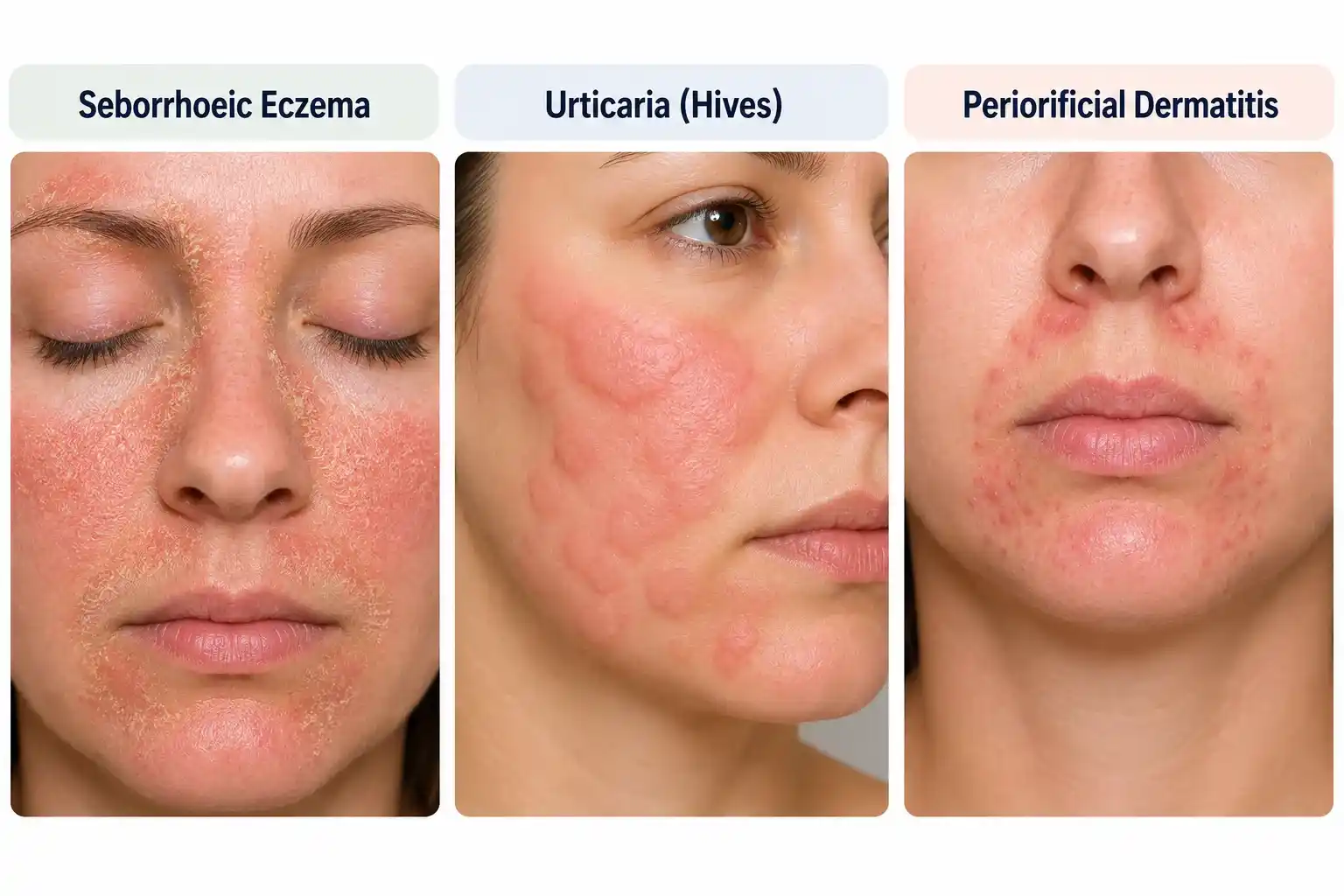
This condition typically appears as greasy, yellowish scaling around the nose, eyebrows, and other oil-prone areas of the face. It is linked to an overgrowth of yeast that naturally lives on the skin. The warm, humid environment created under a mask gives this yeast more room to thrive, which can bring on new symptoms even in people who rarely dealt with this condition before.
▪️ Periorificial Dermatitis
Small red bumps clustered around the mouth, nose, or eyes characterize this condition, and it tends to affect younger women more often. Mask wearing doesn’t directly cause it, but the same warm, occlusive environment that contributes to other mask-related skin issues can make it more likely to appear or worsen.
▪️ Urticaria
Some people develop hives, either from the physical pressure of a tight-fitting mask or from a reaction to something the mask is made of. Pressure-related hives can appear right where the mask sits against the skin, sometimes showing up immediately and other times taking a few hours to develop.
▪️ Acne
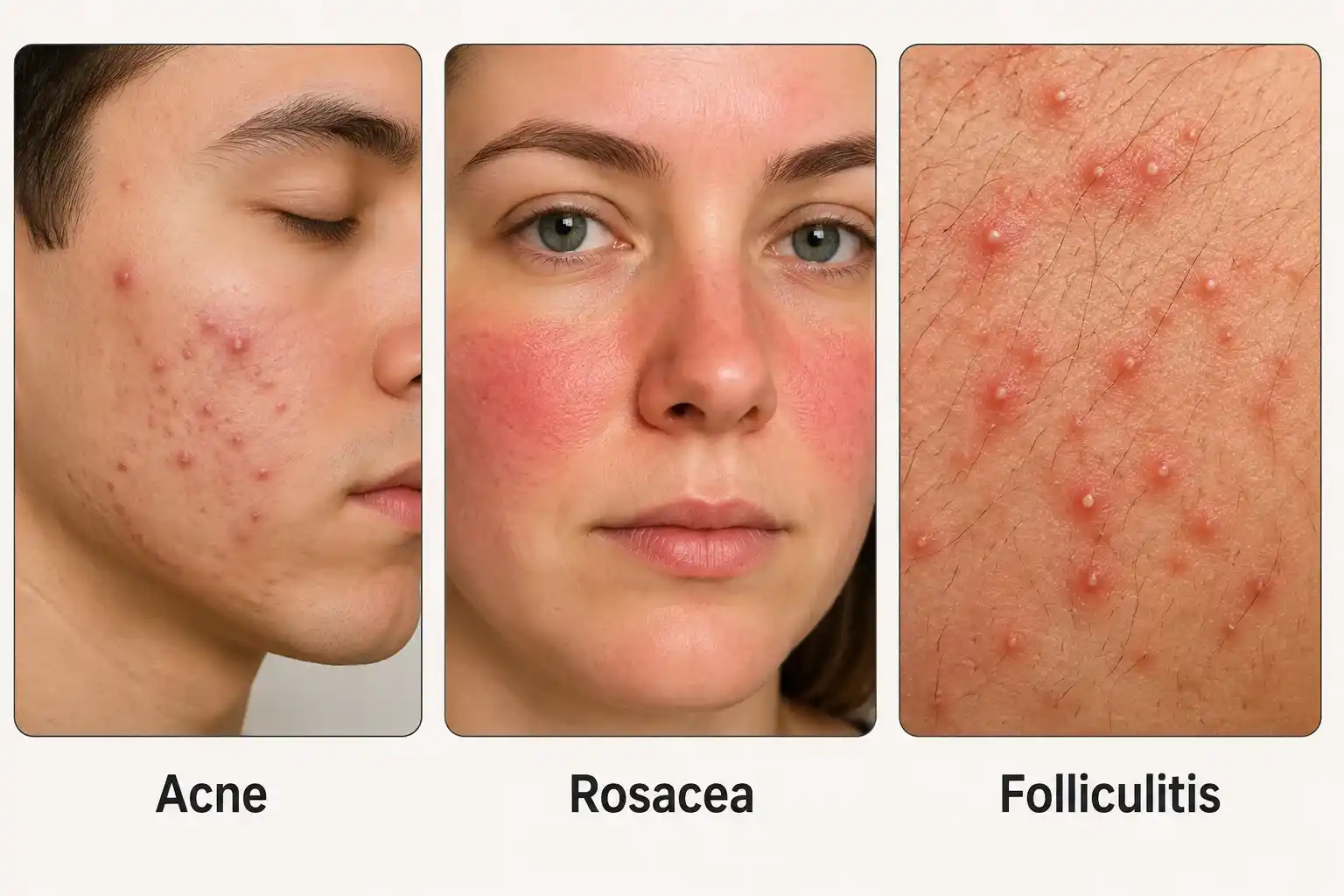
Covered in more detail earlier in this article, mask-related acne stems from a combination of trapped heat, bacterial buildup, and follicle blockage caused by prolonged friction.
▪️ Rosacea
For those already prone to rosacea, extended mask wear can trigger flushing, visible redness, and breakouts across the cheeks, nose, and chin. The mechanism may be similar to acne, but rosacea often responds differently to treatment and may require a separate approach.
▪️ Folliculitis
This shows up as small, inflamed bumps around hair follicles, most often on the lower face and jawline. It’s more common in men, largely due to the combination of facial hair and mask friction, which creates an environment where follicles become irritated or infected.
What Causes Mask Acne? 6 Key Risk Factors to Know
Breakouts under a mask rarely come down to one cause. Skin type, mask material, wear time, and daily habits all play a role in how likely acne is to develop.
1. Age Under 30
Younger healthcare workers face a notably higher risk. Data shows people under 30 are nearly three times more likely to develop mask-acne compared to those older, a pattern that held up even after researchers accounted for other variables.
2. Female Gender
Gender plays a significant role, with women showing a much higher likelihood of developing mask-acne than men, over five times higher in one study.
3. Mask-Wearing Duration
Healthcare workers who wear a mask for more than 8 hours a day are more than twice as likely to develop mask acne as those with shorter daily exposure. This tracks with what other studies have found: longer, more frequent mask use consistently raises the risk of acne, irritation, and rashes.
4. Oily or Combination Skin
Skin type appears to matter too. Among healthcare workers who developed mask-acne, a large majority reported having oily or combination skin, compared to a much smaller share with non-oily skin. This makes sense biologically, since oil production already plays a role in acne development, and the added heat and moisture under a mask can amplify that effect.
5. Makeup Use
The link between makeup and mask-acne is less clear-cut. Some research found a connection between wearing makeup before putting on a mask and a higher rate of breakouts. Still, once other risk factors were factored in, that connection weakened and wasn’t consistently significant. Other studies have found no meaningful association, suggesting that this factor likely plays a smaller role than age, gender, or wear time.
6. Mask Type
Interestingly, the type of mask worn (surgical versus N95) hasn’t shown a consistent link to mask-acne risk across studies. Some research has pointed to N95 respirators carrying a higher risk, while other studies found no real difference between mask types, suggesting other factors like duration and skin type may matter more than the mask itself.
Related Posts
- Occupational Hand Dermatitis in Nurses
Causes, symptoms, and prevention strategies for healthcare professionals. - Skin Issues in Healthcare Workers
Common workplace-related skin problems and ways to protect your skin.
How to Prevent Mask Acne: Effective Tips to Avoid Breakouts
The good news is that most mask-related blemishes respond well to simple changes. The following steps target the root causes, from friction to trapped moisture, without adding extra steps to an already busy routine.
➤ Cleanse Before You Mask Up
Start with a gentle, soap-free cleanser to remove excess oil, dirt, and any leftover product before putting on your mask. Clean skin under a mask means less buildup that can clog pores throughout a shift.
➤ Moisturize at Least 30 Minutes Before
Applying a light, non-comedogenic moisturizer at least half an hour before putting on your mask helps strengthen your skin barrier. This buffer layer can reduce irritation significantly compared to going in with bare, unprotected skin.
➤ Use a Barrier Product on Pressure Points
For areas that take the most friction, like the bridge of the nose and cheeks, a thin silicone-based barrier tape or wipe can protect the skin directly underneath the mask. This creates a protective film between your skin and the mask material without compromising the mask’s fit or seal.
➤ Try a DIY Cushion for N95 Respirators
For healthcare workers who wear N95 masks for extended periods, some clinicians have used a simple, low-cost trick: cutting a makeup cotton pad into a shaped skin protector, with a center piece for the nose bridge and two wing pieces for the cheeks.
The pad is taped in place before the mask goes on, cushioning the areas most likely to sustain pressure and friction, particularly over the cheekbones. If standard barrier tape does not fully solve the problem, consider asking your infection control or occupational health team about it before trying it on the job.
➤ Get the Fit Right
A mask that’s too tight increases friction and pressure, while one that’s too loose won’t seal properly. Taking the time to find a properly fitted mask can reduce unnecessary friction on the skin throughout your shift.
➤ Take Regular Mask Breaks
Whenever your work environment allows it, stepping away for short mask breaks, ideally every hour for respirator wearers, gives your skin a chance to breathe and lets built-up moisture evaporate. This simple habit helps prevent the warm, humid environment that contributes to breakouts.
➤ Stay Hydrated
Drinking enough water throughout the day supports your skin’s overall barrier function, making it more resilient to the friction and occlusion caused by extended mask wear.
➤ Keep Up with Oral Hygiene
Regular brushing and flossing may seem unrelated, but research has linked oral health to skin health, making it one more small habit worth maintaining as part of an overall prevention routine.
Treatment Options: When Home Care Is Enough and When to See a Doctor
Most cases of mask-induced acne are mild, and simple home care is often enough to bring it under control. But some situations call for a dermatologist’s help, especially when symptoms don’t improve or start affecting your skin long term.
When Home Care Is Usually Enough
If your blemishes are mild, meaning a few scattered bumps or occasional dryness and irritation, sticking with the prevention steps above often resolves the issue within a few weeks. This includes gentle cleansing, consistent moisturizing, barrier products on friction points, and regular mask breaks when possible.
Over-the-counter products containing gentle exfoliating ingredients or lightweight, non-comedogenic formulas can also help without over-stripping the skin, which can worsen irritation.
When It’s Time to See a Dermatologist
A few signs suggest it’s worth booking an appointment rather than waiting it out:
- Symptoms are getting worse instead of better, even after weeks of consistent skincare changes.
- The reaction is severe if it causes swelling, oozing, significant pain, or broken skin.
- You suspect an allergy, especially if the irritation has a clearly defined shape that matches part of the mask, such as the strap or nose wire.
- Dark spots or scarring start to appear, since these changes can become permanent if not addressed early.
- The condition is affecting your quality of life, whether that’s your comfort at work, your confidence, or your mood.
What a Dermatologist Might Recommend
Treatment depends on which condition is actually driving the skin issues, since irritation, allergic reactions, and acne don’t always respond to the same approach. A dermatologist may prescribe topical treatments for more persistent acne, a short course of a mild steroid cream for contact dermatitis, or in some cases, patch testing to pinpoint a specific allergen if allergic contact dermatitis is suspected.
For skin that has already broken down due to the friction, a protective dressing can shield the area while it heals without interrupting mask use.
Frequently Asked Questions
How long does it take for maskne to go away after I stop wearing a mask?
It varies by condition. Irritation and contact dermatitis often improve within days once the trigger is removed, while acne can take a few weeks of consistent skincare to clear, especially if it’s been building up over months.
Is maskne the same as regular acne, or is it different?
It’s related but not identical. Maskne (or mask-induced acne) falls under “acne mechanica,” meaning it’s triggered by physical friction and pressure rather than hormones alone. The treatment overlaps with regular acne, but prevention focuses more on reducing friction and trapped moisture.
Can wearing two masks at once make maskne worse?
Double masking increases pressure and reduces airflow even more, which can trap extra heat and moisture against your skin. If you need the added protection, taking more frequent breaks becomes even more important.
Can reusing the same cloth mask without washing it cause breakouts?
Yes. A mask that isn’t washed regularly builds up oil, sweat, and bacteria, which then sits directly against your skin for hours. Washing cloth masks daily is one of the simplest ways to reduce that risk.
Will switching to a looser-fitting mask fix the problem?
It might help with friction, but a mask that’s too loose won’t seal properly, which matters for infection control. The goal is a proper fit, not necessarily a looser one, so barrier products and breaks are usually a safer first step.
References
- Mask-related acne and facial dermatoses
- Risk factors for acne in healthcare workers during COVID-19
- Prevent nose and cheek damage from N95 masks
- Mask-acne prevalence and risk factors
Disclaimer: This article is for general information and isn’t a substitute for a proper evaluation. Since several different conditions can look similar under a mask, getting an accurate diagnosis is the best way to make sure you’re treating the right one.