Hand Dermatitis in Nurses: Causes, Symptoms, and Treatment Guide
Quick Answer: Hand dermatitis in nurses is skin inflammation caused mainly by frequent handwashing, sanitizer use, and prolonged glove wear. It affects an estimated 18–30% of nurses, per NIH-published research. Symptoms include dryness, redness, cracking, and itching, and consistent skin care can lower the risk.
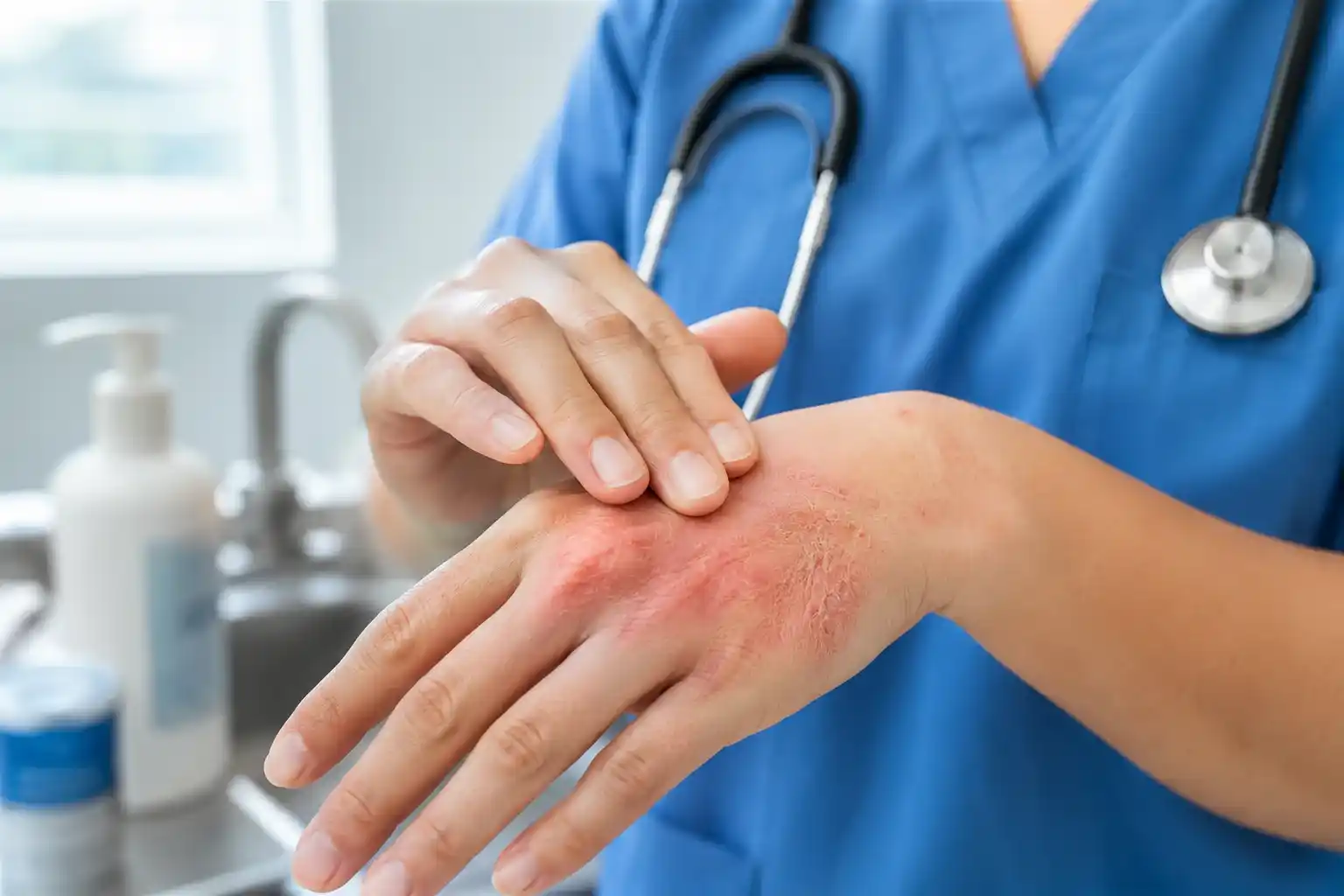
If you are a nurse, your hands probably tell the story of your shift before you say a word: dry knuckles, a raw patch near your thumb, or skin that stings the second you touch soap. A nurse’s hands play a vital role in daily patient care activities, but constant exposure to workplace irritants can take a toll on skin health.
Hand dermatitis in nurses is a workplace skin concern that many healthcare professionals encounter during their careers, and it tends to build up quietly over weeks or months rather than showing up all at once.
This guide explores why it happens, what signs to watch for, and how nurses can care for their hands while meeting the hygiene demands of patient care.
What Is Hand Dermatitis?
Hand dermatitis is a general term for inflamed, irritated skin on the hands. It happens when the skin’s outer layer, which normally locks in moisture and blocks out irritants, gets damaged and stops doing its job properly. Once that barrier weakens, the skin becomes more reactive to everyday contact, whether that’s water, soap, or friction from constant use.
Common Forms of Hand Dermatitis
Hand dermatitis shows up in different forms, each with its own cause and appearance.
1. Irritant Contact Dermatitis Irritant contact dermatitis is the most common type of hand dermatitis. It happens when repeated exposure to water, soap, or harsh chemicals gradually strips away the skin’s natural oils, weakening its protective barrier.
2. Allergic Contact Dermatitis Allergic contact dermatitis occurs when the immune system reacts to a specific substance that touches the skin, causing inflammation only in the area of contact. Common triggers include nickel, fragrances, and rubber gloves.
3. Atopic Hand Dermatitis Atopic hand dermatitis is a form of hand eczema linked to an existing tendency toward atopic conditions, such as eczema or sensitive skin elsewhere on the body. More likely in people with a personal or family history of atopic eczema. Typically affects the backs of the hands, fingers, and wrists.
4. Dyshidrotic Eczema (Pompholyx) Dyshidrotic eczema is a distinct type of hand dermatitis marked by small, fluid-filled blisters that form deep in the skin and cause intense itching. Usually appears on the palms and along the sides of the fingers. Blisters can be painful and may take weeks to fully clear.
5. Hyperkeratotic Hand Dermatitis Hyperkeratotic hand dermatitis causes the skin, usually on the palms, to thicken and harden over time, often leading to painful cracks. Skin may feel rough or leathery to the touch. Fissures can deepen with continued hand use, making daily tasks uncomfortable.
Each type responds differently to care, so identifying the correct one often shapes the right treatment approach.
Causes and Risk Factors of Hand Dermatitis in Nurses
Beyond the general risks faced by healthcare workers, nurses face a few additional factors tied specifically to their daily routine and work environment:
- Limited Recovery and Skin Care Time During Shifts: Back-to-back shifts can limit skin recovery, while busy schedules make regular moisturizer use difficult.
- Bedside and hands-on care duties: Direct, repeated physical contact with patients increases the number of hand hygiene events compared to less hands-on roles.
- Department-specific exposure: Units like ICU, surgical, or emergency departments often require more frequent glove changes and handwashing than lower-acuity settings.
- Personal or family history of eczema: Nurses with an existing atopic tendency may develop symptoms faster or more severely than colleagues without one.
- Frequent switching between wet and dry conditions: Moving quickly from handwashing to charting or handling equipment doesn’t allow hands to fully dry before the next task.
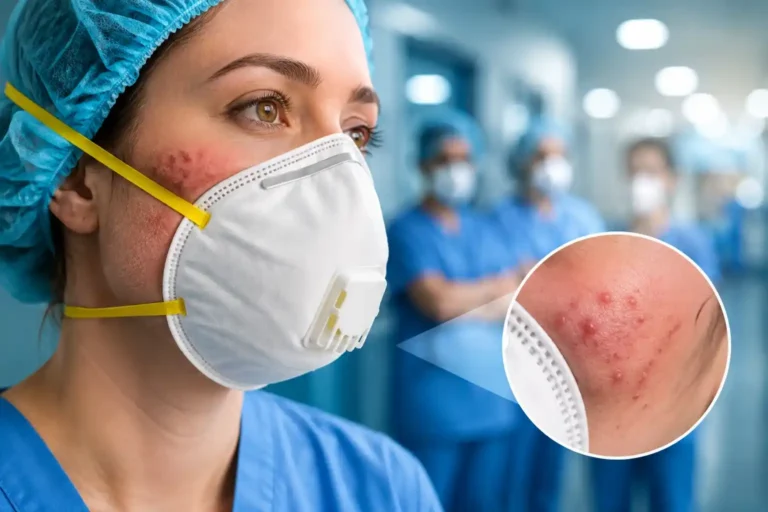
Related post: Causes of maskne in healthcare professionals
Signs and Symptoms of Hand Dermatitis in Nurses
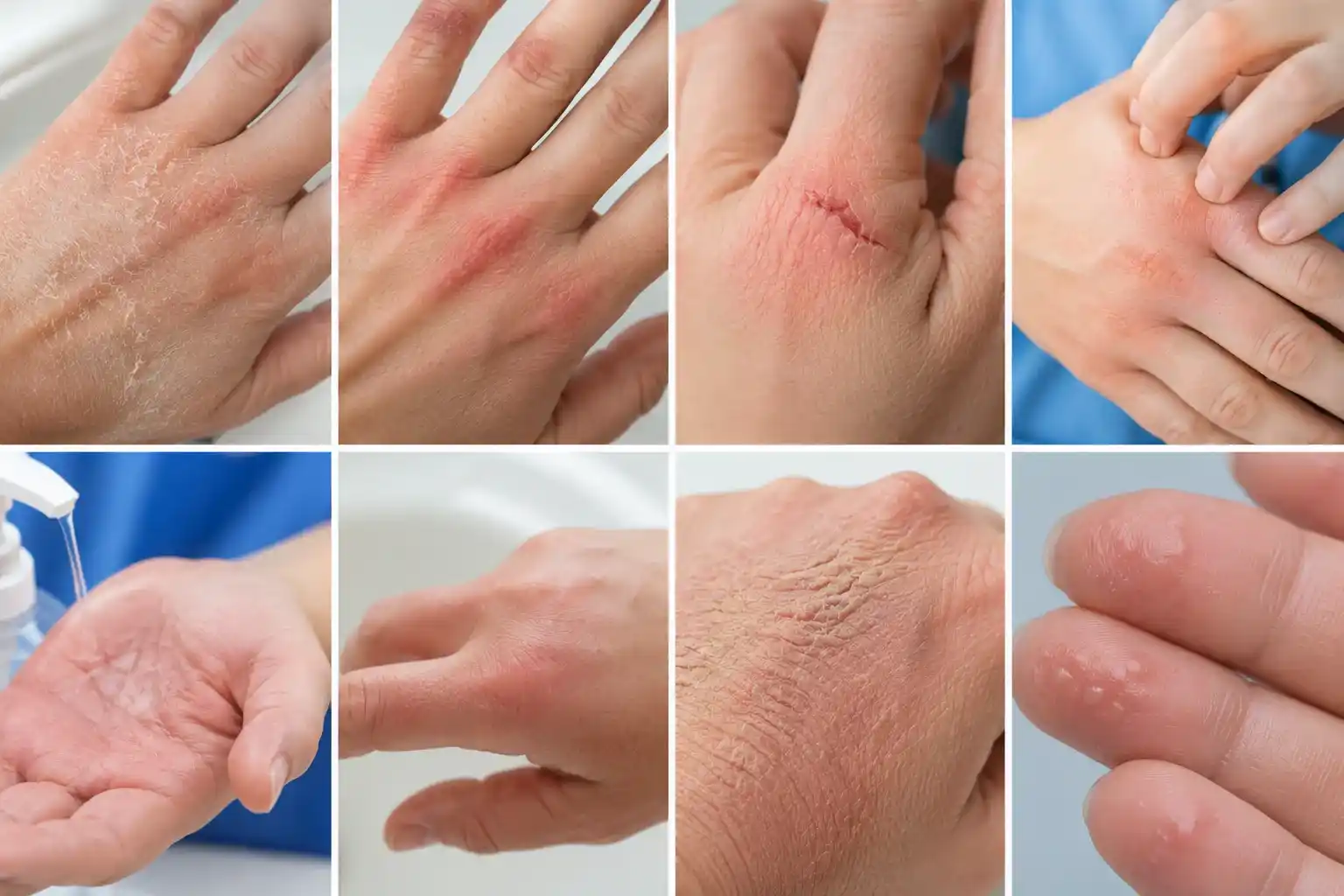
The symptoms of hand dermatitis among nurses can start subtly and worsen over time. Common signs include:
- Dryness and flaking on the hands, especially after glove removal.
- Redness, often on the knuckles or between the fingers.
- Cracks or fissures that deepen with continued exposure.
- Itching, from mild to persistent.
- Stinging or burning, usually after soap or sanitizer contact.
- Swelling in more irritated areas.
- Thickened, leathery skin in long-term cases.
- Small blisters on the palms or sides of the fingers.
How Hand Dermatitis in Nurses Is Diagnosed and Evaluated
Diagnosing hand dermatitis usually involves a combination of medical history and physical examination rather than a single test. A dermatologist or healthcare provider typically follows these steps:
- Reviewing symptom history: When symptoms started, how often they flare, and whether they improve on days off work.
- Physical examination: Checking the location, pattern, and appearance of affected skin.
- Work exposure assessment: Discussing handwashing frequency, glove use, and contact with chemicals or disinfectants.
- Patch testing: Used to identify specific allergens if allergic contact dermatitis is suspected.
- Ruling out other conditions: Confirming the issue isn’t a fungal infection, psoriasis, or another unrelated skin disorder.
- Skin biopsy: Rarely needed, but may be used in unclear or persistent cases.
Prevention Tips for Hand Dermatitis
Most nurses don’t think about hand care until symptoms already show up, but a few small changes made early can save a lot of discomfort later. The good news is that prevention doesn’t require an overhaul of your daily routine, just smarter choices around the products and habits already part of your shift.
Choosing the Right Hand Hygiene Products
- Use a fragrance-free, alcohol-based hand rub when hands aren’t visibly soiled, since it’s generally gentler on skin than repeated soap and water washing.
- Reserve soap and water for times when hands have visible contamination, such as contact with blood or bodily fluids.
- Avoid scented or dyed hand cleansers, which can add unnecessary irritation.
Selecting Gloves Wisely
- Choose non-powdered gloves, since powder can increase skin irritation.
- Consider nitrile gloves if a latex sensitivity is suspected or confirmed.
- Avoid vinyl gloves for tasks involving direct contact with bodily fluids, as they offer less protection.
- Skip petroleum-based creams under latex gloves, since they can weaken the material.
- Wear thin cotton gloves underneath standard gloves during extended wear (over 20 minutes) to reduce sweat-related irritation.
Building a Simple Skin Care Routine
- Apply a fragrance-free moisturizer after every handwashing session, not just at the end of a shift.
- Keep a small barrier cream at your station for quick reapplication during breaks.
- Pat hands dry gently instead of rubbing, which can add extra friction to already sensitive skin.
Getting Support When Needed
- Speak with an occupational health officer if gloves or products seem to be triggering symptoms.
- Ask about alternative glove options if a current type isn’t working well for your skin.
When to See a Doctor
A little dryness after a shift is normal. Cracked, bleeding skin that won’t heal is not. Knowing the difference helps you decide when self-care is enough and when it’s time to bring in a professional.
- Symptoms last more than two to three weeks despite consistent moisturizing and glove precautions.
- Cracks or fissures deepen or start bleeding.
- Signs of infection appear, such as increased redness, warmth, swelling, or pus.
- Blisters or oozing develop, especially if they spread beyond the original area.
- Pain interferes with daily tasks, like gripping equipment or writing notes.
- Symptoms keep returning even after avoiding known triggers.
- Sleep is disrupted due to itching or discomfort.
A dermatologist or occupational health provider can identify the exact type of hand dermatitis involved and recommend a treatment plan suited to the cause.
Conclusion
Hand dermatitis is a common, manageable part of working in healthcare, not a personal failing or something to simply push through. With the right combination of protective habits, suitable products, and timely medical attention when needed, most nurses can keep symptoms under control while continuing the hands-on work their patients depend on.
If skin changes persist or worsen despite consistent care, a healthcare provider or dermatologist can offer a clear path forward tailored to the specific cause. Taking hand health seriously isn’t just about comfort. It’s part of maintaining the strength and readiness needed for the work itself.
Frequently Asked Questions
Is hand dermatitis contagious?
No. It’s not caused by an infection and cannot spread to coworkers or patients through contact. It develops from the skin’s own reaction to irritants or allergens, not from a transmissible organism.
Can wearing rings make hand dermatitis worse?
It can. Rings, especially those made from cheaper metals containing nickel, may trap soap and cleaning products underneath, leading to increased irritation. Removing rings before handwashing or wet tasks can help reduce this risk.
Does hand dermatitis get worse in certain seasons?
Many nurses notice flare-ups during colder months, when indoor heating and cold outdoor air both pull moisture from the skin, making it more reactive to hospital-grade soaps and sanitizers.
Does hand dermatitis count as a workplace injury?
It’s typically classified as an occupational illness rather than a standard injury, and many cases are eligible for workers’ compensation if the condition was caused or worsened by job duties. Coverage rules vary by state and employer, so it’s worth checking with HR or an occupational health department to confirm eligibility
Disclaimer: This article is intended for general educational purposes and does not replace personalized medical advice. Consult a licensed healthcare provider for diagnosis and treatment specific to your situation.