
Why Workplace Burnout Needs More Than Self-Care to Improve
Workplace burnout is often treated as a personal problem with a personal solution: get more sleep, take a break, exercise, or make time for yourself. Those habits can support recovery, but they do not address every factor that contributes to burnout.
Heavy workloads, limited control, understaffing, poor communication, and a lack of support can all contribute to workplace stress and burnout. When those conditions remain unchanged, self-care alone may not be enough. Real improvement also requires looking at the workplace itself and asking what needs to change.
Workplace Burnout Is More Than Feeling Tired
The WHO does not recognize it as a medical condition. A busy work week does not necessarily mean burnout, and a late submission alone may not reveal it to your manager.
Someone experiencing emotional burnout at work may feel exhausted by tasks they once handled without difficulty. Difficulty concentrating, sleep problems, and general discomfort can also stem from other causes.
Where Self-Care Helps With Workplace Burnout and Where It Stops
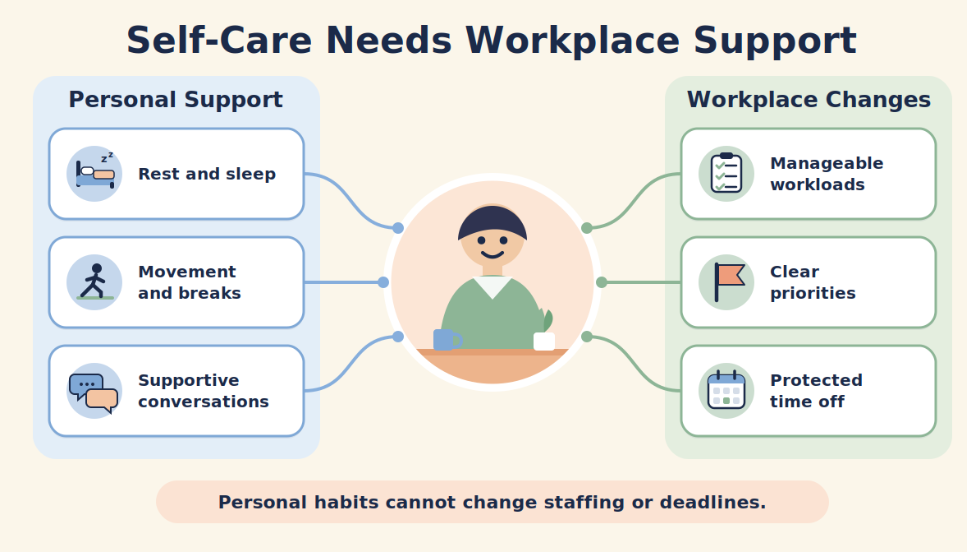
A meaningful approach to burnout should look beyond self-care and address both individual needs and workplace conditions. Sleep, physical activity, relaxation, and socializing with trusted individuals are some healthy ways to relieve pressure. Employees should have free access to these opportunities, without having to rely on them exclusively to cope with work-related stressors.
When offered in the workplace, stress management training can help employees recognize potential stressors and communicate when they need support. It can also allow employers to identify workplace factors that may be contributing to ongoing stress and consider appropriate changes.
| Work problem | Personal support | Employer action |
| Work exceeds available hours | Rest and regular breaks | Reduce assignments or add coverage |
| Conflicting instructions | Pause to organize concerns | Agree on one set of priorities |
| Messages interrupt time off | Silence routine notifications | Define response hours and emergency coverage |
| Little control over tasks | Discuss preferred ways of working | Clarify which decisions employees can make |
Wellness activities should be considered optional and fitting within paid working hours. Self-care should not become another test of devotion. Personal care and workplace support need to work together.
Feeling overwhelmed by work stress? Use our stress level checker to get a quick snapshot of your current stress level.
Identify the Workplace Factors Behind Burnout
The sources of burnout in the workplace may include high demands, lack of control, unclear expectations, and problematic relationships. A good place to start is by looking at what the job actually demands, including the challenges that may not appear in a job description.
When the Workload Exceeds Available Hours
An unrealistic workload cannot be fixed by simply asking employees to organize the same tasks better. A proper workload review should also account for preparation, meetings, follow-ups, revisions, and regular interruptions.
Check What the Work Actually Requires
Compare scheduled hours with the work you expect to find within. Examine each of the following options:
- Remove any tasks that have lost their usefulness.
- Postpone the due date of work being performed with a new (more flexible) deadline.
- Reduce the complexity of report requirements or other reviews.
- Make sure there is enough coverage for essential work when others are unavailable.
Responsibility Without Enough Control
A lack of autonomy can leave employees responsible for results without enough control over how, when, or in what order they complete their work.
Clarify Decision-Making Boundaries
Managers should clarify which decisions employees can make on their own and which ones require discussion with a manager. Established limits should relate to safety, quality, and customer needs but should also allow for professional discretion.
When Workplace Practices Conflict With Wellness
Organizations should address gaps between their stated values and everyday practices, as these differences can contribute to workplace stress and burnout. For example, a company cannot promote a culture of rest while praising employees for answering emails late at night.
Review What the Workplace Rewards
Consider praise, promotions, plus performance reviews. Wonder if:
- Hard work in the required hours is rewarded.
- Employees can question a deadline without being branded a troublemaker.
- Managers follow the same rules about rest and after-hours availability that they recommend to employees.
Turn Workplace Burnout Support Into Daily Actions
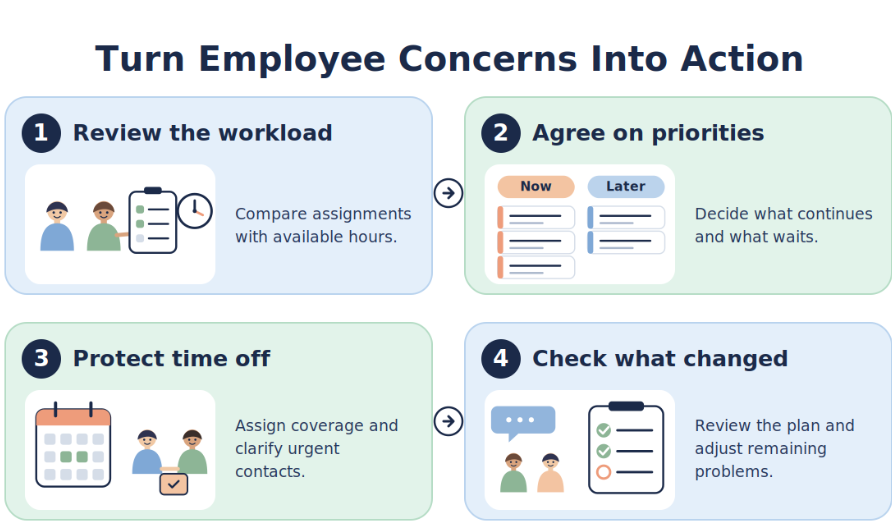
Effective employee burnout prevention should change something employees can identify in their working week. A supportive conversation is a start, but it needs a decision, an owner, and a review date.
Practical advice for managers on employees’ work is based on questions about the work itself: Which assignment is taking longer than expected? What is waiting for your approval? Which competing requests need your decision?
From here, managers can take specific actions:
- Identify the top priority and pause work that gets in the way.
- Designate someone to solve an approval roadblock rather than asking for progress reports.
- Confirm revised deadlines with everyone affected so the employee does not have to negotiate alone.
This is where organizational responsibility for burnout becomes practical. When staffing or budgets sit beyond a supervisor’s control, senior leaders need to address them. Asking the supervisor to be more understanding cannot replace a resource decision.
Addressing workplace burnout also requires making trade-offs clear to everyone involved. If one deadline is non-negotiable, the leader should specify which other commitment must be modified. Otherwise, the employee has to take on the responsibility of deciding, which takes the issue out of the leader’s hands.
Document these decisions where requesters can easily see them, especially when managers make changes that support healthier workloads.
Turn Workplace Boundaries Into Clear Procedures
Advice about healthy boundaries at work needs an agreement about what happens when a request crosses them. Employees should not have to make a fresh case for personal time every evening.
Finally, teams can agree on their regular working hours, how they will handle true emergencies, and who will be on call. If the job description requires being on-call, it is essential to clarify responsibilities and procedures for handing over duties in case of absence.
Before someone goes on leave, make sure their essential tasks have a clear owner. The people covering those tasks should have the skills and time to handle them. It also helps to decide who will handle questions or requests while they are away.
Make Mental Health Support Private and Accessible
Supporting employee mental health does not always require sharing personal health information. Someone may be comfortable discussing workload or deadlines without discussing their health. Managers can focus on the work-related concerns and offer support without asking for details about a person’s condition or treatment.
The company should make sure employees know what support is available and how to access it. For example, employers can provide contact information for an employee assistance program or occupational health service, if available.
Individuals need to know what information they may share voluntarily and how the company will protect their right to privacy if they decide to use those services. The conversation about self-care and burnout should also acknowledge diverse situations, considering people’s financial and family needs, and health conditions.
Professional help may be appropriate when distress persists or affects daily functioning. Access to that help should go hand in hand with action on working conditions.
Plan a Gradual Return After Burnout
Don’t measure burnout recovery by how quickly someone resumes all their responsibilities. Before they return to work, agree on their initial responsibilities and how you’ll communicate during the transition.
The plan for returning to work should be based on answering the following questions:
- What responsibilities can the person undertake during the first days?
- Who will handle the duties not included in the transition plan?
- When can the employer and employee discuss if the new expectations are appropriate?
If someone returns to an unrealistic workload, their time away may not provide the recovery they need. The manager and employee should review the plan during the first week back and adjust it as needed, giving the employee space to raise concerns without feeling judged on performance.
Follow Up on Workplace Changes
Review the changes after they are put in place to make sure they are actually working. Have deferred tasks been brought back? Were unnecessary meetings canceled? Was the extra workload reassigned to someone else?
Conclusion
Workplace burnout often requires more than a change in personal habits. Rest, exercise, and self-care can help people manage stress, but they cannot fix an unmanageable workload, unclear priorities, or a lack of support at work. Employers also need to address the workplace conditions that contribute to burnout. This may include reducing unnecessary tasks, setting clear priorities, and protecting time for rest and personal activities. The goal is to create a work routine that leaves enough room for recovery and makes it easier for employees to maintain their well-being over time.
References
- World Health Organization. Burn-out as an occupational phenomenon. Definition and classification of burnout.
- World Health Organization. Mental health at work. Workplace risks, organizational factors, and support measures.
- Mayo Clinic. Job burnout: How to spot it and take action. Signs of burnout, self-care approaches, and when to seek professional help.
- SterlingNext. Manager actions to reduce burnout. Practical considerations for workload management and workplace support.
Author’s bio
Pavitra K writes for SterlingNext about workplace well-being, professional development, and everyday work challenges. Her articles focus on clear, practical ways to understand work-related stress, improve team support, and build healthier working habits.
Disclaimer: This article is for general information only and does not replace professional medical or mental health advice.