Burnout in Healthcare Jobs: Tragic End of the White Coat
Burnout in healthcare jobs is one of those problems that often stays hidden behind a calm face, a professional tone, and a white coat. From the outside, healthcare work looks like strength, service, and commitment. But for many healthcare professionals, the reality feels much heavier than most people ever see.
If you work in healthcare, you may know this feeling well—showing up for others even when you feel empty yourself. You keep moving from one responsibility to the next because patients need you, your team depends on you, and there is rarely enough time to pause and breathe.
This is why burnout in healthcare jobs matters far beyond individual stress. It affects the people who provide care, the patients who depend on them, and the healthcare system that expects human beings to perform under constant pressure. Behind every white coat is not just a professional role, but a person trying to stay strong in a demanding environment.
This blog explores what healthcare burnout really means, why it has become such a serious issue, how it affects patient care, and what can be done to protect the people who spend their lives protecting others.
What Is Burnout in Healthcare Jobs?
Burnout in healthcare jobs is a work-related condition where constant pressure starts to affect how healthcare professionals feel, perform, and connect with their work. It is more than normal tiredness after a long shift. It is the kind of strain that builds when a person keeps providing care, attention, and emotional energy without enough time to recover.
According to the World Health Organization, burnout is linked to chronic workplace stress that has not been successfully managed. In healthcare, this idea becomes very real because medical workers are not only handling tasks; they are caring for people in moments of pain, fear, and uncertainty.
Think of a nurse moving from one patient room to another, a doctor explaining difficult news to a family, or an emergency team staying focused during a critical case. These roles require skill, patience, and emotional control. Over time, that level of responsibility can make the job feel heavier than it looks from the outside.
At its core, burnout in healthcare jobs means the person behind the white coat is struggling to keep going in a system that constantly expects strength, focus, and compassion.
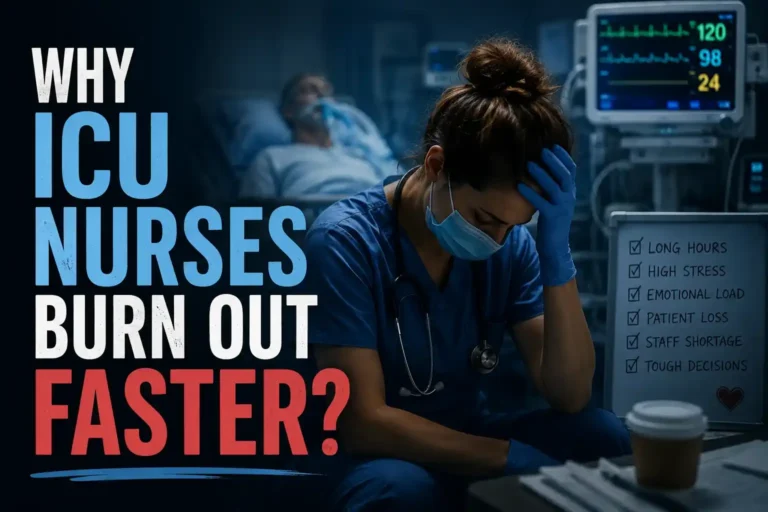
If you are an ICU nurse, this guide explains why burnout hits critical care nurses harder than most.
How Common Is Burnout in Healthcare?
Burnout in healthcare is still a serious issue in 2026. The numbers are better than they were during the worst years of the pandemic, but they still show that many healthcare professionals are working under heavy pressure.
According to the American Medical Association, 41.9% of physicians reported at least one symptom of burnout in its latest national physician comparison data, published in April 2026. That means nearly 4 out of every 10 doctors are still dealing with burnout-related strain. The same AMA report also found that burnout is not equal across every specialty. Emergency medicine reported one of the highest rates at 49.8%, followed by urological surgery at 49.5% and hematology/oncology at 49.3%.
The AMA also reports that physicians in training are not untouched by this issue. In its April 2026 resident physician data, 28.6% of residents and fellows reported burnout symptoms. This was based on responses from more than 3,000 resident and fellow physicians across 20 states and 29 organizations. In simple terms, burnout can start early in a medical career, long before someone becomes an attending physician.
Nurses are feeling this pressure too. According to the 2026 State of Nursing report released by Cross Country Healthcare and Florida Atlantic University, burnout among nurses rose from 39% in 2022 to 67% in 2026. The report was based on insights from more than 2,000 nurses and nursing students across the United States. That number is especially important because nurses are often the people patients see the most during care.
Burnout in healthcare is common enough that it cannot be treated like a rare personal struggle. The latest data shows that burnout is affecting doctors, physicians in training, and nurses across the healthcare system. Behind these numbers are real people trying to provide care while carrying a level of pressure that many patients never see.
If you are unsure whether burnout can improve, read our guide on whether burnout is permanent.
What are the Causes of Burnout in Healthcare?
Healthcare burnout usually comes from a mix of workplace pressure, emotional demand, and system-level problems. It is not about one difficult day. It is about a work environment that keeps asking medical staff to do more with limited time, energy, and support.
Some of the main causes include:
Long and unpredictable work hours
Many healthcare professionals work long shifts, night duties, overtime, or on-call schedules. When the body and mind do not get enough rest, even meaningful work can start to feel exhausting.
Heavy workload
Doctors, nurses, and other medical staff often care for many patients in a limited amount of time. The pressure to move quickly while staying accurate can make the job feel overwhelming.
Emotional pressure from patients and families
Healthcare workers often meet people during some of the hardest moments of their lives. A nurse may help a patient in pain, comfort someone scared, answer a family’s repeated questions, and then move straight to the next room without time to reset emotionally. Families are usually worried and looking for quick updates, which is understandable, but that added pressure can make an already demanding shift feel even heavier.
Staff shortages
When there are not enough team members, the remaining staff often have to take on extra responsibilities. This can make the workday feel rushed, stressful, and harder to manage.
Too much paperwork
Charting, documentation, insurance forms, and electronic health records can take a lot of time. The National Academy of Medicine explains that administrative burden can pull clinicians away from direct patient care, which is often the most meaningful part of their work.
Lack of control
Burnout can grow when healthcare workers have little say in their schedules, workload, staffing, or daily workflow. The U.S. Surgeon General has also pointed out that burnout is often connected to workplace systems, not just personal stress.
High responsibility with little room for error
Healthcare work requires focus, quick thinking, and careful decisions. When someone is expected to stay calm and accurate under constant pressure, the mental load can become very heavy. In simple words, healthcare workers are burned out because many are expected to provide care, patience, focus, and emotional strength every day without always receiving enough support in return.
Related: Can You Die from Overworking?
Healthcare Worker Burnout Symptoms
Burnout can be challenging to notice in healthcare because many medical workers are used to pushing through hard days. They may keep caring for patients, answering questions, and completing tasks while feeling completely drained inside.
According to the World Health Organization, burnout is often linked with three work-related signs: exhaustion, mental distance from the job, and a reduced sense of professional effectiveness.
Common healthcare worker burnout symptoms include:
▫ Constant exhaustion: Feeling drained before the shift even starts, even after rest.
▫ Physical stress signs: Headaches, muscle tension, stomach discomfort, body aches, or a racing heartbeat.
▫ Emotional distance: Feeling disconnected from work that once felt meaningful.
▫ Negative thoughts: Thinking, “Nothing I do is enough” or “This job is taking too much from me.”
▫ Trouble concentrating: Finding it harder to stay focused, remember details, or move smoothly between tasks.
▫ Feeling less effective: Questioning your skills or feeling like your work no longer makes a difference.
▫ Loss of motivation: Caring about patients but feeling less hopeful or connected to the purpose of the job.
▫ Sleep problems: Struggling to fall asleep, waking up often, or feeling tired even after sleeping.
▫ Mood changes: Becoming more impatient, sensitive, frustrated, or emotionally overwhelmed.
These symptoms do not always appear all at once. For many healthcare workers, burnout starts with one or two warning signs and slowly becomes harder to ignore. Recognizing these signs early matters because burnout is easier to address before it affects a person’s health, work, and daily life.
Related: Stages of Burnout: Why Waiting to Act Is a Costly Mistake
Consequences of Burnout in Healthcare
Burnout in healthcare does more than affect how someone feels during a shift. Over time, it can influence work performance, job stability, and the overall team environment.
Common consequences of burnout in healthcare include:
→ Lower job satisfaction: Healthcare professionals may feel less fulfilled by their role, even if they still care about the work. Research on healthcare burnout connects burnout with lower job satisfaction and weaker commitment to the organization.
→ Reduced work performance: When burnout continues, it can affect productivity, professionalism, and the quality of daily work. This does not mean healthcare workers are careless; it means the work environment is putting too much strain on them for too long.
→ Higher absenteeism: Burnout can lead to more missed workdays, sick leave, or difficulty keeping up with regular work demands. This can place extra pressure on the remaining team members.
→ Increased turnover: One of the biggest consequences of burnout in healthcare is that workers may leave their role, switch departments, reduce their hours, or leave the profession completely. Studies have linked burnout with turnover among healthcare workers and clinicians.
→ Weaker team morale: When several people on a healthcare team are burned out, the workplace can feel more tense, rushed, and less supportive. This can affect communication, teamwork, and trust among staff.
→ Career regret: Some healthcare professionals may begin questioning whether they chose the right field. The National Academy of Medicine lists career regret as one of the serious consequences connected with clinician burnout.
→ Workforce instability: When burnout leads to absenteeism, turnover, and low engagement, the whole organization feels the impact. Staffing becomes harder, remaining workers carry more pressure, and the cycle becomes difficult to break.
The consequences of burnout in healthcare are serious because they go beyond one person’s bad day. Burnout can weaken careers, teams, and healthcare organizations. That is why it should be treated as a workplace issue, not just a personal struggle.
Related: Can Burnout Cause Fatigue?
How Burnout Affects Patient Care
Burnout can affect patient care because healthcare depends on focus, communication, patience, and clear decision-making. When the care environment becomes overloaded, every step of the patient experience can feel more rushed and harder to manage.
Common ways burnout can affect patient care include:
➤ Less clear communication: A rushed nurse may answer a family’s question quickly, but not have enough time to explain the full care plan calmly.
➤ Missed details: A tired clinician may have a harder time catching a small change in a chart, lab result, or handoff note. In healthcare, small details can matter.
➤ Lower patient satisfaction: Patients may feel ignored or unheard when staff members are overwhelmed, even if the staff is doing their best.
➤ Less emotional presence: A doctor or nurse may still provide the right care, but the interaction may feel colder or more rushed to the patient.
➤ Higher safety risks: The AHRQ (Agency for Healthcare Research and Quality) notes that clinicians with burnout are more likely to rate patient safety lower and report mistakes or substandard care.
➤ Weaker care experience: According to the National Academies, clinician burnout can jeopardize patient care, which is why healthcare systems need to address it at the workplace level.
For example, imagine a nurse who is caring for several patients at once. One patient needs pain medicine, another family is asking for updates, and a new admission arrives at the same time. The nurse may still be skilled and caring, but the pressure can make it harder to give every patient the time, attention, and reassurance they need.
In simple terms, burnout affects patient outcomes because the quality of care depends on the people providing it. When healthcare professionals are supported, rested, and respected, patients are more likely to receive safer, clearer, and more compassionate care.
Check your stress level in 2 minutes with our free stress level checker.
How to Prevent and Reduce Healthcare Burnout
Healthcare burnout cannot be fixed by telling workers to “be more positive” or “take a day off.” Real prevention starts when healthcare organizations make the job more manageable, and workers have practical support they can actually use.
Effective healthcare worker burnout solutions include:
▸ Improve staffing plans: Hospitals and clinics should build staffing models that match real patient volume, not just minimum coverage.
▸ Make schedules more realistic: Rotating shifts, back-to-back duties, and overtime should be planned carefully so workers have enough recovery time between shifts.
▸ Reduce unnecessary paperwork: Streamlining documentation, improving electronic health record systems, and removing duplicate tasks can give clinicians more time for meaningful care.
▸ Train supportive leaders: Managers should know how to recognize workplace strain, listen without blame, and respond before problems grow.
▸ Offer confidential mental health support: Healthcare workers need easy access to counseling, peer support, and crisis resources without fear of judgment or career damage.
▸ Create safe reporting systems: Staff should be able to report unsafe workloads, workflow problems, or workplace concerns without retaliation.
▸ Build team-based support: Regular check-ins, debriefs after difficult cases, and peer support groups can help workers feel less isolated.
▸ Give workers more voice in decisions: Healthcare professionals should have input on workflow, staffing concerns, scheduling, and process changes that affect their daily work.
▸ Protect real break time: Breaks should not exist only on paper. Workers need protected time to eat, hydrate, pause, and reset during demanding shifts.
▸ Encourage realistic self-care: Self-care matters, but it should be practical. Sleep, hydration, boundaries, movement, and time away from work can help, but they work best when the workplace also supports recovery.
The best way to reduce burnout in healthcare is to treat it as both a personal and organizational issue. Healthcare workers can build healthy coping habits, but hospitals, clinics, and leaders must also create conditions where people can do their jobs without being pushed beyond their limits.
Related: Can the 42% Rule for Burnout Actually Save Your Day?
FAQs About Burnout in Healthcare Jobs
Why should hospitals take burnout seriously?
Hospitals should take burnout seriously because it affects staff retention, workplace culture, care quality, and long-term workforce stability. Supporting healthcare workers is not only good for employees; it also helps the entire healthcare system work better.
What are the top 3 causes of nurse burnout?
The top three causes of nurse burnout are usually unsafe staffing levels, heavy patient loads, and emotional pressure from caring for patients and families in difficult situations. These challenges can make nursing harder to sustain, especially when support is limited.
Can healthcare burnout happen even if someone loves their job?
Yes. A healthcare worker can love helping patients and still feel burned out. Passion does not protect someone from constant pressure, limited recovery time, or a stressful work environment.
Why does the “white coat” hide burnout?
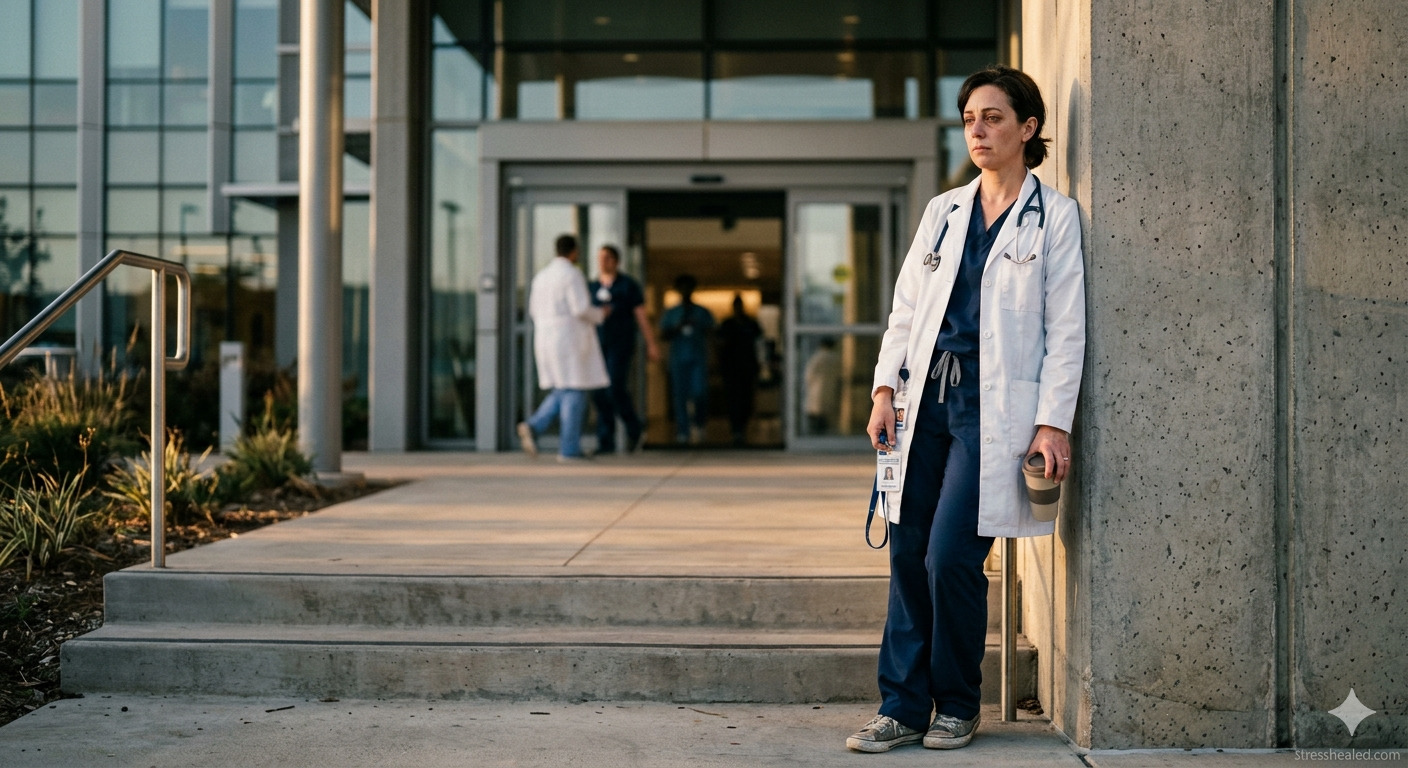
The white coat often represents strength, trust, and professionalism. But it can also hide the human side of healthcare workers—the stress, pressure, and emotional weight they may carry behind the role.
Related: How Exercise Helps Reduce Workplace Stress
Bottom Line
Healthcare burnout is a serious signal that something in the work environment needs attention. It is not about one tired worker or one stressful shift; it reflects a deeper gap between the demands of healthcare work and the support available to the people doing it.
Addressing burnout means protecting the future of healthcare itself. When hospitals, leaders, and teams take this issue seriously, they help build a workplace where skilled professionals can stay, grow, and continue doing meaningful work without being pushed past their limits.
Medical Disclaimer: This article is for informational purposes only and is not a substitute for professional medical advice, diagnosis, or treatment. If you are struggling with severe stress, burnout, depression, or thoughts of self-harm, please contact a qualified healthcare professional or emergency support right away.
Want to share your voice with our readers? Visit our Write for Us page to submit your guest post idea.
◆ References
- American Medical Association—Physician burnout rates are falling; specialty gaps remain
- American Medical Association—Latest data shows a 28.6% burnout rate among resident physicians
- Cross Country Healthcare & Florida Atlantic University—Purpose Under Pressure: The State of Nursing in 2026
- World Health Organization — Burn-out as an Occupational Phenomenon
- U.S. Surgeon General—Health Worker Burnout Advisory
- AHRQ Patient Safety Network—Burnout
- AHRQ Patient Safety Network—Burnout Among Health Professionals and Its Effect on Patient Safety
- National Academies—Taking Action Against Clinician Burnout
- National Academy of Medicine—Clinician Burnout: A Crisis in Health Care