
Can Burnout Cause Fatigue? Fix It Now or Lose Everything You Worked For
Photo by Jackson Simmer on Unsplash
Fatigue is when you feel low on energy and just don’t seem to bounce back, even after rest or time off. It’s not just normal tiredness after a busy day—it’s that feeling where your body and mind don’t really recover the way they should. In discussions of prolonged stress exposure, a key question arises: can burnout cause fatigue? Yes. Evidence in occupational health research indicates that sustained psychological stress can interfere with normal recovery mechanisms, leading to ongoing physical and mental fatigue that is not fully relieved by rest alone.
In more advanced cases, burnout can cause severe fatigue when prolonged stress continuously disrupts the body’s recovery systems, leading to persistent and intense physical and mental exhaustion that does not improve with rest.
Are you just busy or actually overstressed? Find out by using our free stress level checker tool in just 2 minutes.
What Are The Burnout Fatigue Symptoms?
Burnout fatigue often becomes noticeable in how a normal workday feels and unfolds, rather than through a single obvious sign. Many employees start the day with the intention to perform normally, but notice that their pace slows earlier than expected, and tasks require more mental effort to get started or completed.
1. Energy levels stay low even after sleep or time off, making it difficult to feel fully refreshed for work.
2. Attention drifts easily during work activities, and it becomes harder to stay fully engaged in conversations or tasks.
3. Processing information takes more time, which can affect decision-making and everyday work efficiency.
4. Simple or familiar tasks begin to feel heavier and require more mental effort than before.
5. Energy rises and falls unpredictably, making it difficult to maintain steady performance throughout the day.
6. Longer or more detailed work becomes harder to sustain, leading to quicker mental fatigue.
7. Tasks may take longer to complete, and overall work performance may gradually decrease.
8. Interest and drive in daily tasks decrease, making it harder to start or finish work consistently.
9. Standard job demands start to feel more challenging even when the workload remains the same.
10. Work performance becomes less stable, with noticeable variations in focus, speed, and output.
11. Feeling physical heaviness or muscle fatigue during or after routine activities, where even normal physical effort may start to feel more tiring than usual.
Recommended Reading: Before It Gets Worse: The Stages of Burnout You Need to Know.
Difference Between Burnout and Fatigue
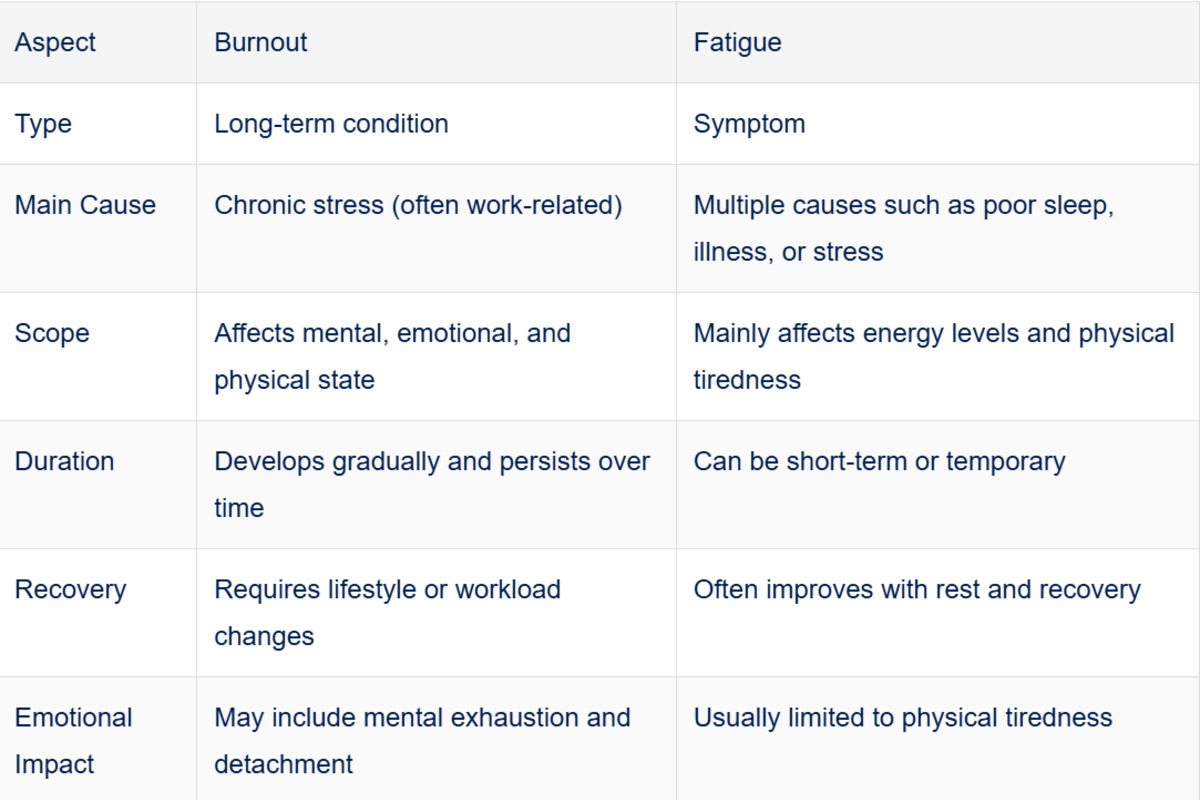
Burnout and fatigue are often confused, but they are not the same thing. Understanding the difference helps clarify whether you are dealing with a temporary lack of energy or a deeper, long-term stress-related condition.
The comparison below breaks down how both conditions differ in nature, causes, and impact.
Can Burnout Contribute to Compassion Fatigue?
When someone is dealing with ongoing burnout, their emotional and mental capacity gradually becomes limited, especially in roles that require constant empathy and support for others. Over time, it becomes harder to stay emotionally present, even when the person genuinely cares about their work or the people they’re helping.
For example, imagine a nurse working long shifts in a busy hospital. At first, they may feel tired but still emotionally engaged with patients. But after weeks or months of high pressure with little recovery time, they may start feeling emotionally drained, less responsive, or even detached—not because they don’t care, but because their internal capacity is overloaded. This is where burnout can begin to overlap with compassion fatigue, especially in caregiving or people-centered professions where emotional output is constant.
In simple terms, when burnout continues for too long, it can reduce emotional resilience, making it more difficult to consistently empathize and connect with others in demanding environments.
Recommended Reading: Can You Die from Overworking?: Death by Desk Statistics.
Strategic Steps to Reverse Burnout Fatigue
Recovering from burnout fatigue is a gradual process, not a quick fix. It usually starts with noticing how your energy is being used throughout the day and where it is not being restored properly. Many people begin to improve once they honestly recognize when they are operating beyond a sustainable level, rather than pushing through it automatically.
Understanding Your Energy Balance
From there, it becomes important to understand your overall energy balance. If most of your time is spent in constant output with very little recovery, the system slowly wears down. This is where reflecting on patterns like the 42% rule can help, as it highlights how long-term imbalance between effort and recovery can quietly lead to exhaustion.
Accepting That Recovery Is Possible
It also helps to realize that burnout is not always permanent. Often, people recover once they start making steady adjustments in how they manage workload, rest, and daily pressure. The key is consistency, not dramatic change.
Related: How Long Does Burnout Last?
Acknowledging the Impact of Long-Term Overwork
At the same time, it’s important to acknowledge the role of long-term overwork. When pressure continues without enough recovery, it doesn’t just affect productivity—it slowly reduces both mental and physical resilience.
Supporting Recovery Through Daily Habits
Finally, recovery improves when daily habits support the body instead of draining it further. Simple changes in routine, combined with light movement and better recovery time, can gradually help restore energy and improve how you handle stress.
Related Blog: How Exercise Helps Reduce Workplace Stress
Frequently Asked Questions (FAQs)
How to Use the “3 P’s” to Overcome Daily Exhaustion?
The “3 P’s” approach—pace, prioritize, and pause—helps manage daily exhaustion by balancing effort and recovery. Pacing means spreading tasks throughout the day instead of overloading yourself at once. Prioritizing focuses your energy on the most important tasks rather than trying to do everything at the same time. Pausing reminds you to take short breaks so your mind and body can reset before fatigue builds up.
Which organ suffers from fatigue the most?
Fatigue is not limited to a single organ, but it is most strongly linked to the brain and nervous system. When the brain is under prolonged stress or overwork, it affects focus, energy regulation, and overall mental clarity. The muscles can also feel fatigued because the nervous system controls how the body responds to physical effort, especially when recovery is not sufficient.
How Occupational Therapy (OT) Helps You Reclaim Your Energy
Occupational therapy helps people rebuild energy by improving how they manage daily activities. It focuses on creating balanced routines, reducing unnecessary strain, and teaching practical ways to conserve energy throughout the day. OT also helps individuals adjust their work and lifestyle habits so they can function more efficiently without feeling constantly drained.
Medical Disclaimer: This content is for informational purposes only and is not intended as medical advice, diagnosis, or treatment. Always consult a qualified healthcare professional for personalized guidance regarding your health condition.
If you’d like to contribute or share your expertise, you can visit our Write for Us page to submit your article.