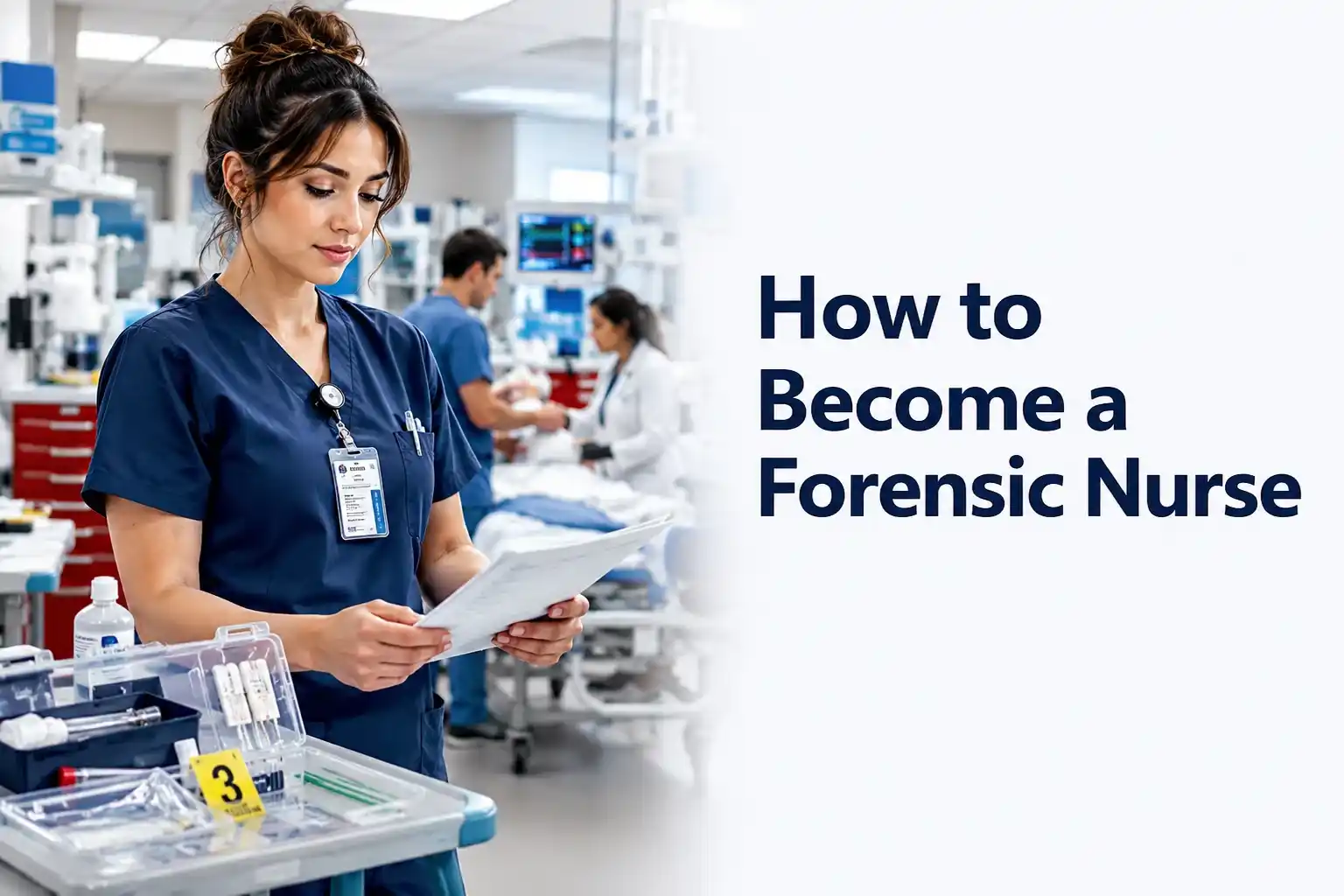
How to Become a Forensic Nurse: A Complete Step-by-Step Guide (2026)
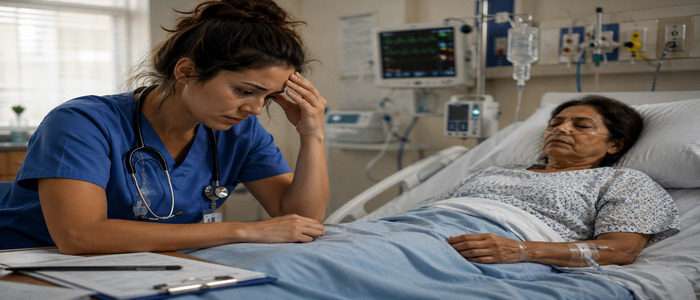
A nurse walks into an emergency room at 2 AM. A 26-year-old sits alone in a curtained exam bay. She reported a sexual assault an hour ago. She is scared, in pain, and unsure whether anyone truly believes her. The nurse who enters that room, speaks to her gently, collects evidence wisely, and advocates for her needs both medically and legally is a forensic nurse.
Forensic nursing is a specialized nursing practice that combines clinical care with legal science. A forensic nurse provides medical treatment to victims of violence, abuse, and trauma while simultaneously collecting and preserving evidence for use in legal proceedings.
They serve as a bridge between the healthcare and the justice system. That dual role makes forensic nursing one of the most meaningful and impactful careers in the nursing profession.
How to Become a Forensic Nurse is a question many nurses ask when searching for a career that combines patient care, victim advocacy, and legal responsibility. The American Nurses Association (ANA) recognized forensic nursing as a nursing specialty, giving the field greater professional credibility and recognition.
Forensic nurses are also known as forensic nurse examiners or forensic clinical nurse specialists, depending on their setting and specialty area.
What Are the Daily Responsibilities of a Forensic Nurse?
A forensic nurse’s day is very different from a typical nursing shift. They care for patients while also collecting evidence and documenting important details for legal cases. On any given day, a forensic nurse examiner may:
- Conduct thorough medical forensic examinations on survivors of sexual assault, domestic violence, child abuse, or elder abuse.
- Collect, document, and preserve forensic evidence from a victim’s body in a way that holds up in court.
- Perform trauma-informed interviews to gather case details without re-traumatizing the patient.
- Coordinate care with law enforcement officers, social workers, and hospital staff.
- Provide crisis intervention and emotional support to patients and their families.
- Serve as an expert witness in criminal court proceedings.
- Document injuries using clinical photography and detailed written records.
- Work alongside coroners or medical examiners in death investigation cases.
- Serve human trafficking survivors, individuals behind bars, and psychiatric patients.
Specialized training and clinical experience prepare nurses for this unique role.
Types of Forensic Nurses and Their Specialized Roles
The forensic nursing field is broader than most people realize. Here are the main specializations within forensic nursing:
- Sexual Assault Nurse Examiner (SANE): The most common type of forensic nurse. SANE nurses work directly with survivors of sexual violence. SANE nurses can specialize in either SANE-A (Adult/Adolescent) or SANE-P (Pediatric).
- Forensic Psychiatric Nurse: Provides care to offenders, crime victims, and patients in correctional or psychiatric settings. A strong background in psychiatric nursing is essential.
- Legal Nurse Consultant: Reviews medical records and provides expert opinions on injury-related legal cases. Often works independently or with law firms.
- Death Investigator / Coroner’s Nurse: Assists with investigating suspicious or violent deaths. Works closely with medical examiners, law enforcement, and forensic pathologists.
- Correctional Forensic Nurse: Provides primary care and forensic assessments to jailed individuals, where abuse, self-harm, and violence are common.
- Forensic Clinical Nurse Specialist: An advanced practice role requiring a Master of Science in Nursing (MSN) with a forensic focus. Often leads forensic nursing programs within hospital systems.
- Elder Abuse Nurse: Specializes in identifying and documenting abuse, neglect, and exploitation of older adults, working with adult protective services.
Is Forensic Nursing a Good Career Choice?
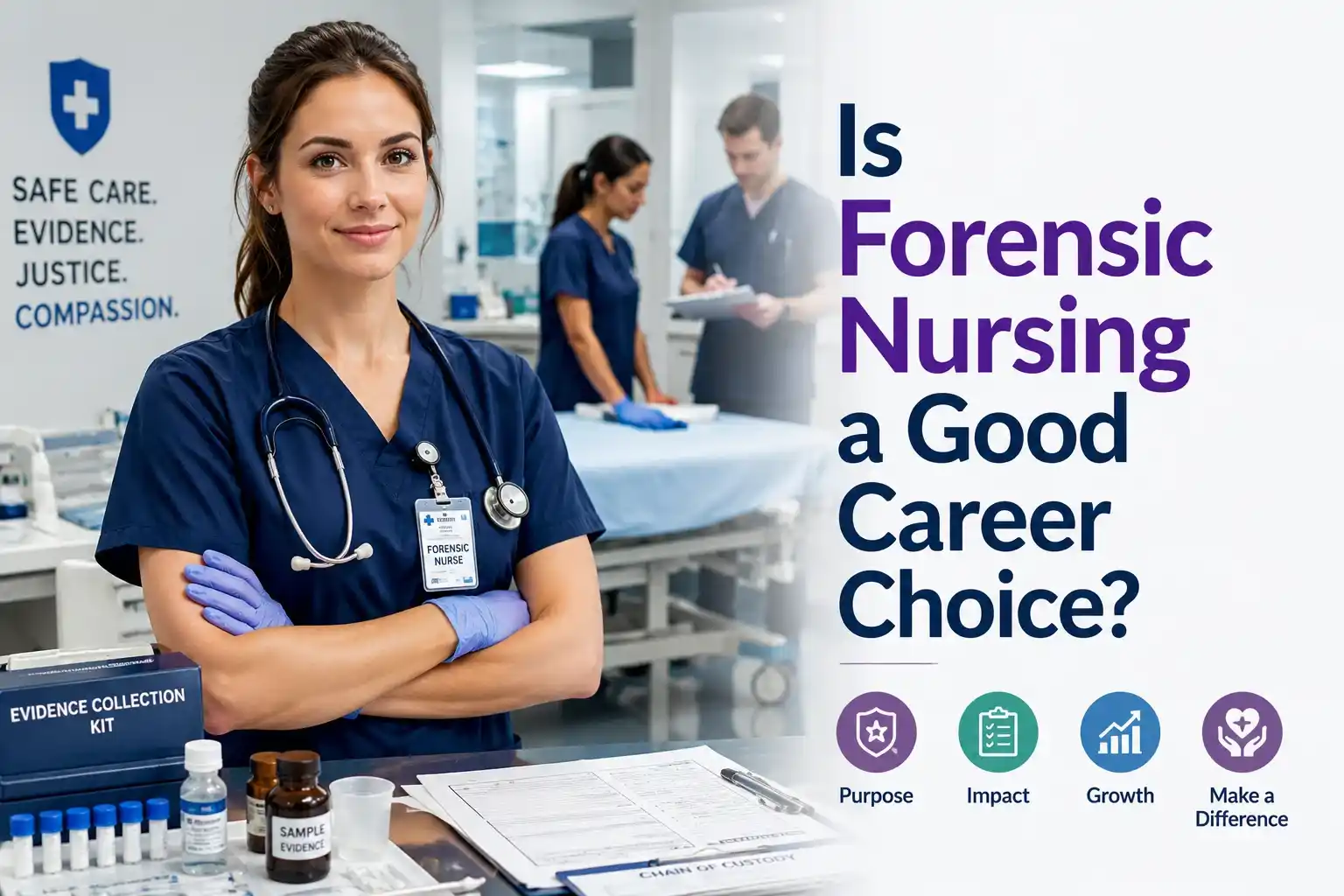
Forensic nursing can be incredibly rewarding, but it also comes with significant emotional challenges. You will support people during some of the most difficult moments of their lives.
Ask yourself these questions before committing to this path:
- Can you hold space for someone in severe trauma without absorbing their pain to the point of breaking?
- Are you able to stay clinically precise during emotionally overwhelming situations?
- Do you have strong personal boundaries and a solid support system outside of work?
- Can you handle detailed documentation, legal accountability, and courtroom testimony?
- Are you committed to ongoing education and professional development in a constantly evolving field?
If most of your answers are yes, forensic nursing could be a great fit. If not, you can build those skills before entering the field. Many nurses explore specialized career paths after experiencing burnout in high-stress clinical environments.
How to Become a Forensic Nurse: Step-by-Step Career Path
Learning how to become a forensic nurse means following a clear educational and professional pathway. There is no single shortcut, but every step builds on the last. Here is the complete roadmap.
Step 1: Earn a Nursing Degree (ADN or BSN)
Your path to becoming a forensic nurse begins with a foundational nursing degree. You have two main options:
Associate Degree in Nursing (ADN):
- Takes approximately 2 or 3 years to complete.
- Allows graduates to sit for the NCLEX-RN exam.
- Some employers in the forensic nursing field prefer a BSN over an ADN.
- May require additional education later to advance your forensic career.
Bachelor of Science in Nursing (BSN):
- Takes approximately 4 years to complete.
- Many forensic nursing employers now prefer this degree.
- Provides stronger preparation for advanced certifications and MSN programs.
- As of 2020, 65.2% of nurses entered the workforce with a bachelor’s degree or higher, and 41% of employers require a BSN for new hires (American Association of Colleges of Nursing).
Which should you choose? If you can commit to a four-year program, the BSN gives you more options and better positioning in a competitive forensic nursing job market. If time or finances make the ADN more realistic, it is still a valid starting point; just be prepared to complete an RN-to-BSN program later.
Choose a nursing program accredited by the Accreditation Commission for Education in Nursing (ACEN) or the Commission on Collegiate Nursing Education (CCNE). Avoid enrolling in an unaccredited program, as it may affect your eligibility for licensure, certification, and future employment opportunities.
Step 2: Pass the NCLEX-RN and Get Your RN License
After completing your nursing degree, you must pass the National Council Licensure Examination for Registered Nurses (NCLEX-RN exam) to obtain your registered nurse (RN) license. This is a national standardized licensing exam administered by the National Council of State Boards of Nursing (NCSBN).
Here is what to know:
- Each state has its own nursing board that issues your RN license.
- You can apply for licensure in the state where you plan to work.
- If your state participates in the Nurse Licensure Compact (NLC), your license may be valid in multiple states simultaneously.
- Your RN license must remain active and in good standing throughout your forensic nursing career.
Without an active RN license, you cannot practice as a forensic nurse in the United States. This step is non-negotiable.
Step 3: Build Clinical Experience (This Step Is Critical)
Before you can qualify for SANE certification or most forensic nursing positions, you need real, hands-on clinical nursing experience. The International Association of Forensic Nurses (IAFN) requires a minimum of two years of RN experience for the SANE-A certification and three years for the SANE-P certification.
The most relevant clinical backgrounds for forensic nursing include:
- Emergency nursing (highest relevance if you see trauma, assault, and violence regularly).
- Obstetrics and gynecology nursing (important for SANE practice).
- Pediatric nursing (especially relevant for SANE-P specialization).
- Psychiatric and mental health nursing (essential for forensic psychiatric roles).
- Medical-surgical nursing (builds broad clinical assessment skills).
Use this time to develop your trauma-informed care skills, sharpen your documentation habits, and build relationships with experienced nurses who can mentor you. Strong assessment and documentation skills often develop while working night shifts as a nurse.
Step 4: Complete a Forensic Nursing Certificate Program or SANE Training
Once you have your RN license and at least two years of clinical experience, you can pursue specialized forensic nursing training. The most common entry point is SANE training.
SANE Training Requirements:
The IAFN’s 2025 Certification Examination Handbook outlines the following minimum requirements for SANE certification eligibility:
- Hold an active, unrestricted RN or APRN license in the United States.
- Have practiced nursing for a minimum of 3 years as a first-level general nurse (or equivalent).
- Complete a 40-hour didactic SANE training course that meets IAFN educational guidelines.
- Complete a SANE clinical preceptorship under a qualified supervisor.
- Log at least 300 hours of clinical practice in sexual assault patient care (as recommended by IAFN).
The 40-hour didactic training is available both online and in-person through hospitals, university programs, state nursing organizations, and the IAFN directly. Clinical hours must be completed in person with supervision.
In 2023, the IAFN received 1,433 applications for SANE certification, a 49% increase from the previous year and the highest number in the organization’s history. This growth signals strong career momentum in this field.
Step 5: Sit for Your Forensic Nursing Certification Exam
After completing your training and meeting all eligibility requirements, you are ready to pursue board certification. The most recognized forensic nursing credentials include SANE-A, SANE-P, and AFN-BC (Advanced Forensic Nursing-Board Certified).
- SANE-A and SANE-P exams are computer-based, consist of 150 multiple-choice questions, and are offered twice per year in April and September through IAFN-designated testing centers.
- Certification is valid for 3 years and requires renewal through continuing education (at least 45 CE hours in forensic or sexual assault nursing.
- The AFN-BC credential through the American Nurses Credentialing Center (ANCC) is designed for nurses practicing across the broader scope of forensic nursing.
Getting certified significantly improves your job prospects, your earning potential, and your credibility.
Step 6 (Optional but Powerful): Pursue an MSN in Forensic Nursing
An MSN with a forensic nursing concentration can help you qualify for leadership, education, research, and advanced clinical roles.
Several universities now offer online MSN forensic nursing programs, making this degree accessible to working nurses. Schools offering accredited programs include Cleveland State University, Saint Joseph’s University, and others. Verify accreditation through the CCNE or ACEN before enrolling.
A dual degree in nursing and criminal justice is also available at select institutions for nurses with a deep commitment to both fields.
How Long Does It Take to Become a Forensic Nurse?
The timeline depends on your educational path, prior nursing experience, and certification goals.
Use the timeline below to understand how long each step usually takes.
| Stage | Duration |
|---|---|
| BSN program (preferred) | 4 years |
| Pass NCLEX-RN, obtain RN license | 1 to 3 months after graduation |
| Build required clinical RN experience | 2 to 3 years minimum |
| Complete 40-hour SANE training + clinical hours | 6 to 12 months |
| Sit for and pass SANE-A or SANE-P exam | Offered April and September each year |
| Total time from start to certification (BSN path) | Approximately 7 to 8 years |
| ADN path (shorter degree, same experience requirements) | Approximately 5 to 6 years |
Most forensic nurses spend five to eight years completing their education, experience, and certification requirements.
Forensic Nurse Salary and Earning Potential
Let’s talk numbers, because salary transparency matters.
According to ZipRecruiter (2025), forensic nurses earn an average salary of $65,466 per year in the United States. Most earn between $48,000 and $78,500 annually, while top earners can make more than $100,000 per year.
According to the U.S. Bureau of Labor Statistics, registered nurses earn a mean annual salary of $98,430. Forensic nurse salaries vary by employer, location, experience, and certification level. Nurses who earn advanced credentials and gain specialized experience often qualify for higher-paying forensic nursing positions.
Forensic nurse salary by state (highest-paying states):
| State | Estimated Annual Salary |
|---|---|
| New York | ~$74,453 |
| California | ~$73,979 |
| Idaho | ~$73,900 |
| Alaska | High (cost-of-living adjusted) |
| Washington | Above national average |
Lower-paying states for forensic nursing include Georgia, Louisiana, and North Carolina, with median salaries ranging from approximately $48,923 to $54,134.
Are Forensic Nurses in Demand in 2026?
The job outlook for forensic nurses remains strong. The Bureau of Labor Statistics projects registered nurse employment to grow by 5% between 2024 and 2034, compared to 3% growth for all occupations. This increase is expected to create approximately 166,100 new nursing jobs over the decade.
Demand for forensic nurses continues to increase as healthcare organizations expand services for survivors of violence, abuse, and human trafficking. As a result, career opportunities in forensic nursing are expected to grow.
If you enjoy using healthcare technology and improving patient care systems, you may also be interested in learning how to become an informatics nurse and explore one of nursing’s fastest-growing specialties.
Frequently Asked Questions About Forensic Nursing
Can I become a forensic nurse without a BSN?
Yes. An Associate Degree in Nursing (ADN) qualifies you to become a registered nurse (RN) and pursue a career in forensic nursing. However, many employers prefer candidates with a Bachelor of Science in Nursing (BSN). Many nurses start with an ADN and later complete an RN-to-BSN program while gaining clinical experience.
How much does a forensic nurse make per hour?
According to recent ZipRecruiter data, forensic nurses earn an average of about $31 per hour, $1,258 per week, and $5,455 per month, resulting in an average annual salary of approximately $65,466 in the United States.
Can a man become a forensic nurse?
Absolutely. Forensic nursing is open to nurses of all genders. Male forensic nurses work in correctional facilities, death investigation, and other subspecialties. Some SANE programs offer survivor patients the option to request a specific gender examiner as part of trauma-informed practice. These figures can vary based on demand, education level, and clinical expertise.
Could artificial intelligence change forensic nursing in the future?
Artificial intelligence may assist with documentation, evidence management, and administrative tasks. However, technology cannot replace the human judgment, empathy, and patient advocacy that forensic nurses provide. Survivors of trauma often need compassionate support that only a trained professional can offer.
Final Thoughts
Forensic nursing is not a career you stumble into. It is one you choose deliberately, usually because you feel a pull toward justice, toward advocacy, toward being the one person in a crisis room who stays steady when everything else feels chaotic.
If you are serious about learning how to become a forensic nurse, start with your nursing degree, build the right clinical experience, pursue SANE training, and never underestimate the importance of taking care of yourself along the way. This field will ask a great deal from you. It also gives back in ways that most careers cannot.
The survivors you serve will never forget the nurse who showed up for them when it mattered most. That is the work. And it is worth doing right.
References
- https://www.bls.gov/oes/current/oes291141.htm
- https://www.bls.gov/ooh/healthcare/registered-nurses.htm
- https://www.aacnnursing.org/news-data/fact-sheets/nursing-fact-sheet
- https://www.ziprecruiter.com/Salaries/Forensic-Nurse-Salary
- https://www.nursingworld.org/our-certifications/advanced-forensic-nursing-renewal
Disclaimer: Salary figures, certification requirements, and career information may change over time. Always verify current requirements with state nursing boards, employers, and professional organizations before making career decisions.