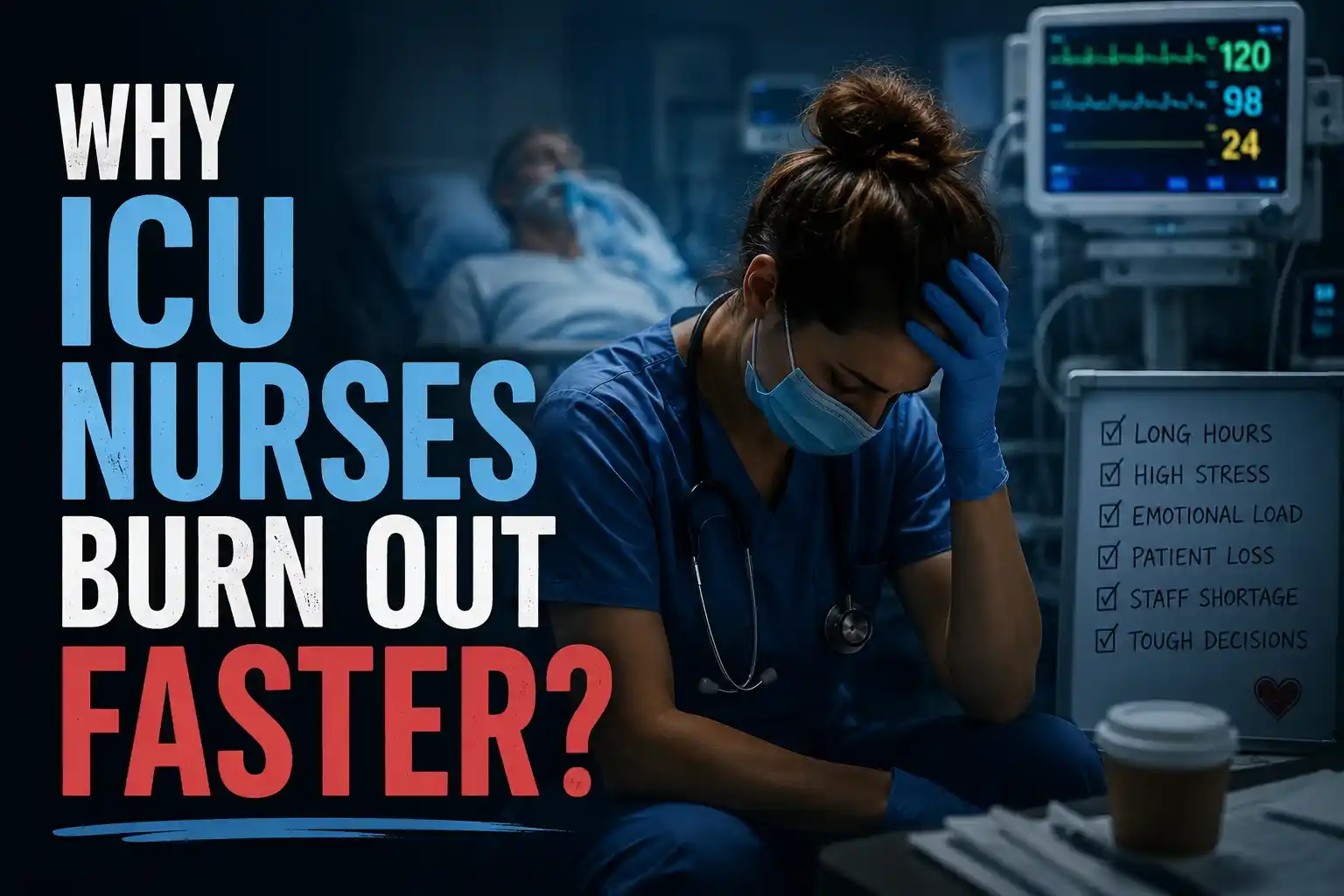
Why ICU Nurses Burn Out Faster? 7 Evidence-Based Reasons Nobody Talks About
ICU nursing is a specialized field of nursing focused on caring for critically ill or medically unstable patients who require continuous monitoring, advanced treatments, and intensive life-support interventions.
I don’t understand how someone can love nursing, feel passionate about helping patients, and still reach a point where they dread walking into work. Imagine it’s hour eleven of your twelve-hour shift. You’re standing beside a ventilated patient you’ve cared for all week.
Deep down, you know she isn’t coming back. Her family knows it too. Yet you keep adjusting medications, checking monitors, and carrying an emotional weight that is referred to as nurse burnout.
Nurse Burnout is a state of persistent occupational exhaustion resulting from prolonged exposure to high clinical demands and workplace stressors.
ICU nurse burnout is one of the most serious crises in American healthcare right now, and it is happening faster and harder in critical care than in almost any other specialty. This article breaks down exactly why ICU nurses burn out faster, what the research actually says, and what you can do about it.
Why ICU Nurses Burn Out Faster Than Other Nursing Specialties
Let me give you a number that stopped me in my tracks.
According to research published in the International Journal of Environmental Research and Public Health, between 25% and 33% of ICU nurses experience severe burnout syndrome. Even more striking, up to 86% of ICU nurses report at least one core burnout symptom, including emotional exhaustion, depersonalization, or a reduced sense of personal accomplishment.
The ICU nurse burnout rate vs other nurses is not just slightly higher. It reflects a much deeper level of workplace stress and emotional strain.
| Burnout Indicator | ICU Nurses | General Nurses |
|---|---|---|
| Severe Burnout Syndrome | 25%–33% | Lower overall rates |
| At Least One Burnout Symptom | Up to 86% | Significantly lower |
| Emotional Exhaustion | Very High | Moderate to High |
| Depersonalization | Common | Less Common |
| Reduced Personal Accomplishment | Common | Less Frequent |
| Overall Burnout Rate | Among the Highest in Nursing | Approximately 35%–45 |
This is not a personal failure. It is a structural problem built into how critical care environments operate across the United States.
Related: How Can Nurse Managers Improve Nurse Morale?
7 Reasons ICU Nurses Burn Out Faster
1. Frequent Exposure to Patient Death and Loss
I once spoke with a charge nurse who worked in a cardiac ICU in Chicago. In just three years, she witnessed more than 200 patient deaths. She was there during many of those moments, caring for patients and supporting families through hardest days of their lives.
That kind of repeated loss creates end-of-life care stress that accumulates in layers. ICU nurses care for the same critically ill patients for days or even weeks. They build strong connections with patients and families, which can make loss much more personal and emotionally difficult.
Research on patient mortality nurses supports this. Repeated exposure to patient death is one of the biggest causes of occupational burnout in ICU settings. Over time, it can create emotional trauma and what experts call “moral residue”.
Moral Residue is the residual emotional distress that persists after healthcare providers face situations that conflict with their professional values.
2. Moral Distress Hits ICU Nurses the Hardest
Moral distress is something every nurse deals with, but in the ICU, it reaches a level of intensity that most nursing textbooks barely prepare you for.
Moral distress is the psychological distress that occurs when healthcare professionals know the ethically appropriate action to take but are unable to act on it because of institutional, legal, or clinical constraints.
Here is what moral distress looks like in a real ICU: A 78-year-old patient remains on full life support despite having no meaningful neurological activity. The nurse believes that continued treatment is causing harm, but cannot change the plan of care due to family wishes and clinical decisions.
That gap between what you know is right and what you are required to do is moral distress. It was first described by nurse ethicist Andrew Jameton in 1984, and decades of research confirm that it is a primary driver of critical care burnout.
Sources of moral distress in the ICU commonly include:
- Watching patients suffer during necessary procedures while they are minimally sedated.
- Navigating families who are making decisions that do not serve their loved ones’ dignity.
- Feeling powerless when institutional policies override clinical judgment and ethical dilemmas receive little formal support.
When moral distress builds without a healthy outlet, it can lead to burnout syndrome.
3. The Hidden Health Effects of Night Shift ICU Work
Night-shift ICU burnout is a serious issue, but it is often overlooked in discussions about nurse burnout.
Critical care runs 24 hours a day, seven days a week. That means a significant portion of ICU nurses rotate through nights regularly or work permanent night shifts. The physiological impact of working against your body’s circadian rhythm is not a minor inconvenience.
Research consistently links chronic night shift work to increased cortisol dysregulation, compromised immune function, impaired emotional processing, and faster depletion of the mental reserves that help nurses cope with intensive care unit stress.
For ICU nurses, night shifts can increase burnout by making it harder to recover, recharge, and stay fully engaged with patients. Some nurses respond to ICU burnout by exploring specialized career paths such as forensic nursing.
4. Unsafe Staffing Ratios Increase ICU Nurse Burnout
The nursing shortage of 2025 is not a future problem. It is here right now.
ICU nurses typically work with a 1:2 ratio, meaning one nurse cares for two critically ill patients at the same time. While that may sound manageable, in practice, the workload can quickly become challenging when both patients require constant monitoring.
Now layer on this reality: nurse-to-patient staffing ratios in many American ICUs have been stretched during short periods. Nurses are being asked to take a third patient. Experienced nurses are leaving, and newer nurses are being placed in positions they are not yet ready for.
The data on ICU nurse turnover statistics paints a sobering picture. ICUs and cardiac care units often have high nurse turnover. The American Association of Critical-Care Nurses has consistently documented that nurse staffing ratios directly impact both nurse wellbeing and patient outcomes.
5. The Post-COVID Reality of ICU Nurse Burnout
If you worked in an ICU during 2020 or 2021, I do not need to explain what those years did to critical care nursing. You lived it.
Post-COVID ICU burnout did not end when the pandemic officially did. The psychological and physical toll of those years is still enduring through the critical care workforce. ICU nurse PTSD statistics from the public health emergency period are remarkable.
Studies from 2021 and 2022 found that more than 30% of critical care nurses experienced PTSD symptoms during peak COVID-19 surges. In some studies, the rates were similar to those seen in combat trauma.
The effects of COVID-19 on ICU nurse burnout were more than heavy workloads. Many ICU nurses cared for dying patients without family at the bedside, supported final video goodbyes, and faced difficult decisions under extreme pressure.
The ICU nurse leaving profession trend increased sharply after COVID-19, and many nurses who stayed carried unresolved trauma. ICU nurse mental health 2025 data continues to show elevated rates of anxiety, depression, and compassion fatigue among critical care nurses, even years after the peak of the pandemic.
Related: Is It Okay to Leave Bedside Nursing?
6. The Cumulative Impact of Compassion Fatigue
Nursing compassion fatigue is sometimes used synonymously with burnout syndrome, but they are actually distinct experiences that often co-occur among ICU nurses.
Compassion Fatigue is a stress-related condition characterized by emotional and psychological exhaustion resulting from prolonged exposure to the suffering and trauma of others.
ICU nurse compassion fatigue symptoms can include:
- A growing sense of numbness when patients are suffering.
- Difficulty feeling anything when you leave work, not just negative feelings, but positive ones too.
- Detachment from family and friends who do not understand your world.
- Having negative thoughts about patients or their families that were not typical for you before.
- Depersonalization of nursing responses when patients start to feel like tasks rather than people.
The Maslach Burnout Inventory, the most widely used tool for measuring occupational burnout, identifies depersonalization in nursing as a core dimension of burnout. For ICU nurses, this is a protective mechanism that your psyche develops to keep you functioning when the emotional demands of the job exceed your ability to process them.
7. Lack of Psychological Safety Increases ICU Nurse Burnout
Psychological safety in a workplace means you can speak up about concerns, admit mistakes, ask for help, and challenge unsafe practices without fear of punishment, humiliation, or being labeled difficult. In many ICU settings, genuine psychological safety for nurses remains more of an aspiration than a reality.
When you work in a culture where nurses are afraid to report near-misses, where leadership dismisses concerns about intensive care unit stress, where asking for a mental health day feels career-limiting, the foundation for burnout prevention does not exist.
The research on work-related stress consistently finds that perceived lack of control and lack of institutional support amplify every other burnout risk factor. An ICU nurse dealing with moral distress, staffing pressures, and night shift exhaustion can cope far more effectively when their unit culture is genuinely supportive.
Related: Nurses Crying After Work
ICU Nurse Burnout Self-Assessment: 10 Warning Signs to Watch For
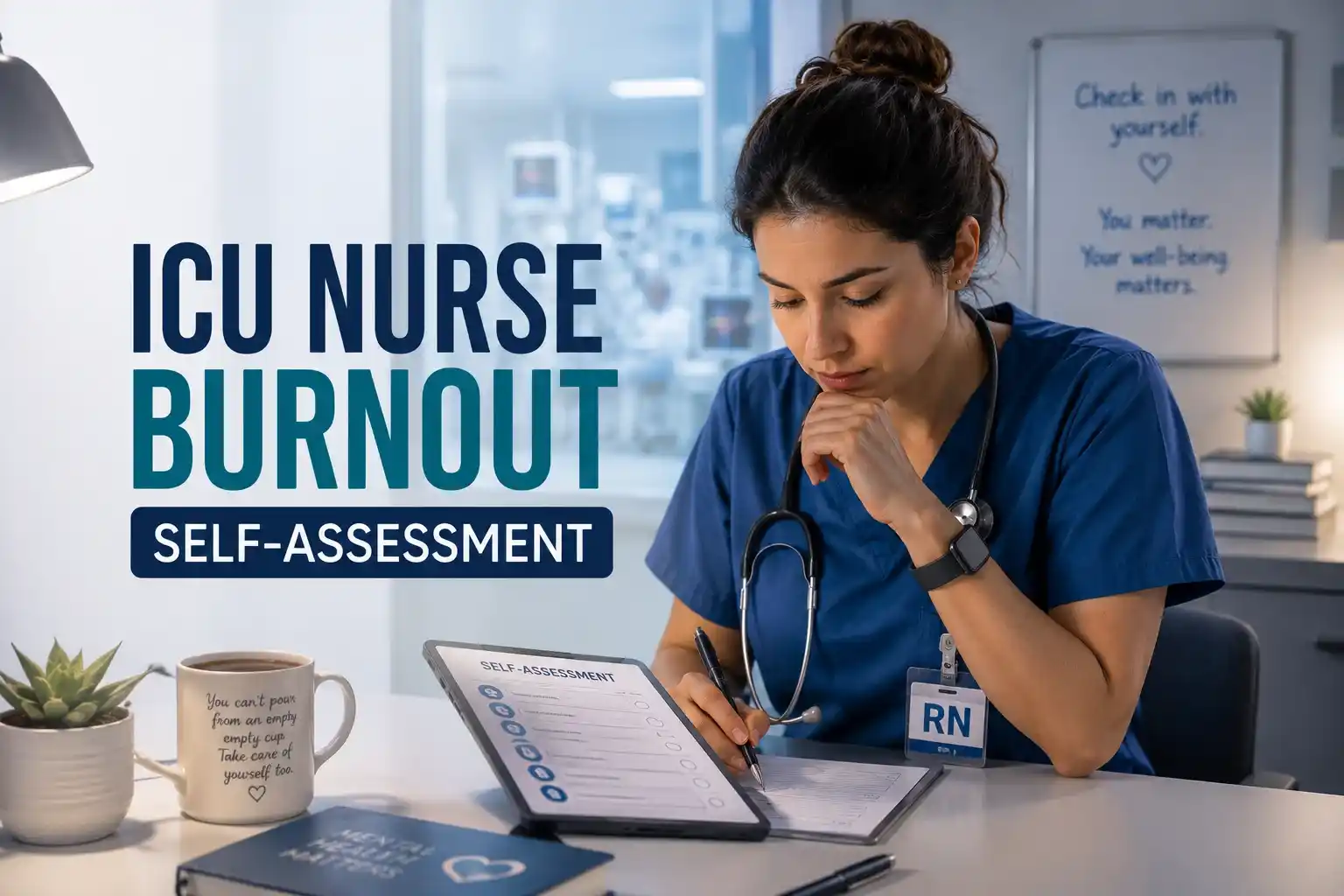
This is not a formal diagnostic tool, but it is an honest mirror. For each statement below, think about how true it has been for you in the last 30 days.
The critical care nurse burnout self-assessment:
- I dread going to work in a way I never used to.
- I feel emotionally numb during patient interactions.
- I have had thoughts about leaving the nursing profession entirely.
- My sleep is poor even on my days off, and I rarely feel genuinely rested.
- Small frustrations at work send me into disproportionate anger or sadness.
- I find myself thinking of patients as tasks or diagnoses rather than people.
- I have started calling in sick, not because I am physically ill, but because I cannot face the shift.
- People close to me have mentioned I seem different, disconnected, or short-tempered.
- I feel like nothing I do at work makes a real difference anymore.
- I experience intrusive thoughts or memories of difficult patient cases during my personal time.
If you checked five or more of these, what you are experiencing is more than just a rough stretch. These are nurse burnout symptoms that deserve attention, not self-criticism.
Related: Worst Nursing Mistakes
You can also check your current stress score with our free Stress Level Checker tool.
How Quickly Does ICU Nurse Burnout Develop?
Research on how fast ICU nurses burn out suggests that meaningful burnout symptoms can emerge within the first 12 to 18 months of working in a critical care environment. For new ICU nurses, the first year is particularly vulnerable. The gap between nursing school preparation and the reality of bedside critical care is enormous and a significant driver of early-career burnout syndrome.
First-year ICU nurse burnout signs often look different from veteran nurse burnout. Unlike experienced nurses, first-year ICU nurses often experience burnout quickly.
- Overwhelming self-doubt and imposter syndrome that does not improve with time.
- Physical symptoms like frequent illness, headaches, or gastrointestinal problems.
- Loss of the idealism and motivation that brought you to nursing in the first place.
- Social withdrawal from peers and friends outside of healthcare.
- An inability to separate from work emotionally, even during days off.
For nurses considering alternatives to direct patient care, this guide on how to become an informatics nurse explores a technology-focused career that can offer greater flexibility and a different type of professional challenge.
What percentage of ICU nurses experience burnout?
Research suggests that about 25% to 40% of ICU nurses experience significant burnout, while a smaller percentage experience severe burnout. These rates have remained high since COVID-19.
Related: What Is the Golden Rule of Bedside Care?
Why ICU Nurses Burn Out Faster Than ER Nurses
I get this question a lot, and it deserves a direct answer.
Both specialties carry enormous stress. But the nature of that stress differs in important ways.
The table below highlights the main differences between ICU and ER nurse burnout:
| Factor | ICU Nurses | ER Nurses |
|---|---|---|
| Stress Type | Long-term emotional stress. | Fast-paced acute stress. |
| Patient Relationships | Deep, ongoing connections. | Brief interactions. |
| Main Burnout Cause | Moral distress and grief. | Workload and patient volume. |
| Exposure to Death | Frequent and prolonged. | More episodic. |
| Burnout Risk | Higher emotional burden. | Higher operational pressure. |
Neither form of burnout is less serious. But the ICU pattern tends to be more psychologically complex and, for many nurses, more difficult to recover from without intentional support.
The Lasting Effects of COVID-19 on ICU Nurse Burnout
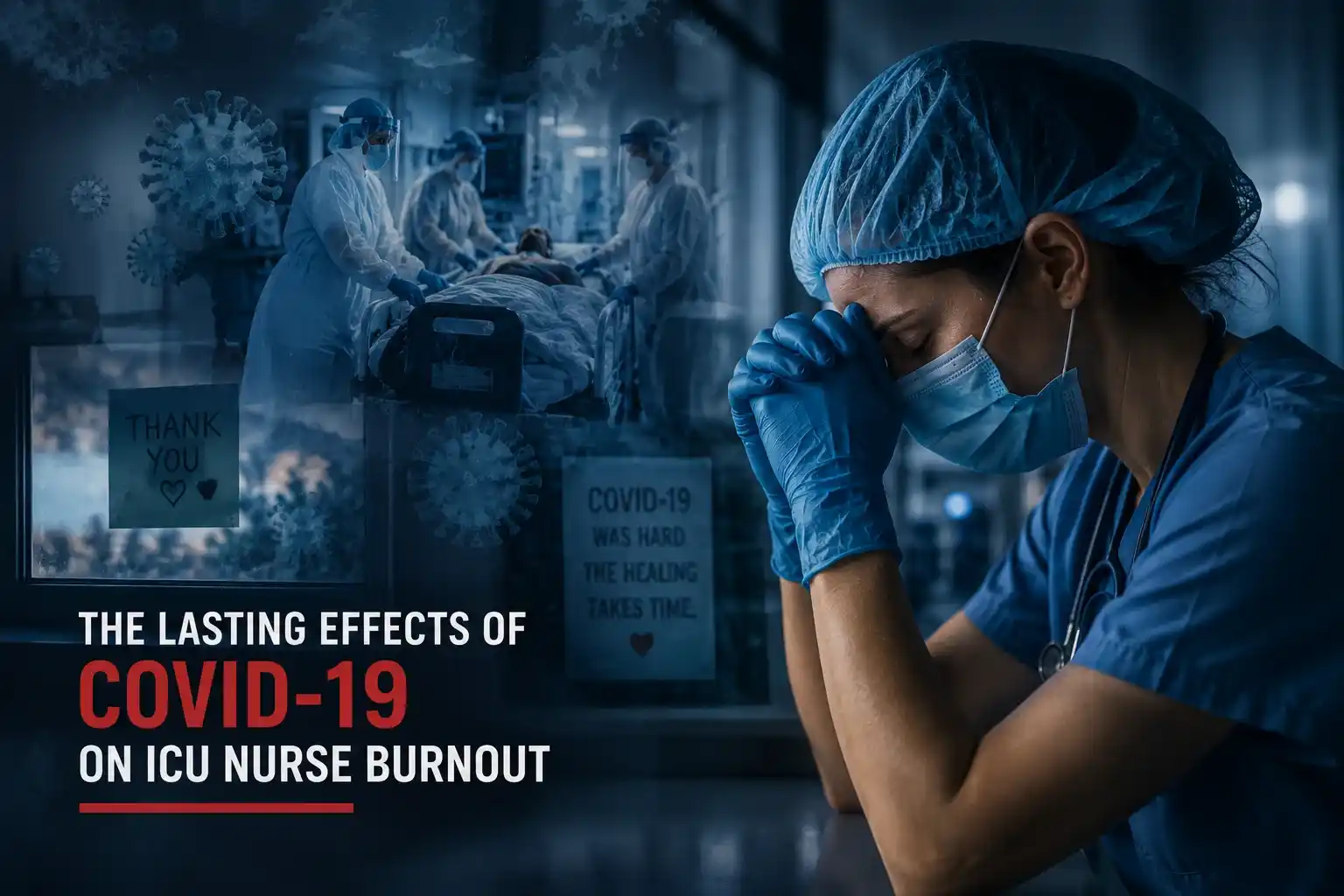
I cannot talk about ICU nurse burnout in 2025 without spending real time on the pandemic’s lasting effects.
Post-COVID ICU nurse burnout in 2025 looks like:
- Persistent hypervigilance and anxiety about the next crisis.
- Difficulty trusting hospital administration after feeling abandoned during the global health crisis.
- Emotional unavailability at work and home.
- A questioning of whether the personal sacrifice of nursing is worth the professional and institutional indifference they experienced.
- Burnout and suicidal ideation among nurses are realities that the profession must confront honestly, as rates of suicidal ideation among healthcare workers increased significantly during and after COVID-19
If you are carrying this kind of weight, please reach out to a mental health professional who specializes in healthcare worker trauma. The National Alliance on Mental Illness (NAMI) helpline and the American Nurses Foundation’s Nurse Suicide Prevention resources are both legitimate starting points.
Related: Burnout in Healthcare Jobs
How to Recover From ICU Nurse Burnout
Most burnout prevention content tells you to do yoga, practice gratitude, and talk to your manager. I respect those suggestions, but I also know they can feel hollow when you are genuinely fatigued.
Exact ICU nurse burnout recovery time varies widely, but here is what a realistic recovery pathway looks like for most critical care nurses:
Weeks 1 through 4: Acknowledge and stabilize
- Stop pretending the burnout is not happening. Name it to yourself and at least one trusted person.
- Request a schedule accommodation if possible, even temporarily reducing overtime or night shifts.
- Begin working with a therapist or counselor, ideally one familiar with healthcare worker stress.
- Identify one non-work activity you actually enjoy and commit to doing it this week.
Months 1 through 3: Rebuild the foundation
- Establish a consistent sleep schedule that your body can adapt to.
- Address any physical health issues that burnout has caused or worsened.
- Explore whether your current unit culture supports psychological safety; if not, whether a unit transfer might be appropriate.
- Connect with peers who understand the specific demands of critical care, whether through your hospital’s Employee Assistance Program or an online community for ICU nurses.
For ICU nurses, building healthy stress management routines can make a real difference after difficult shifts.
Months 3 through 6: Reorient your relationship with the work
- Consider what originally drew you to critical care nursing and whether that purpose is still accessible to you.
- Work with a mentor or professional coach if possible.
- Evaluate whether any structural changes in your role (different shift, different unit, per diem status) would help you sustain a healthier relationship with the work long-term.
- Build genuine practices around nurse wellbeing, including boundaries around work communications on days off.
Recovery time is not linear. Some nurses need six months. Some need longer. The goal is not to return to exactly who you were before, but to find a sustainable way to continue doing meaningful work without destroying yourself in the process.
Related: How Nurses Can Exercise with a Busy Work Schedule
What ICU Managers and Hospitals Can Do to Reduce Burnout
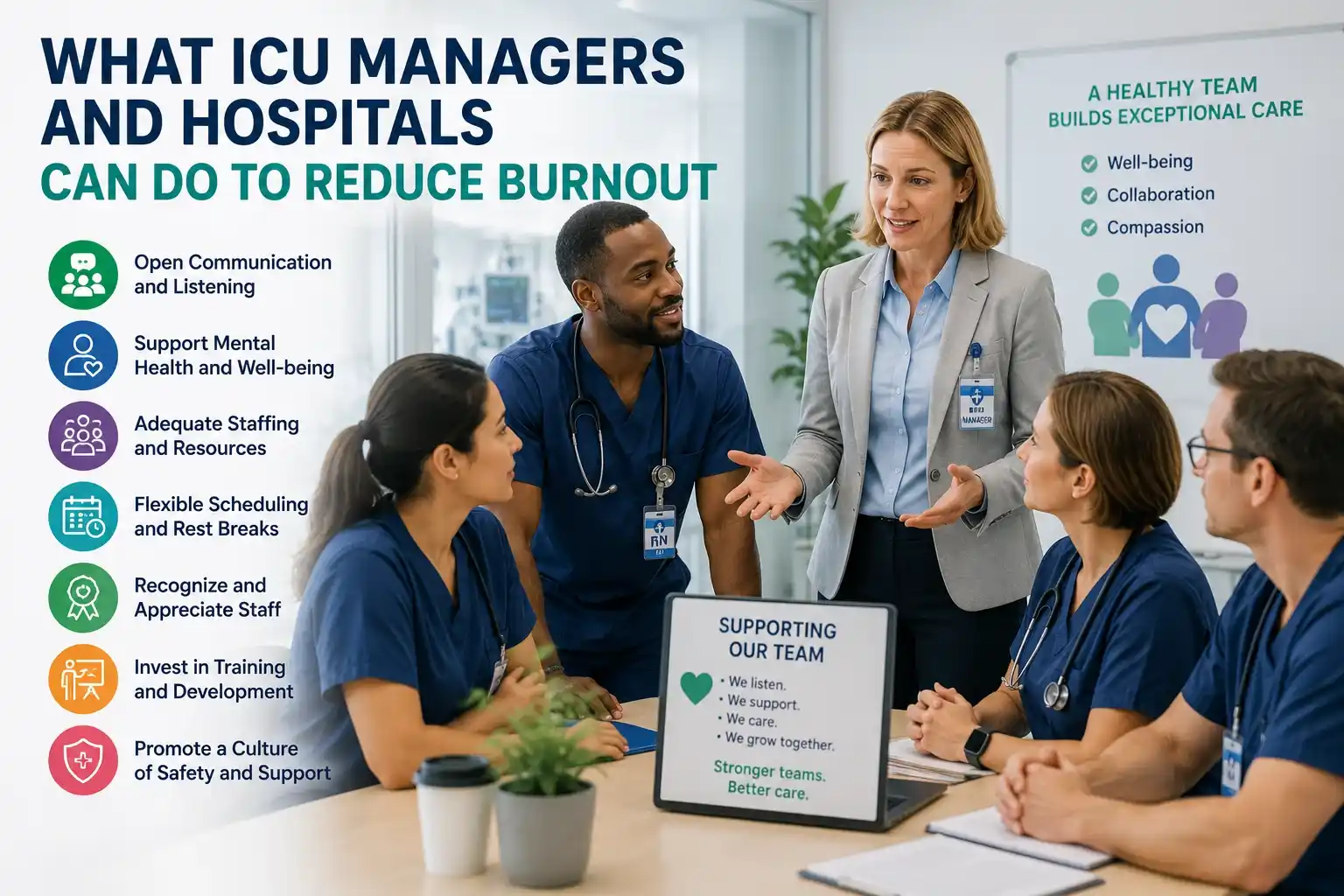
Burnout is not just a nurse problem. It is a healthcare system problem that requires system-level responses.
For ICU leaders and hospital administrators reading this, here are the interventions with the strongest evidence base:
- Protect staffing ratios even when census drops. Staffing shortages place extra pressure on nurses, increasing ICU nurse turnover over time.
- Build genuine psychological safety by creating structures for nurses to debrief after traumatic cases without fear of judgment.
- Address moral distress directly through ethics consultations, palliative care integration, and formal support sessions after difficult cases.
- Expand access to mental health resources, including therapy with providers who understand healthcare culture, not just general Employee Assistance Program (EAP) referrals.
- Acknowledge the post-COVID burden that your critical care staff is still carrying, rather than treating the healthcare crisis as a closed chapter.
- Research from critical care organizations gives proven strategies to reduce burnout, and hospitals should put these recommendations into practice rather than ignore them.
According to the Bureau of Labor Statistics projections, demand for registered nurses is expected to grow by 6% through 2032. Keeping experienced ICU nurses is not just beneficial for hospitals. It is essential for both patient safety and long-term workforce stability.
Related: Toxic Hospital Culture for Nurses
Frequently Asked Questions
Do Magnet hospitals report lower ICU nurse burnout rates?
Research suggests that Magnet hospitals often report lower nurse burnout and higher job satisfaction than non-Magnet hospitals. These hospitals typically emphasize nurse involvement in decision-making, professional development, and supportive work environments.
Is ICU nursing bad for my mental health?
ICU nursing can be emotionally demanding, but it does not automatically harm your mental health. The constant exposure to critically ill patients, trauma, and high-stress situations can increase the risk of nurse burnout. However, many ICU nurses maintain good mental health with strong support systems, healthy coping strategies, and a positive work environment.
Are travel ICU nurses less likely to experience burnout?
Travel nurses may benefit from higher pay and greater scheduling flexibility. However, they still face many of the same emotional challenges as permanent staff. Frequent transitions between hospitals can create additional stress. Burnout risk depends more on workload, support, and work environment than employment type. Travel nursing is not a guaranteed solution to burnout.
A Final Word
I started this piece by saying you are not alone. I want to end it by saying you matter.
ICU nurse mental health 2025 is not just a statistic or a workforce problem to be managed. It is about you and the thousands of nurses like you who chose one of the most demanding roles in healthcare. If you have ever wondered what ICU nursing is like, it means carrying immense responsibility while caring for patients during some of the most critical moments of their lives.
ICU nurse burnout is real. It is serious. But it is not inevitable when nurses have the right support, healthy work environments, and access to mental health resources.
If you are struggling right now, please reach out. Talk to someone. You spend your career fighting for your patients. You deserve someone to fight for you, too.
Also read: How to Manage a Night Shift as a Nurse: Hour-by-Hour Guide
Disclaimer: This article is for educational purposes only and should not be considered medical or mental health advice.
References
- ShiftMed – How to Prevent Moral Distress and Nurse Burnout in the ICU
- Prevalence, Risk Factors, and Burnout Levels in Intensive Care Unit Nurses
- A Multicenter Cross-Sectional Study. BMC Nursing. 2025
- Burnout in Critical Care. AACN Newsroom
- Burnout Syndrome in Critical Care Healthcare Professionals
- U.S. Bureau of Labor Statistics
- World Health Organization (WHO)