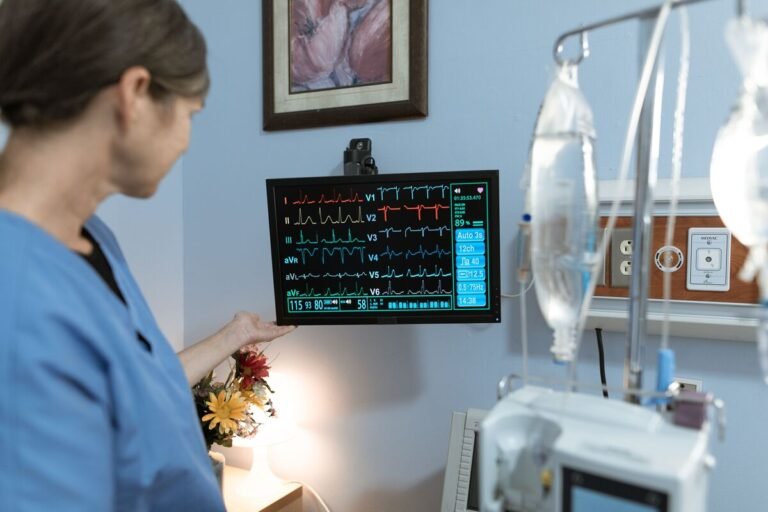
Importance of Handoff Communication in Nursing
Patient safety depends on more than accurate diagnoses and appropriate treatment. The World Health Organization identifies effective communication during patient handovers as a key part of patient safety because incomplete or poorly communicated information can disrupt continuity of care.
For nurses, these transitions can happen several times during a shift, such as during a shift change, transfer to another unit, or a move to a higher level of care. This makes the Importance of Handoff Communication clear in busy hospital settings. A clear handoff gives the next clinician a clear understanding of the patient’s condition, current priorities, recent changes, and issues that need close attention.
If you give or receive report as a nurse, this guide is for you. You’ll see how handoffs go wrong, what to include every time, how SBAR and I-PASS differ, and how your unit can make handoffs safer.
What Is Handoff Communication and When Does It Happen?
A handoff (also called a handover, shift report, or sign-out) is the transfer of patient information, authority, and responsibility from one caregiver or team to another.
AHRQ’s TeamSTEPPS program emphasizes that a safe handoff involves more than sharing clinical information. The person taking over care also needs to understand who is responsible for the patient and what needs to happen next.
The World Health Organization identifies several common situations where handoffs occur:
- Patient admission
- Physician sign-out
- Nursing shift changes
- Transfers between units or facilities
- Anesthesia-to-recovery reports
- Emergency department transfers
- Patient discharge
The Pennsylvania Patient Safety Authority also points to a less obvious situation: temporarily taking over a colleague’s patients during a break.
Importance of Handoff Communication
A handoff may last only a few minutes, but its effects continue after the conversation ends. The incoming clinician takes that information into the next part of the patient’s care. This is where the practical value of good handoff communication becomes clear.
Here are some of the key benefits of effective handoff communication:
- Keeps care continuous: Carries important patient information from one clinician or shift to the next.
- Reduces missed information: Allows the receiving clinician to clarify details before taking over care.
- Supports safer treatment and medication use: Makes current medications, treatments, and changes easier to understand.
- Helps identify changes in condition: Brings attention to new symptoms, abnormal findings, or concerns that need follow-up.
- Prevents delays in care: Makes pending tests, treatments, and follow-up tasks clear.
- Highlights patient-specific risks: Brings attention to concerns such as falls, allergies, aspiration, or other precautions.
- Clarifies responsibility: Makes it clear who is taking over the patient’s care and what still needs to be done.
- Strengthens teamwork: Keeps the care team working from the same information.
- Supports safer transfers and discharge: Helps important clinical information follow the patient when care moves between settings.
- Reduces communication-related risk: Clear, consistent handoffs can reduce problems associated with missing or misunderstood information.
SBAR vs. I-PASS: How They Compare
SBAR and I-PASS are two structured communication tools used to organize patient information during clinical handoffs. AHRQ’s TeamSTEPPS program includes both SBAR and I-PASS.
SBAR provides a simple structure for presenting a patient’s situation, relevant background, assessment, and recommended next steps. I-PASS uses a more detailed structure that includes illness severity, a patient summary, an action list, contingency planning, and confirmation by the receiving clinician.
| SBAR | I-PASS | |
|---|---|---|
| Stands for | Situation, Background, Assessment, Recommendation | Illness severity, Patient summary, Action list, Situation awareness and contingency planning, Synthesis by receiver |
| Main purpose | Organizes communication when reporting a concern or discussing a patient’s situation | Structures detailed handoffs between clinicians |
| Common use | Calling a provider, escalating a concern, or communicating an important change | Shift changes, transfers of responsibility, and other clinical handoffs |
| Receiver involvement | Allows the receiving clinician to ask questions and clarify information | Ends with a receiver synthesis, where the receiving clinician repeats or summarizes key information |
| Evidence | Has been studied in several healthcare settings, including nursing | Has been evaluated in studies of physician handoffs and other clinical settings |
Which Approach Fits the Situation?
The right approach depends on what needs to be communicated. SBAR works well for concise communication when a clinician needs to report a concern, give an update, or request action. I-PASS provides a more detailed structure for transferring patient information and responsibility during a clinical handoff.
Healthcare organizations can choose a standard approach that fits their needs and train staff to use it consistently.
Example: An I-PASS-Style Nursing Handoff
The following is an illustrative example of how an I-PASS-style handoff might sound in a nursing setting. It is not a real patient scenario. Nurses should follow their facility’s policies, clinical protocols, and provider orders.
Illness severity: “Mr. D is stable but needs close monitoring.”
Patient summary: “He is 72 and is recovering from a hip replacement. His pain is currently controlled with scheduled medication and as-needed doses.”
Action list: “Reassess his sedation and breathing after any IV pain medication. Physical therapy is scheduled this morning, and urine output needs to be checked by 2 p.m.”
Situation awareness and contingency: “He was more drowsy after his last dose. If he becomes difficult to wake or develops slower breathing, follow the unit protocol and notify the appropriate clinician.”
Synthesis by receiver: “I understand. I’ll monitor his sedation and breathing, follow up on physical therapy and urine output, and watch for changes in his level of alertness.”
Why Handoffs Fail
Handoffs can break down for several reasons, including interruptions, unclear communication processes, limited training, and lack of protected time. These problems can make it harder for the receiving clinician to focus on important information and confirm what needs to happen next.
Common Interruptions During Nursing Handoffs
Handoffs can be interrupted by routine requests, unexpected events, and other demands that need immediate attention.
- Patient Call Light: A patient may request help with pain, toileting, water, repositioning, or another immediate need.
- Family Member Question: A family member may ask about the patient’s condition, medications, treatment, or discharge plans.
- Patient Clarification: The patient may interrupt to correct, clarify, or add information about their care.
- Phone Call: Calls from providers, pharmacies, labs, or other units can pull attention away from the handoff.
- Monitor or Bed Alarm: An alarm may require an immediate check to determine whether the patient needs attention.
- IV Pump Alarm: The pump may alert staff to an occlusion, empty bag, infusion issue, or other problem requiring action.
- Provider Visit: A physician or other provider may enter the room and need information or an immediate response.
- Another Nurse’s Question: A colleague may interrupt to ask about another patient, task, or clinical issue.
- New Admission: A newly arriving patient can require immediate assessment, room preparation, and coordination.
- Sudden Change in Condition: New symptoms such as breathing difficulty, chest pain, confusion, or a fall may take priority over the handoff.
- Medication Issue: A medication may need clarification, replacement, approval, or follow-up with the pharmacy.
- Urgent Staff Request: Transport staff, technicians, charge nurses, or other team members may need an immediate response.
Incomplete Handoff Communication
A handoff can become incomplete when important information is shared, but the receiving clinician does not confirm understanding. Without this confirmation, the outgoing clinician may not know whether key concerns or follow-up actions were clear.
For example, Nurse A tells Nurse B that a patient’s blood pressure has been dropping. If Nurse B says “okay,” Nurse A cannot be sure the concern was understood. A response such as, “I’ll recheck the blood pressure in 30 minutes and notify the provider if it drops further,” confirms both the information received and the action to take.
This exchange is an example of closed-loop communication, in which the receiving clinician repeats or summarizes key information to confirm understanding.
Time pressure
Time constraints can make it difficult for nurses to give and receive a thorough handoff during a busy shift change.
- Limited Handoff Time: Shift changes often involve several patients, leaving little time to discuss each case in detail.
- Delayed Handoff Start: Medication administration, an unstable patient, or unfinished documentation can delay the start of the report.
- Incoming Shift Waiting: The next nurse may be ready to take over while the outgoing nurse is still completing essential details.
- Rushed Handoff: A busy shift can force nurses to shorten the report and leave out details they would otherwise discuss.
- Multiple Patients to Cover: Giving reports for several patients takes longer, particularly when some require more detailed discussion.
- Pending Documentation: Completing charting while preparing to give the handoff can create competing demands at the end of a shift.
- Overtime After Handoff: Repeated delays can extend the outgoing nurse’s workday beyond the scheduled shift.
Best Practices for Giving and Receiving a Handoff
A safe handoff depends on both sides. The person giving the report needs to communicate the right information clearly, while the person receiving it needs to listen, ask questions, and confirm important details.
If you’re giving a report:
- Start with how sick the patient is, and cover the sickest patients first.
- Be specific. Give the volume and the plan.
- Say what you’re unsure about.
- Give if-then plans.
- Avoid abbreviations and jargon that differ by unit or discipline.
If you’re receiving report:
- Take notes, then repeat back the key actions and ask questions. AHRQ says responsibility doesn’t fully transfer until the receiver acknowledges the handoff.
- Ask the giver to slow down or clarify.
- Don’t multitask during report.
For both:
- Use a quiet, well-lit place and block pages except for urgent ones.
- Use a quiet, well-lit place and limit nonurgent calls, pages, questions, and requests during the handoff. Address urgent patient needs, alarms, or changes in condition immediately. When possible, another team member can handle routine requests.
- Use face-to-face communication where possible. If you use an electronic handoff, AHRQ says it works best when reinforced by direct communication.
- Use a written handoff tool as a guide, but keep the conversation natural.
How Organizations Can Build Better Handoffs
Better handoffs depend on more than asking individual clinicians to communicate clearly. Healthcare organizations can make the process safer by creating a consistent system that supports clear communication.
For leaders and educators, the research points to several moves.
- Pick one standard and write it down. Make the expectation clear, including when accountability transfers to the receiver.
- Protect the time and place. Schedule handoffs at predictable times, away from meetings and routine pages.
- Train, then practice. A review of nursing handoff education found structured formats, role-play, and simulation improved students’ clarity and confidence. It also found that students often have limited opportunities to practice real handoffs. A later systematic review found individual feedback and repeated practice opportunities boosted performance and self-efficacy.
- Observe and give feedback. In the I-PASS bundle, observation and faculty development were core elements.
- Measure. The Patient Safety Movement guide suggests tracking adverse events attributable to communication failure, near misses, observation audit results, and staff confidence.
- Avoid turning the tool into a ritual. The Pennsylvania authors warn that rigid standardization can become habit, so staff skip over information that seems routine. Train critical thinking along with the format.
- Make it safe to speak up. When staff feel blamed for a poor handoff, they may be less likely to report problems, making it harder to improve the process.
Frequently Asked Questions
Who decides who is in the room during bedside report, and what if the patient wants privacy?
The patient decides. AHRQ’s bedside shift report handbook says the patient defines who their family is and who can take part, so nurses should ask which family members or friends the patient wants present. Nurses can ask visitors to step out of the room during report. If the patient asks a visitor to stay, the report can proceed. If a patient prefers to be alone, the nurse can ask visitors to leave and continue the report with the patient alone.
Which AI tools can save time during nursing handoffs?
AI-powered clinical documentation tools may help nurses prepare for handoffs by capturing clinical conversations, organizing patient information, and creating structured notes. Examples include Abridge, Microsoft Dragon Copilot, Suki, Nabla, and Heidi Health. These tools can reduce manual documentation, but nurses should verify AI-generated information and follow their organization’s privacy, security, and documentation policies before using it in patient care.
What if the previous nurse gives me an incomplete or confusing report?
Ask specific questions to clarify missing or unclear information, such as:
- “What changed during your shift?”
- “What needs to be followed up on next?”
- “Are there any pending tests, medications, or concerns I should know about?”
Check the patient’s chart and confirm important details when needed. For urgent concerns, assess the patient and follow your facility’s escalation procedures.
How can I handle disagreements between nurses during handoff?
Keep the discussion focused on the patient and the facts. Clarify the concern, review the chart or relevant clinical information, and agree on the next step. If the disagreement affects patient safety or cannot be resolved, involve the charge nurse or appropriate supervisor.
How can nurses handle language differences during handoff?
Language differences can affect how accurately clinical information is understood during a handoff. Use clear, standardized medical terms and avoid unfamiliar abbreviations or colloquial expressions. Also consider cultural and professional differences in communication styles, since they can influence how information is presented and received. For critical patient details, confirm that the receiving nurse understands the information before ending the handoff.
References
- AHRQ TeamSTEPPS. Tool: Handoff. Reviewed May 2023.
- AHRQ TeamSTEPPS. Tools: SBAR and I-PASS.
- AHRQ. Warm Handoff.
- AHRQ. Strategy 3: Nurse Bedside Shift Report, Implementation Handbook.
- World Health Organization Collaborating Centre for Patient Safety. Communication During Patient Hand-Overs. Patient Safety Solutions, vol. 1, solution 3. 2007.
- The Joint Commission. Sentinel Event Alert 58: Inadequate hand-off communication. 2017.
- Correspondence on Starmer et al. Changes in Medical Errors with a Handoff Program. N Engl J Med.
- Choi JY, et al. Educational interventions for improving nursing shift handovers: A systematic review. Nurse Educ Pract. 2024;74:103846.
- Handoffs and Patient Safety: Grasping the Story and Painting a Full Picture. Western J Nurs Res. DOI 10.1177/0193945914539052.
- Use of structured handoff protocols for within-hospital unit transitions: a systematic review from Making Healthcare Safer IV.
About the Author
John Watson founded StressHealed, a platform dedicated to evidence-based content on stress, wellbeing, and healthcare for nurses and frontline medical workers. John researches and writes about the healthcare system, from clinical workflows to workforce burnout, with content grounded in peer-reviewed studies, industry reports, and insights gathered directly from healthcare professionals.
Connect: stresshealed.com
Disclaimer: This article is for education and does not replace your organization’s policies, clinical protocols, or professional judgment. Handoff requirements vary by country, facility, and unit.