Does Mouthwash Actually Kill Bacteria? What the Science Really Says
Quick Answer Box: Yes, but only certain types. Mouthwashes with chlorhexidine, essential oils, or cetylpyridinium chloride are proven to reduce oral bacteria and are recognized by the ADA for controlling plaque and gingivitis. Cosmetic rinses mainly mask odor. Effectiveness depends entirely on the active ingredient, not the brand or price.
A mouthwash can leave your mouth feeling clean, but does that mean it has actually killed the bacteria living there? Not necessarily. Your mouth contains a complex community of microorganisms, and different mouthwashes are formulated to affect that community in different ways.
Some contain antibacterial or antiseptic ingredients, while others focus on fluoride, sensitivity, or breath freshening. This can make it difficult to tell exactly what your mouthwash is doing after you swish and spit.
Even with regular brushing, it is reasonable to question whether adding a rinse makes a meaningful difference. So does mouthwash actually kill bacteria? Let’s look at what the evidence says and where mouthwash actually fits into your daily oral hygiene routine.
How Mouthwash Kills Bacteria: The Mechanism Behind Antiseptic vs. Cosmetic Formulas
Not every mouthwash works the same way, and the difference comes down to two broad categories: antiseptic and cosmetic.
Antiseptic vs. Cosmetic Mouthwash: What’s the Difference?
Before we dive into the details, here’s what you need to know:
- Antiseptic mouthwash = a rinse with ingredients strong enough to physically break apart bacteria and stop them from spreading. Think of it as a rinse that actively fights germs.
- Cosmetic mouthwash = a rinse that mainly freshens breath and may help remove loose food particles, but it does not provide the same bacteria-targeting benefits as an antiseptic rinse.
How Antiseptic Mouthwash Works Against Bacteria
Antiseptic mouthwashes contain active ingredients that attack the outer wall of a bacterial cell, much like popping a balloon destroys it from the outside in. Once that wall breaks, the bacteria cannot survive.
The three most common bacteria-killing ingredients you’ll see on a label:
- Chlorhexidine: Sticks to the surface of bacteria and breaks through their outer wall, causing the contents inside the bacteria to leak out and the cell to die.
- Cetylpyridinium chloride (CPC): Attaches itself to bacteria in a similar way and punches through their outer layer, causing the cell to fall apart. It’s a bit gentler than chlorhexidine but still effective, and it’s found in many over-the-counter brands.
- Essential oils (like thymol, eucalyptol, and menthol): Slowly break down the bacteria’s outer wall and interfere with their ability to grow and multiply. They work gradually, reducing bacteria over time with regular use rather than causing instant breakdown.
In simple terms: all three ingredients damage bacteria from the outside until the cell can no longer function.
How Cosmetic Mouthwash Works
Cosmetic mouthwash skips the bacteria-fighting step completely. Instead, it works like an air freshener for your mouth:
- It masks bad breath by covering up the smell with mint or flavoring.
- It rinses away loose debris, like food particles sitting on your tongue or teeth, similar to swishing water around.
- Does not directly target bacteria, so the fresh feeling may not last long.
Why the Difference Between Mouthwashes Matters
- If a label says “antibacterial,” it should contain one of the three ingredients above, not just mint or menthol for flavor.
- Because chlorhexidine and CPC physically attach to your teeth and gums to work, they can sometimes cause temporary staining, something cosmetic rinses rarely cause.
- Using antiseptic mouthwash too often over a long period may allow some bacteria to adapt and become harder to kill over time, a concern researchers are actively studying.
Types of Mouthwash Ranked by Antibacterial Effectiveness
A mouthwash can leave your mouth feeling fresh without telling you much about its antibacterial action. Clinical trials measure mouthwash performance using plaque index scores and gingival bleeding scores. These results help show which types of mouthwash are more effective at supporting oral health.
| Rank | Type | Active Ingredient | Clinical Standing | Typical Trade-Off |
|---|---|---|---|---|
| 1 | Chlorhexidine | 0.12%–0.20% CHX | Widely regarded as the strongest standard, with some studies showing better plaque control than essential oils. | Tooth staining, altered taste, not meant for daily long-term use. |
| 2 | Essential Oils | Thymol, eucalyptol, menthol | Matches chlorhexidine on gingivitis control, with a faster short-term drop in gum bleeding than CPC. | Carries the highest alcohol concentration of any rinse category, which can dry out soft tissue. |
| 3 | CPC | 0.05%–0.10% cetylpyridinium chloride | Matches essential oils on long-term plaque and gum health outcomes. | May be less effective than chlorhexidine at penetrating established biofilm. |
| 4 | Cosmetic | Flavoring agents, mild surfactants | No measurable reduction in bacterial counts. | Breath freshness fades once the flavor wears off. |
Why Dentists Prescribe Chlorhexidine and Why It’s Time-Limited
Periodontists reach for chlorhexidine when a patient needs aggressive short-term control, such as recovering from gum surgery or managing severe gingivitis. Its results are well documented across decades of clinical use, which is exactly why dental offices still prescribe it despite its drawbacks. It isn’t a rinse for indefinite daily use. The standard prescription is limited to about two weeks, occasionally extended to four weeks in specific post-surgical cases.
Where Essential Oils Match Chlorhexidine
What surprises many patients is that essential oil rinses match chlorhexidine’s long-term effectiveness specifically for gingivitis control, though chlorhexidine still edges ahead on plaque reduction.
The trade-off shows up elsewhere too. Essential oil rinses carry a higher alcohol content than any other category, often over 20 percent. That’s worth knowing if you deal with dry mouth or take medication that already reduces saliva flow.
CPC Mouthwash: Milder Than Chlorhexidine, On Par With Essential Oils
CPC formulas tend to appeal to people who want daily protection without the harshness of chlorhexidine or the alcohol load of essential oils. Research shows CPC and essential oil rinses are equally effective for long-term plaque and gingivitis control, though essential oils pull ahead on gum bleeding scores within the first two weeks of use.
Cosmetic Rinses: A Different Category Entirely
Cosmetic formulas aren’t a weaker version of the antibacterial rinses above them; they’re a separate product built for a separate job. If plaque control or gum health is the goal, this category won’t move the needle, regardless of how “clean” it feels.
The Catch: Mouthwash Doesn’t Discriminate
Most rinses are built on one idea: destroy as much bacteria as possible. But a 2025 study from Rutgers School of Dental Medicine challenges that entire approach, and the findings matter for anyone who reaches for a rinse every morning.
What the Researchers Actually Tested
Scientists exposed oral bacteria to three different rinses and tracked how each one behaved over several days:
- A prescription-strength chlorhexidine rinse.
- A standard essential-oil rinse (Listerine Cool Mint).
- A naturopathic rinse made with plant-based ingredients and propolis.
The Result That Surprised Even the Researchers
The two regular rinses didn’t distinguish between good and bad bacteria; they killed both. Chlorhexidine was the harshest example, wiping out some helpful bacteria by up to a million times over.
The herbal formula behaved differently:
- It sharply reduced Fusobacterium nucleatum and Porphyromonas gingivalis, two species tied directly to gum disease.
- It left Streptococcus oralis and Veillonella parvula largely untouched, both protective species.
Why Your Mouth Needs Some Bacteria to Stay Healthy
Your mouth isn’t supposed to be completely germ-free. Some bacteria actually help you:
- They interact with gum tissue in ways that support healing.
- They crowd out harmful bacteria, sometimes fighting them off naturally.
Wipe those species out along with the harmful ones, and you lose a natural layer of protection your mouth already had.
Study author Dr. Georgios Kotsakis explains it simply: instead of killing every bacterium in your mouth, the goal now is to target only the harmful ones.
Does Killing Bacteria Mean a Healthier Mouth?
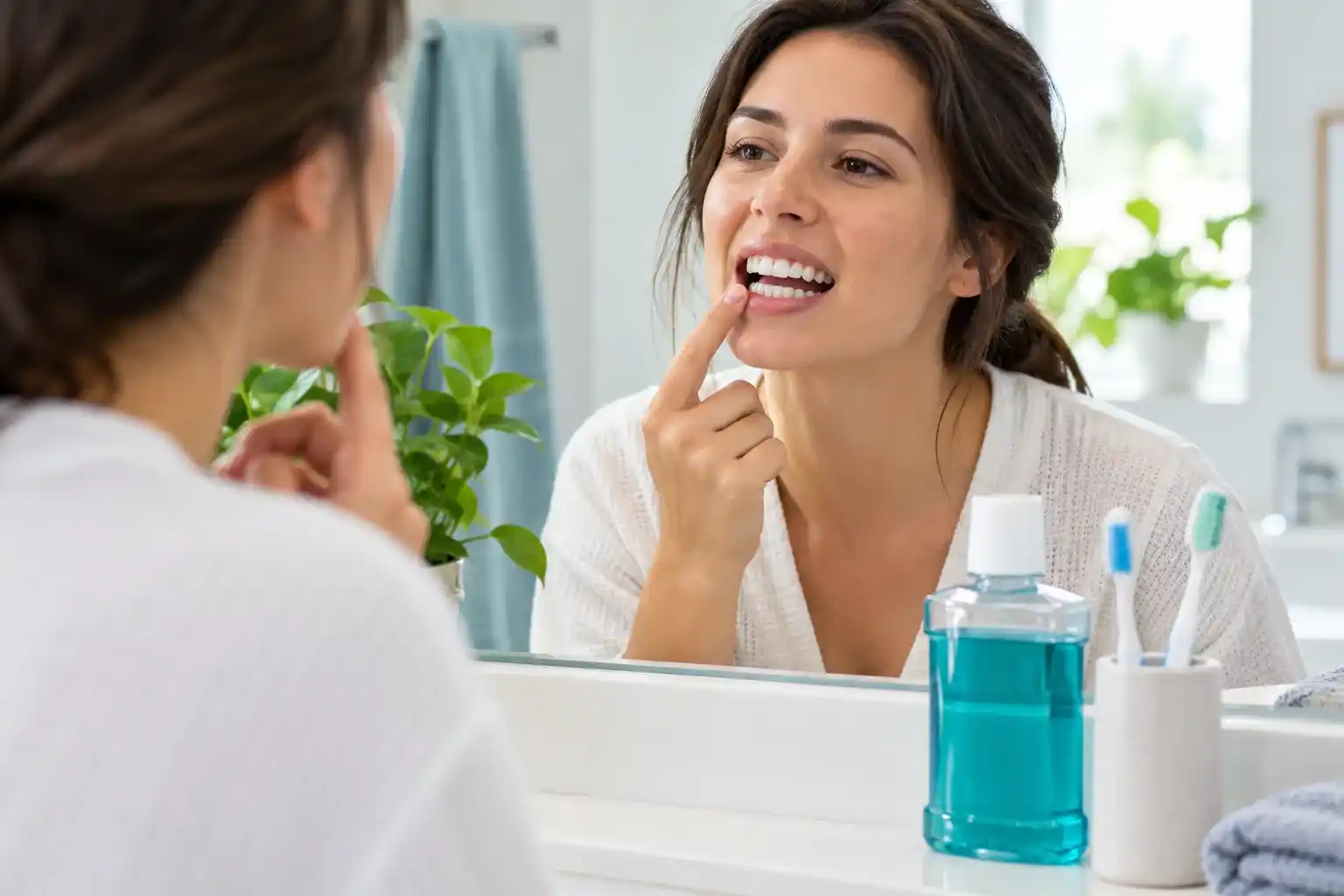
Not necessarily. A mouthwash can kill 99.9% of bacteria and still leave your mouth worse off than before you used it. That sounds contradictory, but it comes down to one concept: dysbiosis.
Dysbiosis means your mouth’s bacteria are out of balance, not that there are fewer of them. Research shows mouthwash can kill certain bacteria while letting harmful ones take over, so a high kill-count doesn’t guarantee a healthier mouth.
Why an Imbalanced Mouth Carries More Risk Than a “Dirty” One
Once your mouth’s bacteria are out of balance, the risks go beyond gum health. Researchers have linked oral dysbiosis to periodontitis, tooth loss, and even oral cancer and rheumatoid arthritis. But this doesn’t mean mouthwash causes these conditions; the link isn’t proven yet. It just means an imbalanced mouth may be a warning sign, and killing bacteria without any selectivity is one way that imbalance can start.
Mouthwash and Blood Pressure: Should You Worry?
This connection sounds unlikely at first: how does rinsing your mouth affect your blood pressure? The link runs through a bacterial process most people have never heard of, called the enterosalivary pathway.
How Your Mouth Helps Regulate Blood Pressure
- Nitrate from food (leafy greens, beets) gets converted to nitrite by specific bacteria living on your tongue.
- That nitrite eventually becomes nitric oxide (NO) in your body, a molecule that relaxes blood vessels and helps control blood pressure.
- The bacteria responsible for this conversion, mainly Veillonella, Actinomyces, Haemophilus, and Neisseria, sit right on the surface of your tongue.
What Happens When Mouthwash Kills These Bacteria
- Chlorhexidine used twice daily has been shown to raise systolic blood pressure within one week in healthy adults.
- One clinical trial found chlorhexidine and cetylpyridinium chloride both produced higher systolic blood pressure readings than a control group.
- Another study found that chlorhexidine blocked a blood-pressure-lowering supplement (L-arginine) from working properly in animal tests by killing off the same tongue bacteria this process depends on.
Where the Evidence Isn’t Settled
Not every study agrees on how significant this effect is:
- One trial in young, healthy women found chlorhexidine disrupted nitrate conversion but caused no measurable change in blood pressure or plasma nitrite.
- Most of these studies used strong, prescription-strength chlorhexidine. So it’s not yet clear if milder, over-the-counter mouthwashes carry the same risk.
- Researchers note that effects vary depending on rinse strength, ingredient, and how often it’s used; this isn’t a settled, one-size-fits-all finding.
Who Should Actually Pay Attention to This
- People already managing hypertension, since even a small nitric oxide disruption may matter more for them.
- Anyone using prescription chlorhexidine daily for an extended period, rather than short-term.
- People who rely on dietary nitrate (beets, leafy greens) specifically to support healthy blood pressure.
Related Post: how anxiety affects oral hygiene.
How Long Does the Antibacterial Effect Actually Last?
Rinsing your mouth for 30 seconds doesn’t mean your mouth stays protected for 30 seconds. The actual duration depends on a property dentists call substantivity, how long an ingredient keeps working after you spit it out.
Chlorhexidine Has the Longest Staying Power
- A single 0.2% chlorhexidine rinse keeps working for more than 12 hours in the mouth.
- Bacterial levels take over 3 hours to climb back to their pre-rinse baseline.
- This happens because chlorhexidine physically binds to teeth, gums, and the tongue, and gradually releases its antibacterial effect rather than working once and disappearing.
Why Other Rinses Don’t Last as Long
- Rinses without strong binding properties, including some CPC formulas, show little to no lasting reduction in salivary bacteria beyond the first half hour.
- Cosmetic rinses fade even faster, since they were never designed to bind to oral surfaces in the first place
What This Means for How You Use Mouthwash
- A rinse used once in the morning isn’t “working” all day unless it’s a high-substantivity formula like chlorhexidine.
- Eating, drinking, or chewing shortly after rinsing shortens this protective window, since it physically washes the active ingredient away.
- Frequent reapplication is not a safe workaround for weaker formulas, since overusing stronger antiseptics brings its own risks
Mouthwash Tips for Nurses, Doctors, and Frontline Healthcare Workers
Nurses, doctors, and other frontline staff face a specific oral health challenge tied directly to their work environment. Hours of mask-wearing during long shifts, combined with limited breaks, create a condition dentists have started calling “mask mouth.”
A survey of healthcare workers wearing masks for 4+ hours a day found dry mouth in over half of respondents, more common with N95 masks (55.6%) than surgical masks (50.2%).
- Masks push you toward mouth breathing, which cuts down the saliva that normally protects your teeth and gums.
- Long shifts mean fewer water breaks, and dehydration makes dry mouth worse.
- Air gets trapped and recycled inside the mask, changing the oral environment over hours.
What This Leads To Over a Full Shift
- Bad breath that builds up faster than normal, since dry mouth lets bacteria multiply unchecked.
- Higher risk of plaque buildup, especially on rushed or skipped oral care days.
- Gum irritation or bleeding in workers who already have a dry mouth tendency.
How to Manage It During Your Shift
- Rinse during breaks, not just after your shift. A quick antiseptic rinse when you get a few minutes counters hours of mouth breathing better than waiting until you’re home.
- Go alcohol-free if you’re already dry. Alcohol-based rinses (higher in essential oil formulas) can make dry mouth worse; CPC-based alcohol-free rinses are gentler for this specific situation.
- Pair rinsing with water, not instead of it. Mouthwash freshens and reduces bacteria, but it doesn’t replace the hydration your saliva needs to function
- Breathe through your nose when the mask allows it. Reducing mouth breathing is the single biggest lever for preventing dry-mouth buildup in the first place.
- Don’t rely on mouthwash as a full replacement for brushing on double shifts. A rinse manages bacteria short-term, but plaque still needs mechanical removal.
Common Mouthwash Myths, Debunked
Mouthwash comes with plenty of advice passed around without much scrutiny. Some of it holds up. Some of it doesn’t. Here’s what the evidence actually says.
Myth: Rinsing Right After Brushing Boosts Protection
Wrong. Mouthwash has less fluoride than toothpaste, and rinsing right after brushing washes away the fluoride layer your toothpaste just left behind. Use mouthwash at a different time of day instead, like after lunch.
Myth: Burning Means It’s Working Harder
No. That burn comes from alcohol content, not antibacterial strength. Some rinses have up to 30% ethanol, added as a solvent, not a bacteria-killer. It’s irritation, not performance.
Myth: Every Mouthwash Fights Cavities
Only fluoride rinses do. A Cochrane review confirmed fluoride mouthwash reduces cavities in children. Antiseptic and cosmetic rinses target bacteria or odor, not enamel.
Myth: Mouthwash Can Replace Brushing
It can’t. Your toothbrush physically removes plaque; mouthwash can’t do that. The ADA is clear: rinse alongside brushing, not instead of it.
Myth: Chlorhexidine Side Effects Mean Something’s Wrong
Staining, altered taste, and mild burning are documented, expected effects, not signs of misuse. That’s exactly why it’s prescribed short-term.
Bottom Line
Choosing a mouthwash isn’t about picking the strongest bottle on the shelf, it’s about picking the right tool for what you’re actually dealing with. Talk to your dentist if you’re unsure which formula fits your situation, especially before starting any prescription-strength rinse long-term.
References
- ScienceDirect — Substantivity of 0.2% Chlorhexidine on Salivary Microbiota
- PMC — Chlorhexidine in Dentistry: Pharmacology, Uses, and Adverse Effects
- PubMed — Magnitude and Duration of Mouthrinse Effects on Salivary Bacteria
- Nature Scientific Reports — Nitrate/Antioxidant Rinse vs Chlorhexidine on Blood Pressure
- International Dental Journal — Mouthwash Effects on the Oral Microbiome: Are They Good, Bad, or Balanced?
- Rutgers Health — Official Coverage
- ADA News — Rinsing Immediately After Brushing
- Express Dentist — Dehydration and PPE in Healthcare Workers
Disclaimer: This article is for informational purposes only and isn’t a substitute for professional dental or medical advice. Consult your dentist before starting or changing your mouthwash routine.