

Are your teeth clenched right now? If yes, your stress is already affecting your jaw. Use our free Stress Level Checker Tool to see your current score before reading the symptoms below.
Many people ask, “Can stress cause jaw misalignment?” The short answer is yes. Stress isn’t just an emotion; it’s a physical trigger. When you’re under pressure, your brain activates the “fight-or-flight” response, releasing cortisol that causes your muscles to tense up instinctively.
The jaw (masseter muscle) is one of the first places this tension hides. You might not even realize you are clenching your teeth while working or sleeping, but this “silent” habit leads to constant jaw pressure and stiffness. Over time, what starts as a weird feeling or minor jaw discomfort can shift your alignment or cause painful jaw spasms.
Why Is My Jaw Misaligned All of a Sudden?
If you feel your jaw is misaligned all of a sudden, it’s rarely a random event. While it feels like an overnight shift, it is usually the “breaking point” of built-up tension. When you face acute stress, your body’s fight-or-flight response causes the masseter muscles to go into a jaw spasm, pulling the joint out of its natural position.
Many people experience this sudden jaw misalignment after:
- Night-time Clenching (Bruxism): Waking up with a jaw that feels “off” or “stuck” because you ground your teeth all night.
- Acute Stress Spikes: A sudden deadline or emotional shock causes an involuntary jaw locking sensation.
- Muscle Fatigue: Your jaw muscles simply get too tired to hold the correct alignment due to constant jaw pressure.
Pro-Tip: If your jaw feels weird or “out of place” right now, try the “N-Position”: place the tip of your tongue on the roof of your mouth behind your front teeth and let your jaw hang loose.
Common Feelings: From Jaw Soreness to a “Weird” Sensation
Before your jaw physically shifts, your body sends “silent alarms.” You might wake up with a dull jaw ache or a persistent jaw soreness that feels like you’ve been chewing something tough all night. Many people describe this as their jaw feeling weird—a sensation of tightness that makes it hard to yawn or speak clearly.
This jaw discomfort isn’t just a muscle cramp; it is stored emotional energy. When you are overwhelmed, your facial nerves become hyper-sensitive, leading to a constant feeling of jaw pressure. If you ignore these early signs, that “weird” feeling can quickly turn into a sharp jaw pain every time you take a bite.
Many professionals subconsciously clench their jaw during high-pressure meetings or deadlines. If your office environment is the main trigger, check out our guide on Managing Workplace Stress to protect your physical health.
The 60-Second Pencil Test (Self-Check)
If you are unsure whether your jaw discomfort is caused by stress or a structural issue, try this simple home test:
- Sit comfortably and drop your shoulders.
- Place a pencil horizontally between your front teeth. Do not bite; just hold it lightly.
- If holding it feels difficult or you feel a dull jaw ache within 60 seconds, your muscles are overactive and fatigued from chronic jaw clenching.
The Goal: A healthy jaw should hold this neutral position without pain. If yours hurts, your muscle memory is stuck in a stressed state.
Structural Red Flags: Clicking, Locking, and Spasms
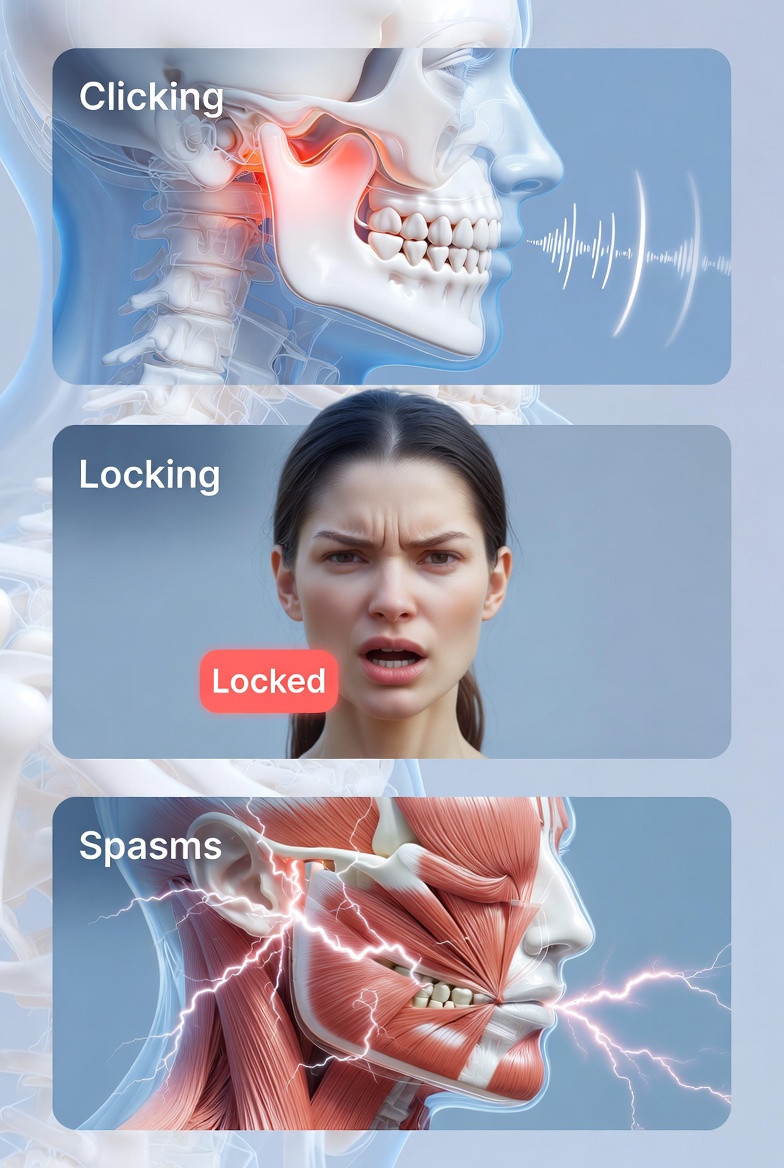
When stress moves from a “feeling” to a “physical change,” you start noticing structural red flags. The most common sign is jaw clicking—that popping sound you hear when opening your mouth wide or chewing. This happens because constant jaw pressure pulls the joint out of its smooth track.
If left unchecked, this tightness can lead to jaw locking, where the muscles become so fatigued they “seize up,” making it difficult to open or close your mouth. These painful jaw spasms are your body’s way of saying it’s overwhelmed.
The Health Connection: High stress levels often lead to “Emotional Eating” or a complete “Loss of Appetite,” which directly impacts your physical health. If your jaw tension is making it hard to eat, monitor your health markers using our BMI Tool.
What Happens If You Ignore Stress-Induced Jaw Pain?
If left untreated, chronic jaw tension can move from a temporary annoyance to a permanent problem. Ignoring the signs of jaw clenching and pressure leads to:
- Permanent Joint Damage (TMJ): Constant friction wears down the joint’s cartilage, leading to chronic jaw clicking and arthritis.
- Dental Erosion: Severe grinding (Bruxism) eventually cracks tooth enamel, leading to sensitivity or broken teeth.
- Facial Asymmetry: Over time, uneven muscle tension can cause severe jaw misalignment, visibly changing your face shape.
- Chronic Migraines: Persistent jaw stiffness often radiates upward, causing daily tension headaches.
“Chronic stress often triggers bodily inflammation, which can worsen joint conditions like Gout. If you are experiencing sharp joint pain alongside jaw tension, check our guide on Natural Gout Relief to manage your uric acid levels effectively.”
When Pain Travels: Ear, Neck, and Tooth Discomfort
Jaw tension is a “migrating” pain. Because the Trigeminal Nerve connects your jaw to your entire face, stress in one area often manifests as jaw and ear pain. You might feel a dull ringing or fullness in your ears, even if your hearing is perfectly fine.
This radiating discomfort often travels downward, causing jaw and neck pain. When your jaw is locked in a stressed position, your neck muscles overcompensate, leading to chronic stiffness. Similarly, many people mistake stress for a dental emergency because of persistent jaw and tooth pain. This “phantom” toothache is actually caused by the nerves being squeezed by your tightened jaw.
The Full-Body Impact: Chronic pain in your upper body can disrupt your digestion and metabolic rate. If you feel your eating patterns are changing due to this discomfort, monitor your energy needs using the Calorie Calculator.
Visible Signs: Stress, Jawline Acne, and Skin Issues
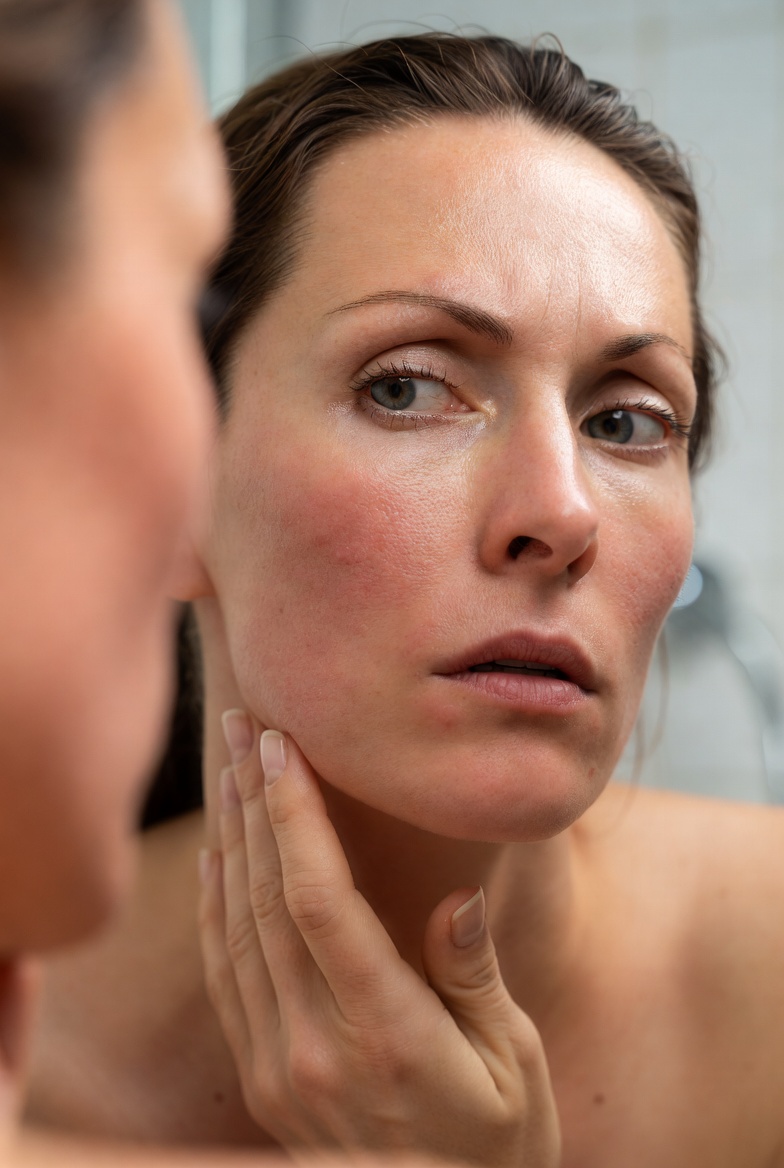
Stress doesn’t just affect your muscles; it shows up on your skin. When your body is in a high-tension state, it overproduces cortisol, which triggers your sebaceous glands to pump out excess oil. This often leads to persistent jawline acne, as the skin around your jaw becomes a magnet for inflammation and breakouts.
For many, especially stressed moms, these flare-ups are a clear physical signal of emotional burnout. This “hormonal mapping” on your face is often linked to poor sleep and high anxiety levels that come with multitasking. If you’re noticing sudden breakouts alongside a tight jaw, your skin is likely reflecting the internal pressure you’re carrying.
“Your skin’s sebaceous glands are like a natural internal moisturizer; they produce the oils (sebum) that keep your face hydrated and protected. But when stress spikes, these glands overwork—turning that healthy glow into persistent jawline acne.”
Serious Concerns: Understanding Jaw Tumors and Physical Risks
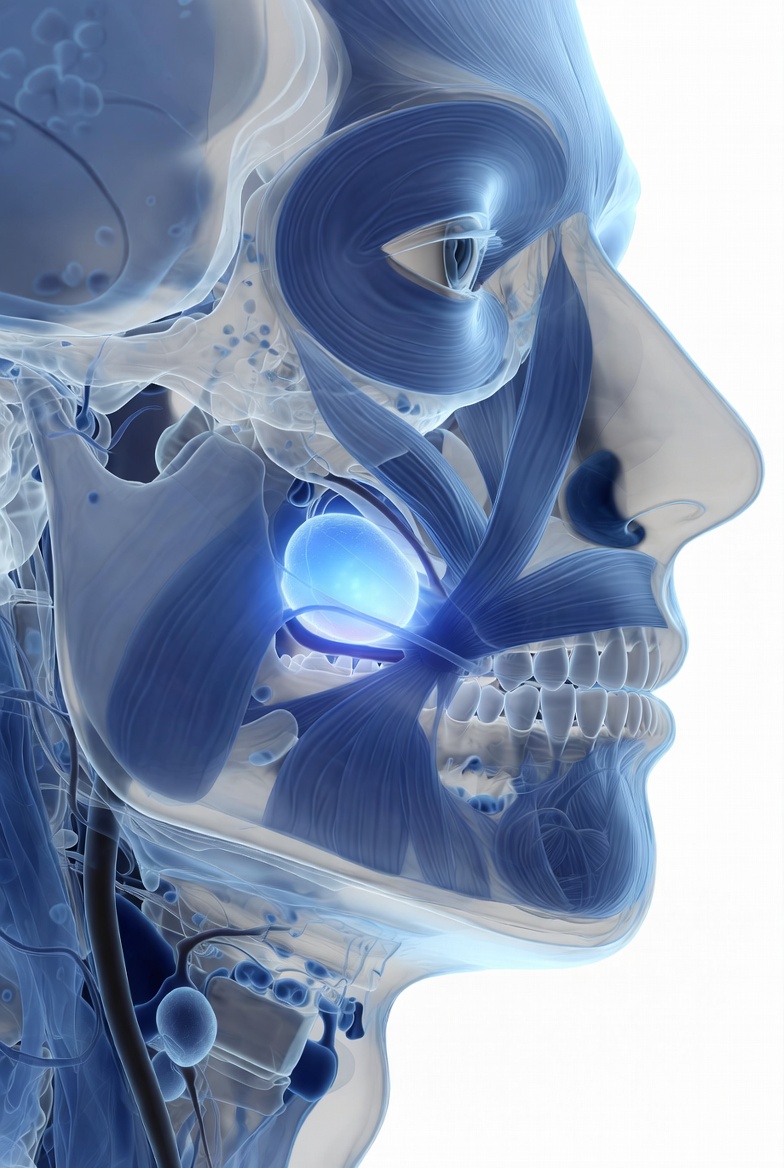
When jaw tension becomes severe, it’s natural to worry about more serious issues like jaw tumors, swollen lymph nodes under the jaw, or a mysterious lump under the jaw. While stress itself does not cause tumors or permanent growths, chronic inflammation from clenching can cause temporary swelling or a “heavy” feeling that mimics these conditions.
However, some symptoms require immediate attention. If you experience jaw and arm pain, jaw numbness, or jaw tingling, these can be signs of cardiovascular strain rather than simple muscle tension. Always consult a professional if your discomfort is accompanied by shortness of breath, as it may relate to Cardiac Stress.
The Metabolism Factor: Chronic stress can speed up your metabolism or cause a “wasting” effect, making it hard to maintain your weight. If you’re struggling to keep your strength up, see our guide on Healthy Weight Gain Strategies.
When to See a Doctor: Critical Warning Signs
While most jaw issues are stress-related, some symptoms require a professional diagnosis to rule out serious conditions. You should consult a doctor or dentist if you experience:
- Persistent Fever: If a high temperature accompanies your jaw pain, it could indicate an infection rather than stress.
- Persistent Jaw Locking: If you cannot fully open or close your mouth.
- Unexplained Lumps: A hard lump under the jaw or swollen lymph nodes that don’t go away after two weeks.
- Radiating Pain: Sudden jaw and arm pain or extreme jaw numbness.
- Difficulty Swallowing: If jaw stiffness is making it hard to eat or breathe.
Since high stress can disrupt your metabolism and lead to weight fluctuations, you can manage your fitness alongside stress relief by following our guide on Healthy Weight Loss.
Effective Treatment Options for Stress-Induced Jaw Issues
If your jaw feels weird or you are experiencing persistent jaw clicking, there are several ways to treat the problem depending on its severity.
1. At-Home Self-Care (Immediate Relief)
- The “N-Position” & Tongue Stretches: Place the tip of your tongue behind your front teeth and let your jaw hang loose. This prevents jaw clenching and resets the muscles.
- Heat & Cold Therapy: Apply a warm compress for 15 minutes to relax tight muscles, or use an ice pack if you feel sharp jaw soreness or inflammation.
- Magnesium-Rich Diet: Eat foods such as bananas, Almonds, and Spinach. Magnesium is a natural muscle relaxant that helps prevent jaw spasms.
2. Professional Medical Treatments
- Custom Night Guards: If you suffer from Bruxism (night-time grinding), a dentist can provide a mouth guard to protect your teeth and prevent jaw misalignment.
- Physical Therapy: Specialized facial massages and exercises can help realign a jaw that has shifted due to chronic jaw stiffness.
- Stress Management Therapy: Since jaw tension is a physical reaction to mental pressure, Stress Management Therapy helps you identify emotional triggers and break the habit of clenching before it causes pain.
3. Over-the-Counter Support
- Anti-inflammatories: Non-prescription pain relievers can help with temporary jaw ache and swelling.
- Muscle Relaxants: In severe cases of jaw locking, a doctor may prescribe temporary medication to break the cycle of tension.
Commonly Asked Questions
Conclusion: Listening to Your Body’s Alarms
Your jaw is often the “physical diary” of your stress. Whether it is a persistent jaw clicking, sudden misalignment, or even jawline acne, these are your body’s ways of signaling that your mental load has become too heavy. Ignoring these signs can lead to long-term structural issues, but the good news is that most stress-induced jaw problems are reversible with the right care.
By understanding the connection between your mind and your muscles, you can prevent temporary tension from becoming a long-term structural issue. Take a moment today to relax your shoulders, unclench your teeth, and prioritize your well-being. Your jaw—and your overall health—will thank you for it.
Remember, a relaxed jaw is the first step toward a relaxed mind.
Medical Disclaimer: This content is for informational purposes only and not a substitute for professional medical advice, diagnosis, or treatment. Always seek the advice of your physician regarding jaw pain from stress or jaw misalignment. Never delay seeking professional help because of something you have read here.
Share Your Story with Us! Do you have a personal experience with stress-related health issues, or are you an expert in mental wellness? We are always looking for fresh perspectives! Visit our Write for Us page to learn how you can contribute your own articles and join our growing community of health-conscious writers.