
Is It Okay to Leave Bedside Nursing? A Guide Every Nurse Should Read
More nurses across the United States are questioning bedside nursing than ever before. Recent Nurse.org workforce data showed that a growing number of nurses want to leave bedside roles due to burnout, emotional exhaustion, unsafe staffing levels, and nonstop stress.
Many nurses search “Is It Okay to Leave Bedside Nursing?” late at night after another shift that leaves them mentally drained, and dreading the next schedule notification. I have seen nurses stay in unhealthy environments for years because they believed leaving the bedside meant they failed their patients, when in reality, many are simply trying to protect their mental health before the stress completely consumes them.
This blog is not going to shame you for feeling exhausted or tell you to “push through” burnout. You are going to get honest answers about nurse burnout, compassion fatigue, non-bedside nursing jobs, salary realities, and the guilt that keeps so many USA nurses stuck longer than they should be.
Related: Nurses Crying After Work
Why So Many USA Nurses Are Questioning Bedside Nursing Right Now
This is not just your struggle. It is a nationwide crisis happening in real time inside American hospitals. According to Nurse.org’s 2026 State of Nursing Survey, more nurses are considering leaving bedside nursing than ever before. About 43% said they may leave bedside roles within the next year, while nearly one in four nurses are considering leaving nursing entirely.
Job satisfaction also dropped sharply, and many nurses reported verbal threats, aggressive behavior, and even physical assault at work. Many nurses entered healthcare to help people, not to work under nonstop stress. What many nurses experience today reflects deeper problems within the healthcare system, not personal weakness.
Related: Toxic Hospital Culture for Nurses
Why Leaving Bedside Nursing Feels So Hard
Before asking whether leaving bedside nursing is okay, many nurses first struggle with guilt. For a lot of nurses, guilt becomes the biggest reason they stay long after burnout starts affecting them.
Nursing culture in the United States often treats bedside nursing as the “real” or most respected part of the profession. I have seen nurses feel ashamed because conversations about leaving are often met with judgment, awkward silence, or comments that make them feel like staying proves they care more about patients.
Over time, many nurses start believing their value depends on staying at the bedside.
Related: How to Survive Night Shift as a Nurse
Is It Selfish to Leave Bedside Nursing?
No. Leaving bedside nursing is not selfish. A severely burned-out nurse cannot safely care for patients forever without consequences. Chronic emotional exhaustion affects concentration, patience, sleep quality, and mental wellbeing. Choosing to protect your health does not make you less compassionate. In many cases, it helps nurses stay in healthcare long term instead of leaving the profession entirely.
Many nurses transition into roles such as nursing informatics or forensic nursing, where they can continue improving patient care in new and meaningful ways.
Why Staying Too Long Can Emotionally Break Nurses
Nurses who keep pushing themselves past emotional exhaustion out of guilt usually do not feel better over time. Over time, the stress can turn into compassion fatigue, where the emotional connection to patients slowly fades, and nursing starts feeling emotionally drained instead of meaningful.
You may start noticing signs like these:
- Difficult cases stop emotionally affecting you
- You start functioning on autopilot during shifts
- charting and patient care feel emotionally disconnected
- The compassion you once felt starts fading
- Chronic stress slowly changes how you experience nursing
That is not dedication. That is depletion. And depletion helps no one.
If stress, burnout, or emotional exhaustion have started feeling heavier lately, try our free Stress Level Checker Tool to better understand what your mind and body may be carrying right now.
Is It Okay to Leave Bedside Nursing After One Year?
Yes, you can leave after one year. Some nurses leave after five years, while others stay for ten years. This is one of the most searched questions American nurses type into Google at 2 AM after a shift. And the nursing community gives wildly inconsistent answers. One of the biggest fears new nurses carry is feeling like they have not “earned” the right to leave yet.
Nursing culture often pushes the idea that nurses must survive years of bedside burnout before considering another path. I have seen many nurses stay miserable simply because they believed leaving early meant failure.
That is not true. One year of bedside nursing experience already gives you valuable clinical skills that qualify you for many non-bedside nursing jobs.
It is a career decision that thousands of skilled and compassionate nurses make every year. Many later realize they should have prioritized their wellbeing much sooner. The nursing profession is much bigger than a hospital floor. Your RN license, clinical experience, and nursing skills still have value far beyond bedside care.
Related: Burnout in Healthcare Jobs
How Nurses Know It Is Time to Leave the Bedside
Not every hard shift means you need to leave nursing. I have seen many nurses push through stressful periods successfully. But when the stress starts affecting your mental health, body, relationships, and daily life for a long time, it may be a sign that something deeper is wrong.
Here are some signs that go beyond normal job stress.
You Dread Every Shift: Your days off no longer feel relaxing because part of your mind stays focused on going back to work. Constant anxiety before shifts can signal deeper emotional burnout, not just normal stress.
Your Body Feels Constantly Drained: Chronic exhaustion, headaches, back pain, poor sleep, and physical fatigue can build slowly over time in bedside nursing. When your body never fully recovers between shifts, it may be reaching its limit.
You Constantly Search for Non-Bedside Jobs: If you regularly look up telehealth, outpatient, or remote nursing jobs, your mind may already be searching for a healthier direction. That usually reflects emotional exhaustion, not weakness.
Leaving Feels More Like Relief Than Loss: Many burned-out nurses expect guilt when thinking about leaving bedside nursing, but instead, they feel relief. Sometimes your nervous system recognizes burnout before your mind fully accepts it.
Related: Caregiver Burnout vs Compassion Fatigue
Why Financial Pressure Keeps Nurses at the Bedside?
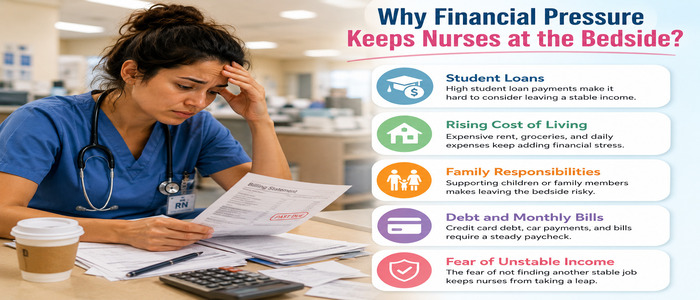
Most conversations about leaving bedside nursing focus on burnout, stress, or mental health. Very few talk honestly about money, even though finances are one of the biggest reasons nurses stay in jobs that are hurting them.
According to the 2026 Nurse.org State of Nursing Survey, 41% of nurses said financial necessity is the main reason they remain at the bedside. Many nurses want a healthier career path but feel trapped by bills, debt, or the fear of losing income.
Related: Workplace Stress
Will Leaving Bedside Nursing Lower Your Salary?
Sometimes yes, especially at the beginning. Some non-bedside nursing jobs may initially pay less than bedside roles with overtime, night differentials, or extra shifts. But income is only one part of the decision. Many nurses eventually realize that protecting their mental health, physical health, and overall quality of life matters just as much as the paycheck.
Pro Tip: Before quitting bedside abruptly, build a transition plan. Updating certifications, networking on LinkedIn, and applying quietly while employed can reduce financial stress during the change.
Related: How Nurses Can Exercise with a Busy Work Schedule
Best Non-Bedside Nursing Jobs With Strong Salaries
Non-bedside nursing jobs are careers where nurses still use their clinical knowledge without working full-time on a hospital floor. Many of these roles focus on leadership, technology, education, insurance, consulting, remote care, or healthcare systems instead of nonstop bedside patient care.
Many nurses move into these careers for:
- Lower stress levels
- More predictable schedules
- Remote work opportunities
- Better work-life balance
- Strong long-term career growth
▷ Leadership and Management Nursing Jobs
These careers focus on supervising healthcare teams, improving patient care systems, and managing hospital operations.
- Chief Nursing Officer (CNO): One of the highest-level leadership positions in nursing. Oversees hospital-wide nursing operations and patient care standards.
Pay: Very high. - Director of Nursing: Manages staffing, budgets, nursing departments, and healthcare operations across facilities.
Pay: High. - Nurse Manager: Leads a nursing unit while supervising staff schedules and daily workflow.
Pay: Moderate to high.
▷ Remote and Work From Home Nursing Jobs
These nursing careers offer more flexibility and lower physical burnout than bedside care.
- Telehealth Nurse: Provides virtual patient support, education, and follow-up care remotely.
Pay: Moderate. - Remote Triage Nurse: Assesses symptoms remotely and guides patients toward proper medical care.
Pay: Moderate to high. - Medical Writer: Creates healthcare articles, clinical documentation, and medical education content.
Pay: Moderate to high. - Remote Health Insurance Nurse Auditor: Reviews claims and medical records remotely for insurance compliance.
Pay: Moderate to high.
▷ Advanced Practice Nursing Careers
These roles usually require advanced education but offer some of the strongest salaries in nursing.
- Nurse Practitioner (NP): Diagnoses illnesses, prescribes medication, and manages patient treatment plans.
Pay: High pay - Certified Registered Nurse Anesthetist (CRNA): Administers anesthesia during surgeries and medical procedures.
Pay: Very high pay
▷ Insurance and Case Management Nursing Jobs
These careers focus on healthcare planning, insurance approvals, and long-term patient coordination.
- Utilization Review Nurse: Reviews treatment plans and insurance approvals in office or remote settings.
Pay: Moderate to high. - Case Management Nurse: Coordinates patient care across hospitals, insurance companies, and community health settings with predictable schedules and no overnight shifts.
▷ Technology and Healthcare Systems Careers
These nursing careers combine healthcare experience with technology and clinical systems management.
- Nursing Informatics Specialist: Improves electronic health records, healthcare software, and clinical systems.
Pay: High.
▷ Education and Training Nursing Careers
These jobs focus on teaching and mentoring future healthcare professionals.
- Nurse Educator: Teaches nursing students in colleges, universities, or hospital systems.
Pay: Moderate. - Online Nurse Educator: Creates digital healthcare education programs and online training content.
Pay: Moderate.
▷ Legal and Consulting Nursing Careers
These careers use nursing knowledge outside direct patient care environments.
- Legal Nurse Consultant: Reviews medical records and supports healthcare-related legal cases.
Pay: High. - Nurse Entrepreneur: Builds businesses through consulting, coaching, healthcare services, or content creation.
Pay: Moderate to very high.
▷ Research and Public Health Nursing Jobs
These careers focus on healthcare improvement, disease prevention, and medical research.
- Clinical Research Nurse: Supports clinical trials and monitors patient safety during research studies.
Pay: Moderate to high. - Public Health Nurse: Focuses on disease prevention and community health programs.
Pay: Low to moderate. - Epidemiology Nurse: Studies disease outbreaks and public health trends.
Pay: Moderate to high.
▷ Corporate and Business Nursing Jobs
These nursing careers allow nurses to work in business, wellness, and corporate healthcare environments.
- Pharmaceutical Sales Nurse: Educates healthcare providers about medications and medical products.
Pay: High. - Occupational Health Nurse: Supports employee wellness and workplace health programs.
Pay: Moderate to high. - Staffing Agency Nurse Recruiter: Recruits nurses for hospitals and healthcare organizations.
Pay: Moderate.
▷ Flexible Low-Stress Nursing Jobs
These nursing careers usually offer calmer environments and more predictable schedules than bedside nursing.
- School Nurse: Provides healthcare support for students in school settings.
Pay: Low to moderate. - Home Health Nurse: Visits patients at home for ongoing care and recovery support.
Pay: Moderate. - Hospice Nurse: Provides compassionate end-of-life care in home-based settings.
Pay: Moderate. - Health Coach Nurse: Helps patients improve lifestyle habits and long-term wellness goals.
Pay: Low to moderate.
Related: Stages of Burnout
How to Get Out of Bedside Nursing Professionally
If you leave bedside nursing after one year or less, many non-bedside employers may ask why you made the change. The best approach is to explain the decision as a thoughtful career move instead of speaking from frustration or burnout alone. You should stay professional and future-focused.
Instead of speaking negatively about your old job:
- Explain what attracted you to the new role
- Highlight transferable bedside skills
- Focus on long-term career goals
- Show how your clinical experience still adds value
A calm and confident explanation usually matters far more than the exact number of months you spent at the bedside.
Related: Can Burnout Cause Fatigue?
Real Stories From Nurses Who Left Bedside Nursing
Sometimes the most comforting thing is realizing other nurses struggled with the same thoughts, guilt, and emotional exhaustion before deciding to leave bedside nursing.
⏵Sarah, ICU Nurse, Chicago
Sarah worked six years in a trauma ICU before burnout started affecting every part of her life. She struggled with sleep, cried after shifts, and felt emotionally exhausted almost constantly.
She eventually moved into telehealth nursing and later said she finally felt like herself again. She still helps patients every day, but now she works from home with far less stress and a healthier schedule.
“I thought leaving ICU meant I failed as a nurse. Now I realize staying until I completely broke down would have been the bigger mistake.”
Critical care demands more than clinical skills. See why ICU nurses face a higher risk of burnout.
⏵Marcus, ER Nurse, Dallas
Marcus spent four years in emergency nursing before the stress started affecting his marriage and mental health. He constantly felt anxious, emotionally drained, and disconnected outside of work.
He later transitioned into case management. Today, he works regular weekday hours and spends far more time with his family.
“My family says they finally got me back. That matters more to me than any hospital title ever did.”
⏵Danielle, Med-Surg Nurse, Atlanta
Danielle left bedside nursing after only fourteen months. She felt guilty for leaving early because people around her kept saying she had not stayed long enough.
During her final months on the floor, she started having panic attacks before shifts. She now works in an outpatient clinic where the environment feels calmer, more predictable, and emotionally manageable.
“Everyone focused on how long I stayed. Very few people asked how badly I was struggling.”
If exhaustion has started feeling normal lately, the 42% Rule for Burnout may help you recognize the warning signs earlier.
Frequently Asked Questions
Do nurses regret leaving bedside nursing?
Some nurses miss patient interaction or certain parts of bedside care, but many do not regret protecting their mental health. Nurses often report feeling calmer, healthier, and more emotionally present after transitioning into different roles. Regret usually depends on why someone left and whether they found a better fit afterward. Leaving bedside nursing does not erase your experience or nursing identity. Many nurses later say they wish they had left sooner.
Why do nurses feel trapped in bedside nursing?
Many nurses feel trapped because of financial pressure, student loans, healthcare benefits, or fear of starting over. Others worry they will disappoint coworkers, patients, or family members by leaving bedside care. Burnout also affects decision-making and can make career changes feel overwhelming. Some nurses stay because they do not realize how many non-bedside nursing jobs actually exist. Feeling trapped is common among emotionally exhausted nurses, especially after years of chronic workplace stress.
Why do nurses replay patient situations long after shifts end?
Many nurses carry difficult patient interactions home mentally, even after clocking out. The brain naturally replays emotional situations while trying to process stress, responsibility, or unresolved feelings. Some nurses overanalyze conversations, emergencies, or medical decisions for hours afterward. This mental replay can make emotional recovery much harder between shifts. Persistent rumination is common among healthcare workers experiencing stress overload.
The Suggestion You Were Looking For
If you scrolled all the way to the end looking for someone to tell you it is okay, here it is:
- It is okay to leave bedside nursing.
- It is okay to want a schedule that does not destroy your sleep. It is okay to want to come home with something still left in you. It is okay to want a career that does not follow you into the shower at night.
- You became a nurse because you wanted to help people. That desire does not disappear when you leave the bedside. It just finds a new place to live.
The system failed you. You did not fail it.
Related: Is Burnout Permanent?
⯀ Reference
- https://nurse.org/articles/state-of-nursing-survey-2026/
- https://nurse.org/articles/state-of-nursing-survey
Disclaimer: This content is for informational purposes only and should not replace professional medical or mental health advice.
Interested in sharing your healthcare, wellness, or nursing insights with our readers? Visit our Write for Us page to learn more about guest posting opportunities.