Best Natural Diet for Gout Pain Relief: A Practical Food Guide
Quick Answer: Yes, you can eat high-purine vegetables even with gout. Research reviewed by Mayo Clinic shows no link between plant-based purines and increased gout attacks, unlike red meat, organ meats, and certain seafood.
Most people assume gout sufferers must avoid every vegetable that contains purines, but that’s not accurate. Research cited by Mayo Clinic shows that vegetables high in purines, such as asparagus and spinach, don’t increase the risk of gout or recurring gout attacks.
This mix-up leads many patients to cut healthy foods for no real benefit while missing changes that actually matter, like weight management and sugar intake. Understanding the real causes and risk factors behind gout attacks matters more than following outdated food myths.
That’s exactly why finding the Best Natural Diet for Gout Pain Relief means learning which lifestyle factors truly influence uric acid levels, rather than fearing every purine source on your plate.
Could your weight be quietly increasing your gout risk? Check your current range in seconds with our BMI Calculator.
Best Foods for a Natural Gout Diet
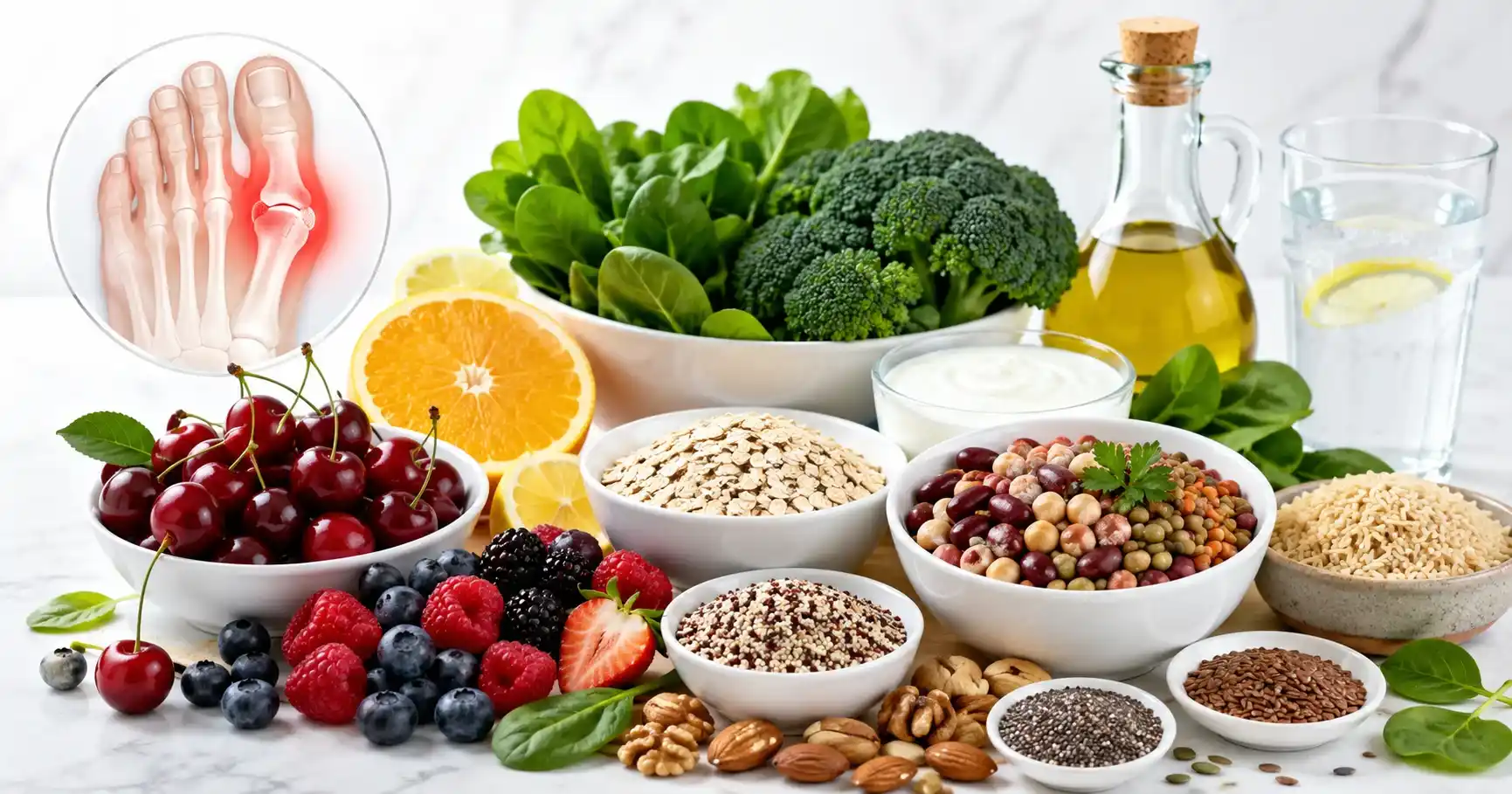
A gout-friendly diet does not depend on one miracle food or a highly restrictive meal plan. Instead, it emphasizes everyday choices that may support uric acid control, healthy weight management, and overall joint health. The following foods can help you build balanced meals without making your diet complicated or difficult to maintain.
1. Low-Fat Dairy Foods
Low-fat dairy gives you high-quality protein without the purine load found in many meat-based foods. Research also links regular intake of low-fat milk and yogurt with lower uric acid levels and fewer gout flares.
Best choices:
- Skim or low-fat milk
- Plain Greek yogurt
- Low-fat cottage cheese
- Unsweetened kefir
Easy ways to add them:
- Use milk in oatmeal
- Pair yogurt with fresh fruit
- Add cottage cheese to lunch
- Drink plain kefir as a snack
Choose unsweetened options whenever possible to avoid extra sugar.
You’re right. The opening should explain the benefit without repeating the foods listed below.
2. Fruits and Vegetables
Fruits and vegetables provide fiber, vitamins, minerals, and antioxidants that support overall health and may help the body manage uric acid more effectively. Eating a variety of fruits and vegetables can improve meal quality.
Good everyday choices include:
| Fruits | Vegetables |
|---|
| Cherries | Spinach |
| Strawberries | Kale |
| Blueberries | Asparagus |
| Oranges | Bell peppers |
| Grapefruit | Broccoli |
| Apples | Cauliflower |
| Pears | Carrots |
| Peaches | Potatoes |
| Melons | Mushrooms |
| Pineapple | Peas and eggplant |
Choose whole fruit more often than fruit juice. Whole fruit contains fiber and is less concentrated in natural sugar, while juice is easier to consume in large amounts. People with kidney disease or potassium restrictions should ask a healthcare professional which fruits and vegetables best fit their needs.
3. Fiber-Rich Whole Grains
Whole grains retain more fiber and nutrients than refined grains. They may help you:
- Stay full for longer.
- Support healthy digestion.
- Maintain steadier blood sugar.
- Reduce reliance on meat-heavy meals.
Good options include:
- Oats
- Brown rice
- Quinoa
- Barley
- Bulgur
- Whole-wheat bread and pasta
Shopping tip: Check the ingredient list and choose products with a whole grain listed first. Labels such as “multigrain” or “wheat bread” can still appear on products made mostly with refined flour.
4. Plant Proteins for Everyday Meals
Beans, lentils, chickpeas, and soy foods offer a practical way to vary your protein intake while adding fiber, folate, and other essential nutrients. They are widely available, affordable, and easy to use in everyday cooking.
| Protein Type | Examples | What to Look For |
|---|---|---|
| Beans and lentils | Black beans, kidney beans, lentils, chickpeas. | Choose no-salt-added options or rinse canned varieties. |
| Soy foods | Tofu, tempeh, edamame. | Select plain, minimally processed products. |
| Packaged alternatives | Plant-based patties, nuggets, and sausages. | Compare sodium, saturated fat, and ingredient lists. |
Introduce high-fiber foods gradually if you do not eat them regularly. This may help limit temporary gas, bloating, or digestive discomfort.
5. Eggs, Nuts, and Fish: What to Choose
These foods can add variety to your protein intake, but they do not all affect gout in the same way. Eggs and nuts are generally easier to include regularly, while fish requires more careful selection and portion control.
| Food | Practical Guidance |
|---|---|
| Eggs | Use boiled, poached, or lightly scrambled eggs as an alternative to meat-heavy breakfasts and lunches. |
| Nuts | Choose unsalted walnuts, almonds, pistachios, or pecans. Keep portions to a small handful because nuts are calorie-dense. |
| Seeds | Add chia, flax, pumpkin, or sunflower seeds to oatmeal, yogurt, or salads. |
| Fish | Choose modest portions rather than making seafood your main protein every day. Purine levels vary considerably between fish varieties. |
Mayo Clinic notes that people with gout may still include small amounts of fish, even though certain seafood contains higher levels of purines. Your symptoms, uric acid level, medications, and other health conditions should guide how often you eat it.
Choose baked, grilled, poached, or roasted options instead of deep-fried preparations. Speak with your doctor or registered dietitian if you are unsure which fish varieties or portions are appropriate for you.
6. Hydration Habits That Matter
Water supports normal kidney function and helps the body remove urate through urine. Staying hydrated may support gout management, but drinking excessive amounts will not stop an active flare or replace prescribed treatment.
Practical hydration habits:
- Keep water nearby and sip it regularly throughout the day
- Drink additional fluids during hot weather or physical activity
- Choose plain or unsweetened sparkling water
- Add fresh lemon, cucumber, or berries when you want more flavor
- Limit beverages that contain large amounts of added sugar
Coffee and Gout
Research has linked regular coffee intake with a lower risk of gout, but coffee does not treat an active flare or replace medication.
Choose:
- Plain black coffee.
- Coffee with a small amount of low-fat milk.
- Unsweetened or lightly sweetened options.
Limit:
- Sugary syrups.
- Heavy cream.
- High-sugar coffee drinks.
Ask your healthcare professional about caffeine if you have high blood pressure, heart rhythm problems, or digestive issues.
There is no single water target that suits everyone. Your needs can change based on body size, activity level, climate, medications, and existing medical conditions.
Important: People receiving dialysis or managing kidney disease, heart failure, or a prescribed fluid restriction should follow the amount recommended by their healthcare team. Drinking more water is not always safer in these situations.
Related post: What to do during a sudden gout attack
Which Eating Pattern Works Best for Gout?
There is no single eating pattern that works best for everyone with gout. However, DASH and Mediterranean-style eating provide useful frameworks for improving diet quality, supporting weight control, and addressing health conditions that often occur alongside gout.
DASH Diet
The DASH diet was originally developed to lower blood pressure. Randomized feeding studies have also found that it can produce modest reductions in serum urate, particularly among people whose levels are already elevated. These findings are promising, but they do not show that DASH alone can prevent gout attacks or replace treatment.
DASH may suit you if you:
- Have high blood pressure.
- Prefer clear food-group targets.
- Need to monitor sodium intake.
- Want defined limits on added sugar and saturated fat.
Mediterranean Diet
Mediterranean-style eating places greater emphasis on minimally processed foods, plant-based ingredients, and unsaturated fats. Research has linked stronger adherence to the Mediterranean diet with lower serum uric acid levels, although evidence for its direct effects on gout remains limited compared with its well-established cardiovascular benefits.
This approach may suit you if you:
- Prefer flexible meal planning.
- Regularly prepare meals at home.
- Want to use more plant-based ingredients.
- Favor olive oil and other unsaturated fats.
Traditional Mediterranean meals often include seafood. Mayo Clinic advises limiting higher-purine choices such as anchovies, sardines, shellfish, and codfish.
How to Build a Balanced Meal Plate for Gout
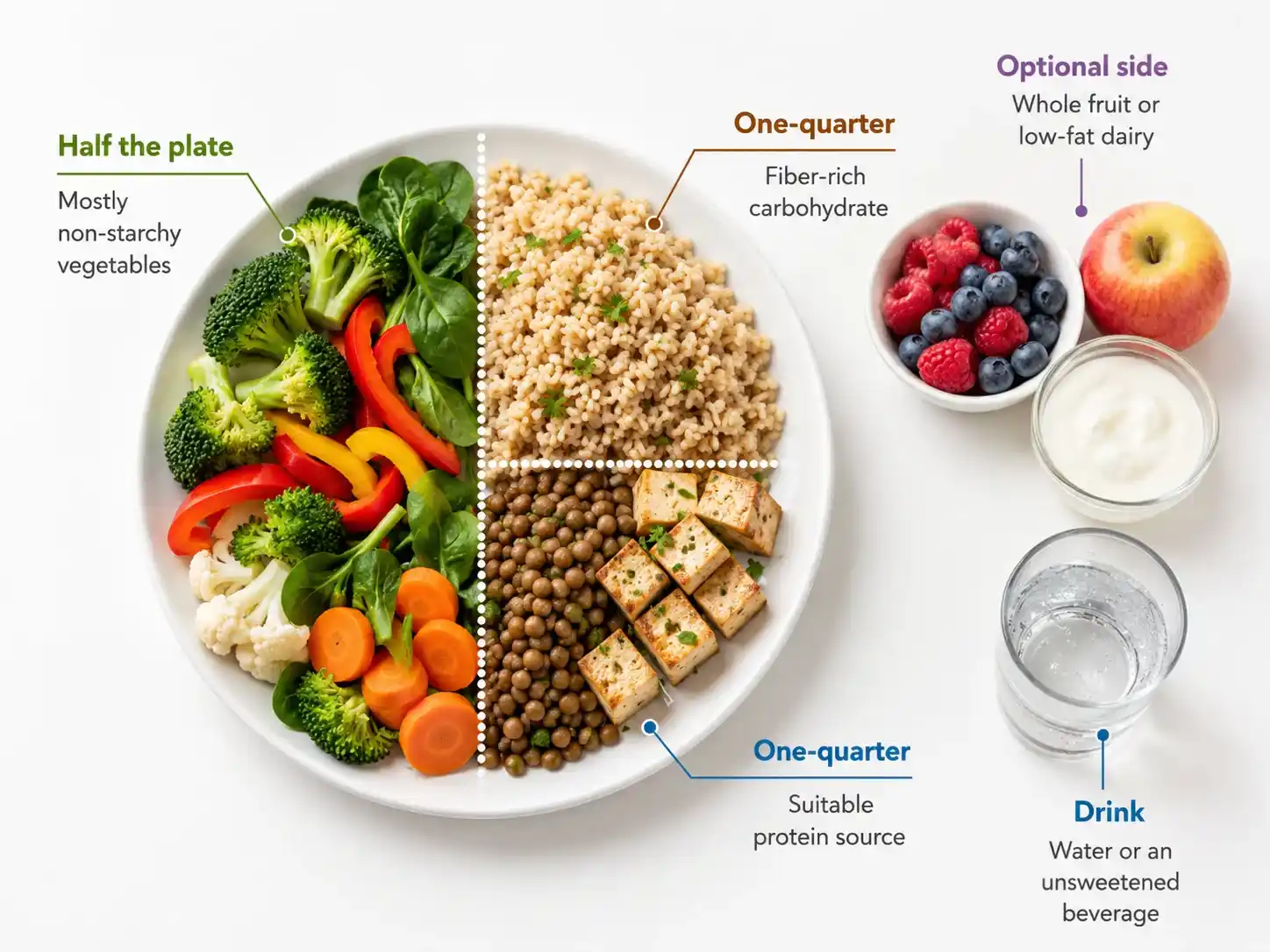
There is no medically prescribed “gout plate,” but a simple visual framework can make everyday meals easier to plan. Build most meals around vegetables, a moderate portion of fiber-rich carbohydrates, and a suitable protein source.
| Plate Area | What to Include |
|---|---|
| Half the plate | Mostly non-starchy vegetables. |
| One-quarter | A fiber-rich carbohydrate. |
| One-quarter | A suitable protein source. |
| Optional side | Whole fruit or low-fat dairy. |
| Drink | Water or an unsweetened beverage. |
Rotate Your Protein Choices
Avoid making meat or seafood the largest part of every meal. Rotate plant proteins, eggs, low-fat dairy, poultry, and carefully selected fish to add variety and reduce dependence on higher-purine animal foods.
Use Simple Cooking Methods
Bake, roast, steam, grill, or poach foods instead of deep-frying them. Season meals with herbs, spices, lemon, garlic, or a small amount of olive oil rather than relying heavily on rich sauces.
One-Day Meal Plan for Gout Management
This sample menu shows how to combine the food groups discussed above into simple, balanced meals.
| Meal | Suggested Menu |
|---|---|
| Morning drink | Water or plain coffee with minimal added sugar. |
| Breakfast | Plain oatmeal prepared with low-fat milk, topped with berries and a small amount of walnuts. |
| Lunch | Quinoa and chickpea salad with mixed vegetables, olive oil, and lemon dressing. |
| Afternoon snack | A whole apple with plain low-fat yogurt or cottage cheese. |
| Dinner | Baked tofu with roasted vegetables and brown rice. |
This menu is an example rather than a fixed prescription, so you can replace foods with similar choices from the same food group. When you eat matters too. See our AM vs PM nutrition guide for the details.
Not sure how much food fits your daily needs? Use our Calorie Calculator to estimate your daily calorie target before adjusting the portions in this sample plan.
Advantages and Disadvantages of a Low-Purine Diet
A low-purine diet reduces foods that produce larger amounts of uric acid when digested. It may support long-term gout management, but its benefits and limitations should be considered before making major dietary changes.
| Advantages | Disadvantages |
|---|---|
| May lower uric acid modestly: Reducing high-purine foods may help lower serum urate and decrease exposure to common dietary triggers. | May not lower uric acid enough: Diet alone is often insufficient for people with recurring attacks or significantly elevated uric acid. |
| Supports long-term weight control: The approach often reduces red meat, alcohol, sugary foods, and heavily processed products. | Can feel restrictive: Long lists of prohibited foods may make the plan difficult to follow consistently. |
| May reduce future flare risk: Limiting certain meats, seafood, and alcohol may help some people experience fewer attacks. | Does not treat active pain: Changing what you eat cannot reliably stop inflammation during an ongoing flare. |
| May benefit metabolic health: Better food choices can also support blood pressure, blood sugar, and cardiovascular health. | Can lead to unnecessary food avoidance: Healthy foods such as spinach, asparagus, beans, and lentils do not need to be eliminated solely because they contain purines. |
| May help reduce uric acid stone risk: Lowering uric acid production may benefit some people who develop uric acid kidney stones. | Does not address every cause: Genetics, kidney function, body weight, medications, and other medical conditions also affect uric acid levels. |
Cleveland Clinic notes that a low-purine diet may help lower uric acid and support healthy weight management. However, the Arthritis Foundation explains that dietary changes alone may not control gout for many people. Those with frequent attacks may need urate-lowering treatment aimed at maintaining serum urate at 6 mg/dL or lower, as recommended by the American College of Rheumatology.
Nutrition is only one part of the picture. Understanding how stress may influence gout flare-ups can help you recognize another possible factor behind recurring symptoms.
The Bottom Line
The right eating pattern can support uric acid control while improving weight, blood sugar, and heart health. It also encourages you to cut back on added sugar, alcohol, and heavily processed meats without removing essential nutrients from your meals.
Diet alone will not cure gout or stop a severe flare, but it can strengthen your long-term management plan. If attacks keep returning, ask your healthcare provider whether additional dietary changes or urate-lowering treatment may be appropriate.
Also read: Gout in Women vs Men: Key Differences
References
- Mayo Clinic’s Gout Diet Recommendations
- Gout Low-Purine Diet: Best Foods to Eat and What to Avoid
- DASH Diet and Change in Serum Uric Acid Over Time
Disclaimer: This article is for educational purposes only and does not replace professional medical advice. Consult your healthcare provider before changing your diet or treatment.