Can Stress Cause Constipation? What Nurses Need to Know
Ever notice that your digestion seems to slow down during your busiest stretch of shifts? You may not feel the effects immediately, but your gut can respond to stress before the symptoms become obvious.
That raises a common question for healthcare workers: Can Stress Cause Constipation? In many cases, the answer involves more than one factor. Stress does not act alone. Irregular schedules and missed breaks may also disrupt normal bowel habits and contribute to constipation.
This article explains exactly what is happening in your gut during stressful shifts, why healthcare workers are especially vulnerable, and what you can do about it both right now on the floor and over the long term.
Classification: Types of Constipation
Constipation can be classified according to its underlying cause, bowel function, and duration. Identifying the type can help guide appropriate treatment.
1. Primary or Functional Constipation
Primary constipation occurs without an identifiable disease or medication being responsible. It is commonly divided into three patterns:
- Normal-Transit Constipation: Stool moves through the colon at a normal rate, but bowel movements may still be difficult, infrequent, or incomplete.
- Slow-Transit Constipation: Stool moves unusually slowly through the colon because bowel contractions are reduced or less effective.
- Defecatory or Outlet Dysfunction: The pelvic-floor and anal muscles do not coordinate or relax properly during a bowel movement.
2. Secondary Constipation
Secondary constipation results from another health condition, medication, or lifestyle factor. Possible causes include hypothyroidism, diabetes, neurological disorders, dehydration, and medicines such as opioids, iron supplements, and certain blood-pressure medications.
3. Acute and Chronic Constipation
- Acute Constipation: Develops suddenly and may follow changes in routine, travel, illness, reduced fluid intake, medication use, or temporary stress.
- Chronic Constipation: Continues or repeatedly occurs over an extended period. Functional constipation is generally assessed using symptom duration, frequency, and other diagnostic criteria rather than duration alone.
What Is the Link Between Stress and Constipation?
Stress and constipation have a well-documented biological connection. At the center of this relationship is the gut-brain axis, a two-way communication network that links your central nervous system to the enteric nervous system in your gut.
The Enteric Nervous System (ENS) is sometimes called the “second brain.” It contains more than 100 million nerve cells that line the gastrointestinal tract and help regulate digestion, intestinal movement, and secretion. At the same time, it constantly communicates with the brain through the vagus nerve and neurotransmitters such as serotonin and dopamine.
Here is the important part: More than 90% of the body’s serotonin is produced by enterochromaffin cells in the gut. When stress disrupts this system, it does not just affect your mood. It can also alter intestinal motility, affecting how quickly and regularly stool moves through your digestive tract.
The gut-brain connection means that emotional and psychological stress translates directly into physical changes in your digestive system. This is not a metaphor. It is physiology.
Stress and Constipation: What Happens Inside Your Body?
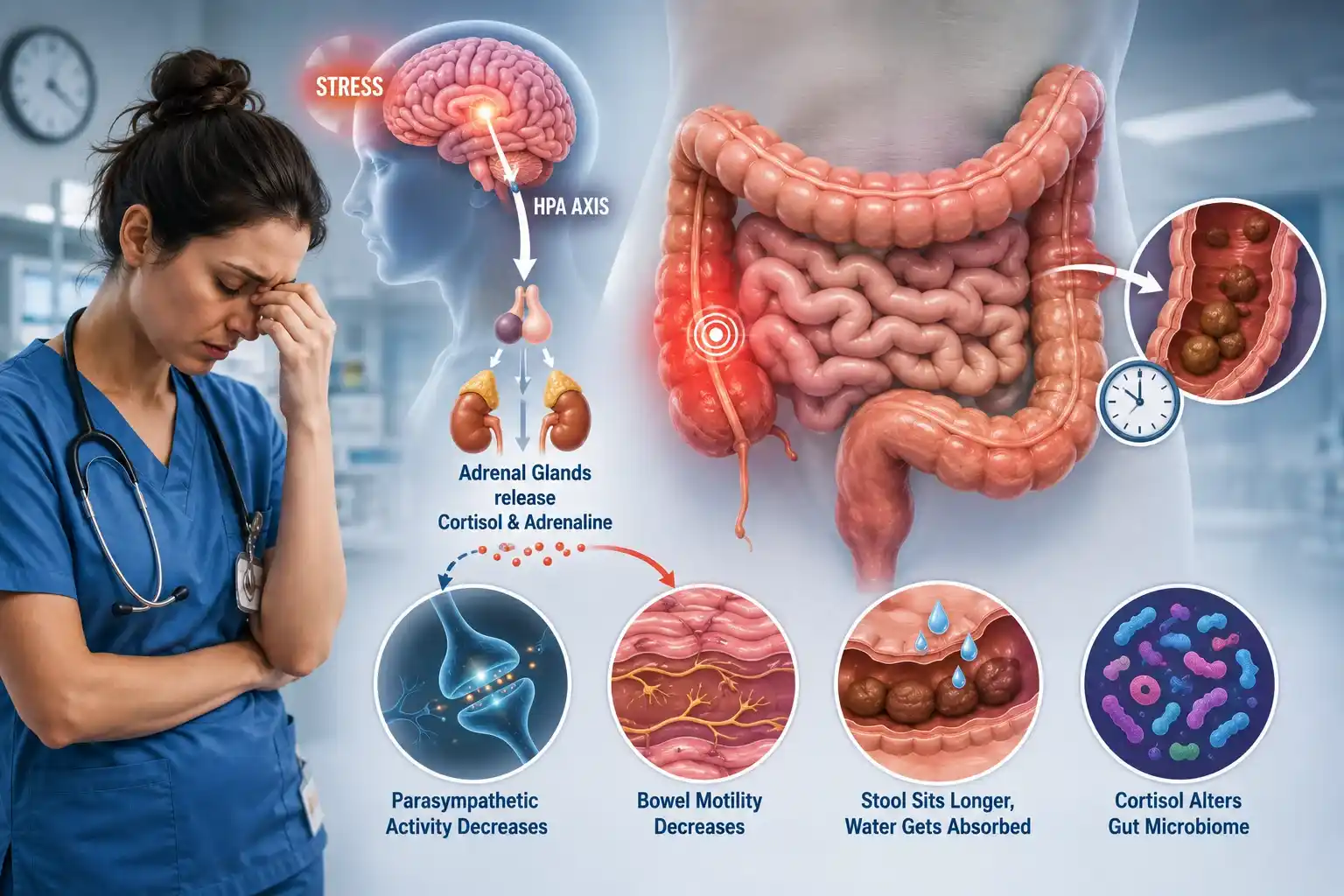
When you experience stress, whether it is a code situation, a difficult family situation, or a crushing patient load, your Hypothalamic-Pituitary-Adrenal (HPA) axis switches on. Your adrenal glands flood your body with cortisol and adrenaline, activating the sympathetic nervous system in what is commonly called the fight-or-flight response.
Here is what that means for your gut:
- Blood flow is redirected. Your body shifts blood flow away from your digestive organs and toward your muscles and heart, which are considered essential for survival. Your colon, operating on reduced blood flow, slows down.
- Bowel motility decreases. Your intestines move stool forward through wave-like muscular contractions called peristalsis. These waves are suppressed by sympathetic nervous system activation. Stool sits in the colon longer. Water gets absorbed. The stool becomes hard and difficult to pass.
- The parasympathetic nervous system gets switched off. Your parasympathetic nervous system is sometimes called the “rest-and-digest” system. When stress activates the sympathetic nervous system, parasympathetic activity may decrease. This can reduce the digestive stimulation that helps keep the gut moving.
- Cortisol alters gut microbiome composition. Chronically elevated cortisol has been shown to disrupt the balance of gut bacteria, which researchers call gut dysbiosis. It is a microbial imbalance that further impairs bowel regularity and can amplify intestinal inflammation.
Why Nurses and Healthcare Workers Are Especially Vulnerable
Nurses do not just experience stress. They experience a specific, layered, compounding type of stress that hits the digestive system from multiple angles simultaneously.
1. Chronic occupational stress without recovery
A 2023 American Nurses Foundation survey found that 56% of nurses reported burnout symptoms, while 64% reported high job-related stress. Repeated stress may disrupt normal cortisol patterns and digestive function, which can affect bowel regularity.
2. Shift work and circadian rhythm disruption
Night shifts can disrupt the natural timing cues that help keep your bowel movements regular. Your colon follows a daily rhythm, with activity typically increasing after you wake and eat, partly because of the gastrocolic reflex. Working overnight can misalign your sleep and meal schedule with this rhythm.
Missed breaks, irregular meals, and repeatedly delaying the urge to use the bathroom may add to the problem.
Research suggests that shift work may be associated with gastrointestinal symptoms, including constipation. However, study findings are mixed, and night work does not affect everyone in the same way.
3. Dehydration during 12-hour shifts
Many nurses go through entire shifts without drinking enough water, not by choice, but because heavy patient loads, limited breaks, and restricted bathroom access make hydration difficult. Stress and dehydration may then work together to contribute to constipation. Inadequate fluid intake allows the colon to absorb more water from the stool.
4. Diet disruption on shift
Nurses and other healthcare workers may miss meals or rely on quick, low-fiber foods when time and options are limited. Depending on age and sex, adults generally need about 25 to 38 grams of fiber each day.
Fiber helps add bulk and moisture to stool, making it easier to pass. Low fiber intake can contribute to constipation.
5. Medication-related constipation
Iron supplements, opioid pain relievers, and some antidepressants can cause constipation, although the effect varies by medication and person. If you suspect a medication is contributing to constipation, speak with your doctor or pharmacist before changing the dose or stopping it.
Symptoms: How to Know If Stress Is Causing Your Constipation
Stress-related constipation can resemble other forms of constipation, so a single symptom cannot confirm the cause. Looking at when symptoms occur, how they change with workload, and whether they improve during time off can help reveal a possible stress-related pattern.
Signs That Stress May Be Contributing
- Symptoms follow a clear pattern, worsening during demanding work periods and easing during time away from work.
- Bloating, abdominal discomfort, or changes in bowel habits occur alongside stress-related symptoms such as headaches, muscle tension, fatigue, irritability, anxiety, disturbed sleep, or palpitations.
- Symptoms occur without another clear cause, such as changes in medication, diet, hydration, activity, or health.
If you find that your constipation tends to worsen during stressful periods, use our Stress Level Checker to understand your current stress level.
Use the Bristol Stool Scale
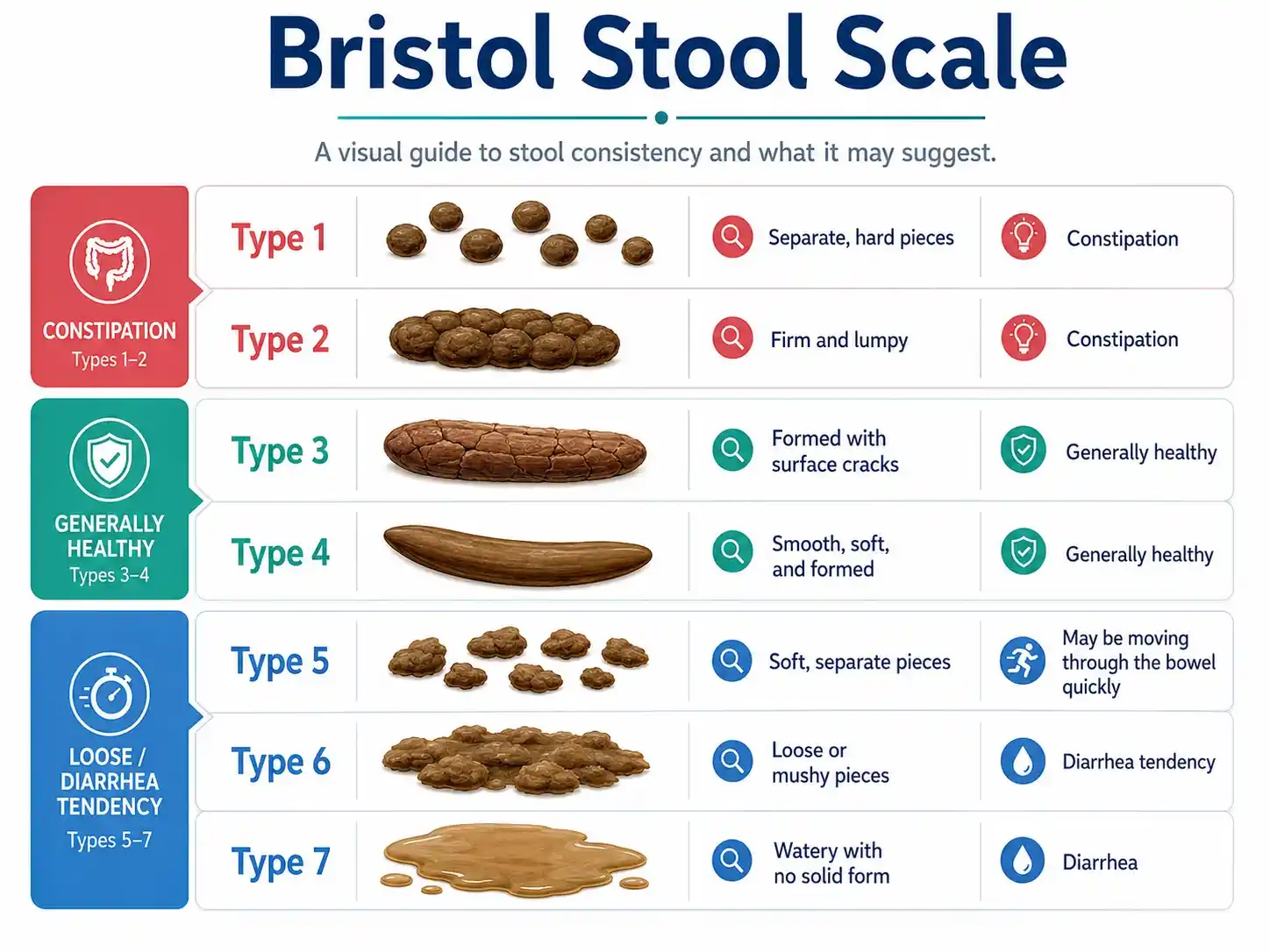
The Bristol Stool Scale classifies stool into seven types based on shape and consistency. Types 1 and 2 commonly indicate constipation, while Types 3 and 4 are generally considered easier and healthier to pass.
| Stool Type | General Description | What It May Suggest |
|---|---|---|
| Type 1 | Separate, hard pieces. | Constipation |
| Type 2 | Firm and lumpy. | Constipation |
| Type 3 | Formed with surface cracks. | Generally healthy |
| Type 4 | Smooth, soft, and formed. | Generally healthy |
| Type 5 | Soft, separate pieces. | May be moving through the bowel quickly |
| Type 6 | Loose or mushy pieces. | Diarrhea tendency |
| Type 7 | Watery with no solid form. | Diarrhea |
How Nurses Can Track and Report Symptoms
- Record the stool type rather than writing only “constipated.”
- Track the frequency of bowel movements alongside stool consistency.
- Share persistent Type 1 or Type 2 stools with a healthcare professional.
- Seek medical advice for concerning symptoms rather than relying on the scale for diagnosis.
The scale is a tracking tool and does not identify the underlying cause of constipation.
Irritable Bowel Syndrome with Constipation. vs. Stress Constipation: What Is the Difference?
Now that we have discussed stress-related constipation, it is important to understand how it differs from IBS-C. Although both conditions can involve constipation, IBS-C includes a recurring pattern of abdominal pain and changes in bowel habits. The following table highlights the main differences.
How Long Does Stress Constipation Last?
Acute stress constipation may last for a few days and often improves after the stressful event passes. However, chronic occupational stress may cause constipation to persist or return, especially among nurses and other shift workers.
Constipation that persists, recurs frequently, or occurs with warning signs may require medical evaluation.
Best High-Fiber Sources for Constipation Relief
Adding high-fiber fruits, vegetables, and dairy-based combinations with fiber-rich ingredients may help support regular bowel movements and digestive health. Busy nurses can choose options that are easy to prepare, pack, and include in shift meals or snacks.
Note: Dairy foods do not naturally provide significant fiber. The fiber in these combinations comes from added fruits, seeds, oats, whole grains, or vegetables.
Practical Relief: How to Treat Stress-Related Constipation
Simple lifestyle measures may help relieve stress-related constipation, but some people may also need an over-the-counter option. The right choice depends on the severity of constipation, other health conditions, and how often the problem occurs. The table below compares common remedies and explains when each option may be appropriate.
Important: Laxatives may relieve constipation but do not address its underlying cause. Use them only as directed on the label and consult a doctor or pharmacist before use, especially if you have a medical condition, take other medicines, or need them regularly.
Important: Laxatives may relieve constipation but do not address its underlying cause. Use them only as directed on the label and consult a doctor or pharmacist before use, especially if you have a medical condition, take other medicines, or need them regularly.
Nurse-Specific Strategies: Managing Constipation on 12-Hour Shifts
For nurses working extended shifts, constipation management should focus on simple, practical measures that can be followed even during the busiest clinical hours.
Before Your Shift
- Prepare meals and snacks before leaving home.
- Carry a refillable water bottle.
- Identify convenient water refill points near your assigned unit.
- Allow enough time for an unhurried bathroom visit before work.
- Pack a small shift kit with portable snacks and any clinician-approved medication you regularly use.
During Your Shift
- Plan bathroom visits around handovers, meal breaks, and quieter periods.
- Ask a colleague for brief patient coverage instead of repeatedly delaying the urge.
- Keep food, drinks, and personal supplies within easy reach.
- Avoid depending entirely on cafeteria or vending-machine options.
After Your Shift
- Give your body time to return to a routine.
- Be especially patient when changing between day and night shifts.
- Avoid forcing a bowel movement when there is no natural urge.
- Avoid excessive straining.
For Floating Nurses
- Learn the location of staff restrooms as soon as you arrive at a new unit.
- Check the likely break schedule with the charge nurse at the start of the shift.
- Keep a compact shift pouch with familiar snacks, tissues, and personal essentials.
- Avoid trying unfamiliar cafeteria foods during particularly busy shifts.
- Maintain the same approximate meal and bathroom timing across different units whenever possible.
When to See a Doctor About Your Constipation
- Blood on the toilet paper or in the stool.
- Unexplained weight loss alongside constipation.
- Severe stomach cramps.
- Vomiting, fever, or inability to pass gas.
- A sudden or significant change in your usual bowel habits.
- Alternating constipation and diarrhea with ongoing abdominal pain.
- Constipation that may be related to a medication you are taking.
Frequently Asked Questions
What Happens If You Are Constipated for Too Long?
Long-lasting constipation can cause repeated straining, hemorrhoids, anal fissures, and fecal impaction, where hard stool becomes stuck in the rectum. In less common cases, ongoing pressure may contribute to stool leakage or rectal prolapse. Seek medical advice if constipation persists, becomes painful, or does not improve with self-care.
Can Drinking Too Much Coffee During a Shift Worsen Constipation?
Not necessarily. Coffee often stimulates bowel activity and still contributes to daily fluid intake. However, excessive coffee may worsen bloating, disrupt sleep, or replace water and regular meals during a busy shift. Balance caffeinated drinks with water and monitor how your body responds.
Why Does Delaying a Bathroom Break Make It Harder to Go Later?
When you postpone a bowel movement, stool remains in the colon longer, allowing more water to be absorbed and making it drier and harder to pass. The urge may also temporarily fade. At work, limited privacy, rushing, stress, or difficulty relaxing the pelvic-floor muscles can make emptying the bowel even harder. Frequent straining or incomplete emptying should be discussed with a healthcare professional.
How Do I Know Whether a Hard Stool Has Become Fecal Impaction?
Fecal impaction occurs when a large mass of dry, hard stool becomes stuck in the rectum. Possible signs include prolonged constipation, abdominal pain or swelling, rectal pressure, nausea, reduced appetite, difficulty passing stool, or watery stool leaking around the blockage.
Is It Safe to Use an Enema for Constipation at Home?
An enema may provide short-term relief, but it should be used only according to the product instructions. Avoid repeated use, and do not use one if you have severe abdominal pain, vomiting, rectal bleeding, or cannot pass gas, as these symptoms may require urgent medical assessment. Ask a doctor or pharmacist before use if you have kidney, heart, or bowel disease, take regular medicines, or suspect fecal impaction.
Can Abdominal Massage Help With Constipation?
A gentle clockwise abdominal massage may help reduce bloating, discomfort, and difficulty passing stool in some people. It should be used as a supportive measure rather than as a replacement for established treatment for constipation.
Can Changing Your Toilet Position Make Bowel Movements Easier?
Placing your feet on a small stool, raising your knees above your hips, and leaning slightly forward may make bowel movements more comfortable and reduce straining. However, this position may not help everyone.
The Bottom Line
Constipation should not be treated as an unavoidable part of working in healthcare. Recognizing changes early, understanding your personal triggers, and responding before symptoms become persistent can make the condition easier to manage. If the problem continues or begins to affect your daily routine, professional medical advice may be needed.
Medical Review: This article is intended for informational purposes only and does not constitute medical advice. Always consult a licensed healthcare provider for personal health concerns.